
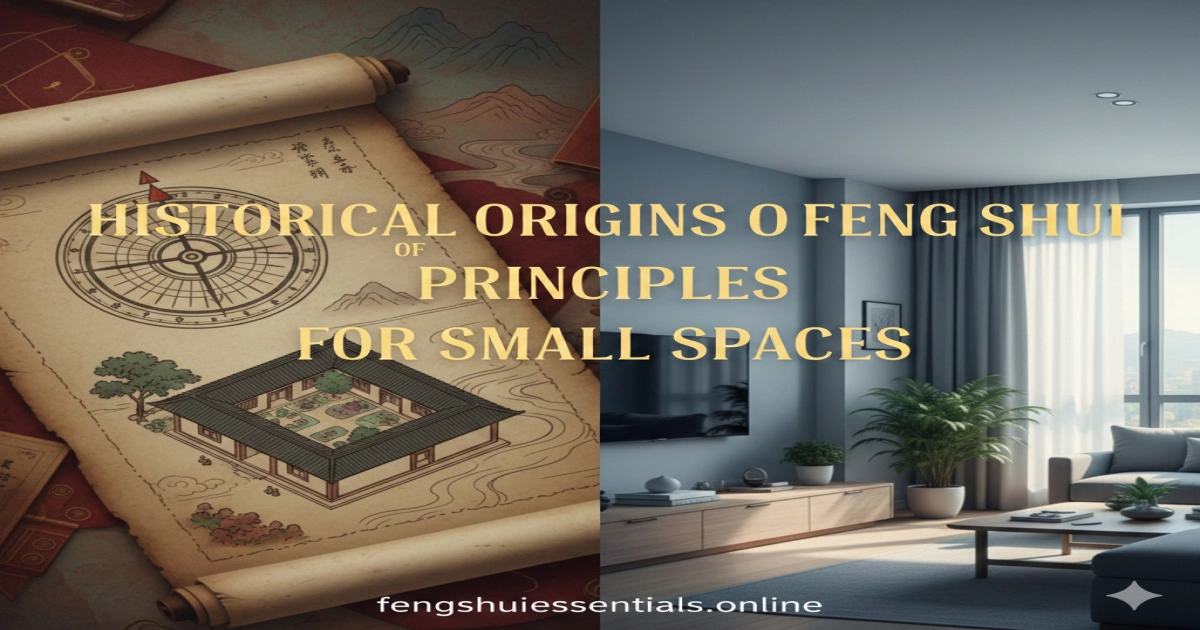
The Origins of Feng Shui Principles History: From Ancient Landscapes to Modern Bedrooms
To truly understand how to arrange a modern studio or a cramped city bedroom, we must look back at the origins of Feng Shui principles history. Originally known as Kan Yu, Feng Shui translates to “Wind and Water.” It emerged over 3,000 years ago as a form of Chinese geomancy history, used to site palaces and tombs in harmony with the natural landscape.
Early practitioners observed that life thrived where wind was gentle and water was clean. This traditional Chinese environmental philosophy wasn’t just about aesthetics; it was a survival strategy. Today, we apply these same qi energy flow historical concepts to urban living. Even if you don’t live on a mountainside, the “mountain” in your bedroom is your headboard, and the “river” is the pathway to your door.
By understanding the yin yang principles in feng shui—the balance between rest (yin) and activity (yang)—we can transform a small, cluttered room into a sanctuary for well-being.
Optimal Bed Placement for Energy Flow: The Command Position
The core of form school feng shui origins lies in the “Command Position.” Historically, this meant placing a home where you could see the valley without being vulnerable to the wind. In your bedroom, this dictates where you sleep.
Why the Command Position Matters
When your bed is in the command position, you can see the door from your pillow without being directly in line with it. This reduces the “fight or flight” response in the nervous system, leading to deeper rest.
- Small Space Tip: If your room is too narrow to angle the bed, use a mirror to reflect the door. This allows you to see “intruders” (metaphorical or otherwise) without being in the direct path of rushing energy.
- The “Death Position”: Avoid placing your feet directly facing the door. In traditional Chinese environmental philosophy, this resembles how bodies were carried out of a home, and it allows energy to “drain” from you while you sleep.
Apartment Example: In a 10×10 Brooklyn bedroom, Sarah placed her bed against the far wall diagonal to the door. Even though the room felt tighter, her insomnia improved because her subconscious felt secure.
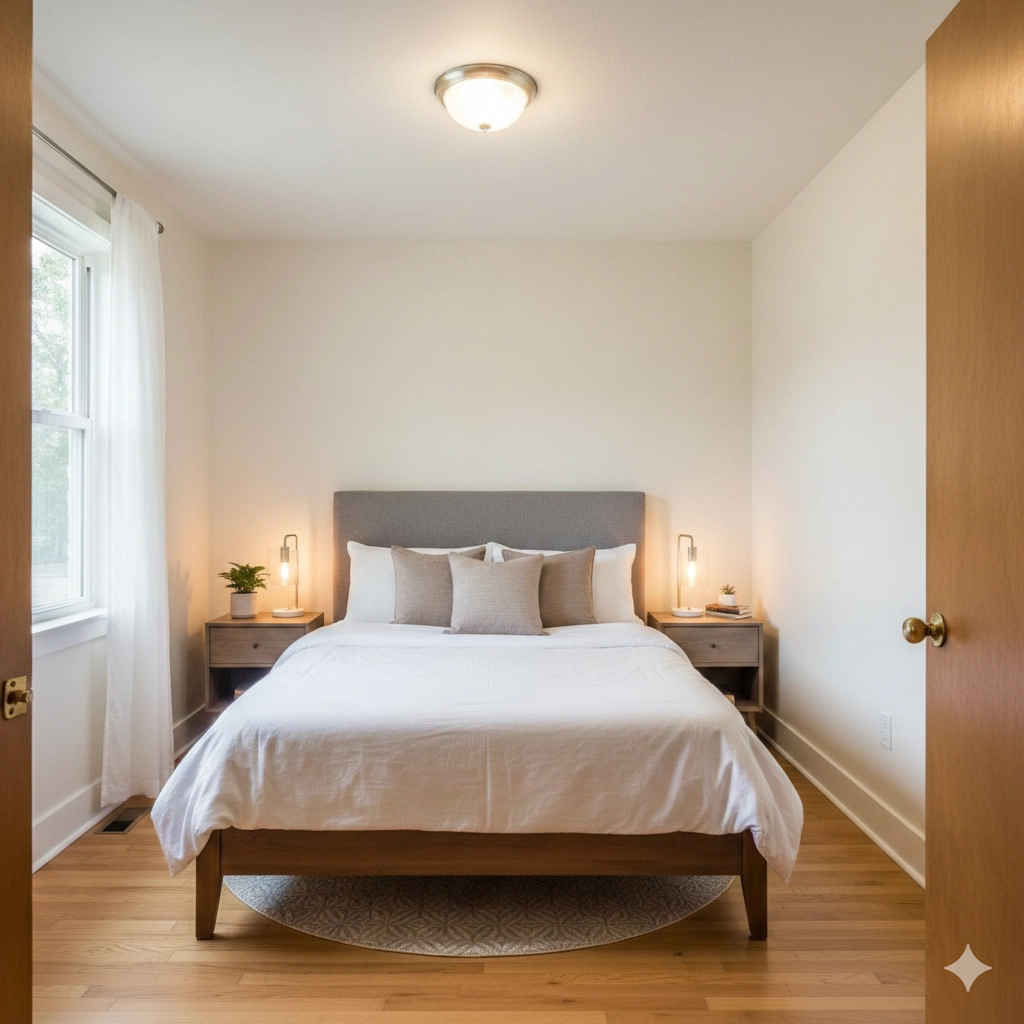
Furniture Arrangement in Compact Rooms: Navigating Qi
Small rooms often suffer from “stagnant qi” or “rushing qi.” The qi energy flow historical concepts suggest that energy should meander like a stream, not blast like a fire hose.
Scaling Down for Balance
In small spaces, oversized furniture acts as a blockage. According to the International Feng Shui Guild, furniture should be proportional to the room size to maintain the yin yang principles in feng shui.
- Avoid Sharp Corners: Aim for rounded nightstands. Sharp “poison arrows” pointing at the bed can cause restless sleep.
- Floating Furniture: If possible, use furniture with legs. Seeing the floor underneath allows qi to circulate around the piece rather than getting trapped.
Apartment Example: A resident in a London flat replaced a heavy, floor-length dresser with a mid-century modern piece on legs. The visual “lift” immediately made the room feel less claustrophobic and more energetic.
Color Choices for Harmonious Balance and Five Elements
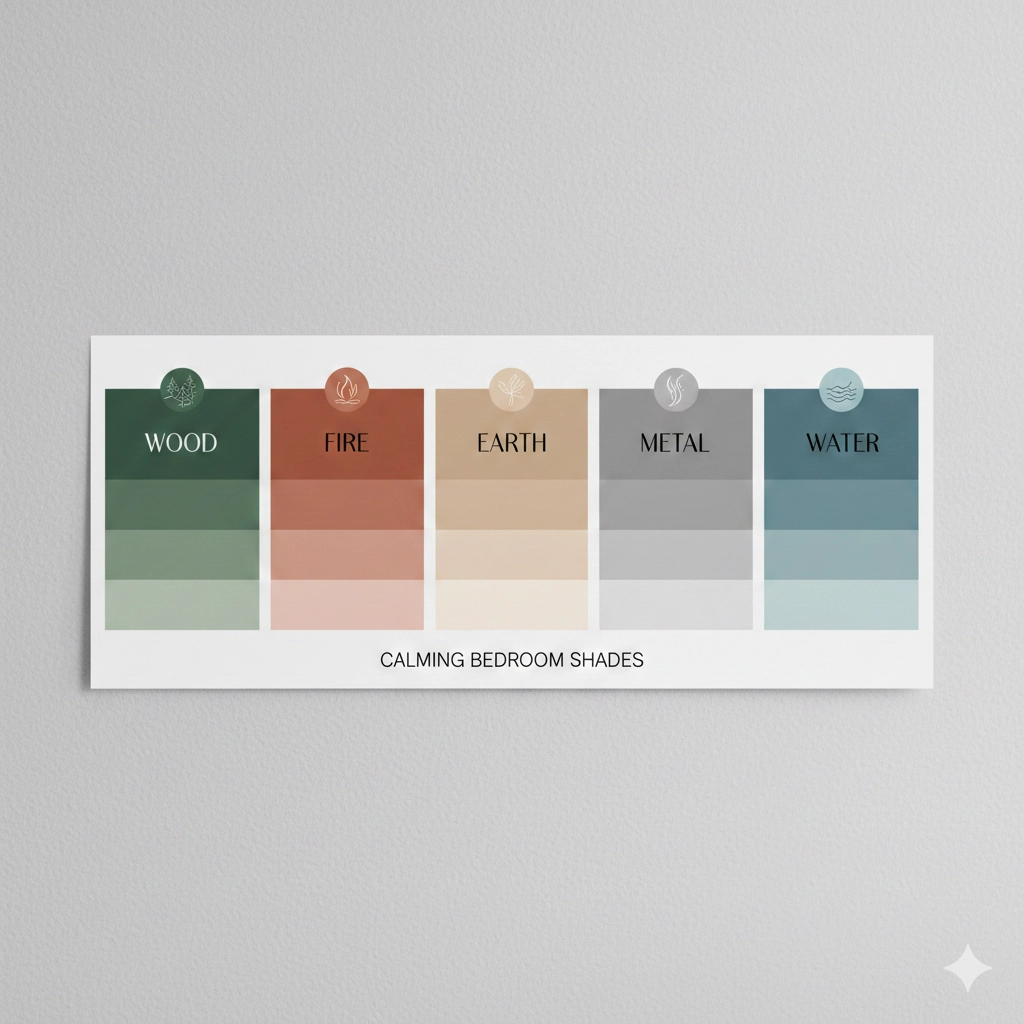
The five elements theory origins (Wood, Fire, Earth, Metal, Water) provide a roadmap for bedroom colors. Since the bedroom is a yin space meant for rest, we focus on Earth and Metal elements.
Selecting Your Palette
- Earth (Stability): Tans, beiges, and soft yellows. These ground the energy—perfect for those who feel anxious.
- Metal (Clarity): Whites, greys, and circular shapes. These encourage mental focus and efficiency.
- Wood (Growth): Greens and teals. Use these sparingly in a bedroom to avoid “over-growth” of energy that prevents sleep.
As noted by expert Lillian Too, the key is not to over-saturate. A small room painted entirely in “Fire” (Red) will be too yang, making it impossible to relax.
Apartment Example: Using a “Metal” palette of soft whites and silver accents in a dim basement studio helped reflect light, making the space feel expansive and “clean” rather than damp and heavy.
Plant and Mirror Strategies for Positive Chi
Mirrors and plants are the “aspirin” of Feng Shui. However, in a small bedroom, they must be used with caution to avoid disrupting the feng shui and Chinese astrology connection to personal peace.
The Mirror Trap
Mirrors double whatever they reflect. If they reflect a cluttered desk, they double the stress. In the origins of feng shui principles history, mirrors were used to deflect negative energy.
- Avoid: Placing a mirror directly facing the bed. It can bounce energy back at you, leading to vivid dreams or restlessness.
Living Qi: Plants
Plants represent the Wood element. In a small space, they purify the air and soften harsh corners.
- Best Choice: Snake plants or Peace Lilies. Avoid cacti; their “spiky” energy is too aggressive for a sleep space.
Apartment Example: Placing a lush Pothos plant on top of a tall wardrobe in a corner helped “lift” the energy in a cramped San Francisco studio, preventing the chi from “dying” in the dark corner.
Bagua Map Application in Limited Spaces
The bagua and lo shu square history involves a 3×3 grid used to map energy in a home. In a small room, you can apply the Bagua to your floor plan or even just your desktop.
Focusing on the “Health & Family” and “Relationship” Sectors
- The Back Right Corner: This is the Relationship area. In a small bedroom, keep this area clear of work files. Place items in pairs (two candles, two small crystals) to invite partnership energy.
- The Center: This is the “Heart” or Health area. Keep it as open as possible to allow energy to circulate.
Lighting and Storage: Clearing the Path to Rest
Clutter is the ultimate “energy killer.” In Chinese geomancy history, a blocked path meant blocked fortune.
Hidden Storage vs. Under-Bed Storage
Modern small-space living often forces us to use the space under our beds.
- The Rule: If you must store items under the bed, only store “soft” things like linens or pillows. Avoid shoes (which represent “walking away”) or paperwork (which represents “work stress”).
- Lighting: Use layered lighting. A harsh overhead light is too yang. Use small lamps with warm bulbs to create a yin environment as you prepare for sleep.
Apartment Example: By moving a box of old tax returns from under the bed to a hallway closet, a client reported feeling an immediate “weight” lifted from their chest every morning.
Best Resources for Learning Feng Shui History
If you wish to dive deeper into the compass feng shui development or the best historians for feng shui research, consider these resources:
- Best Books on Feng Shui Origins: The Complete Guide to Feng Shui by Gill Hale or works by Lillian Too.
- Best Websites for Feng Shui Historical Information: The International Feng Shui Guild (IFSG) website.
- Best Courses on Ancient Feng Shui Principles: Look for certified programs that teach the “Form School” and “Compass School” separately to understand the feng shui evolution.
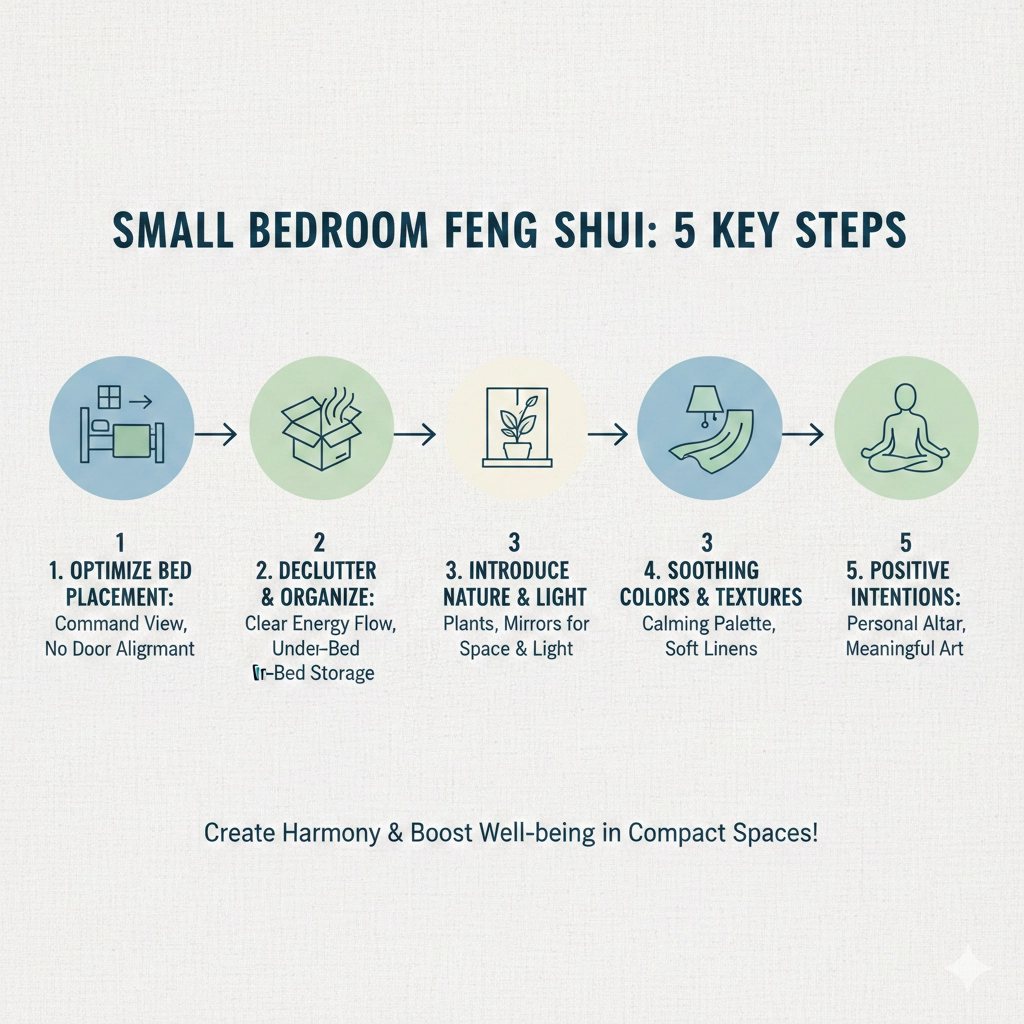
Summary of Key Takeaways for Small Bedrooms
- Command the Room: Position the bed so you can see the door.
- Balance the Elements: Use Earth tones for grounding and Metal for clarity.
- Mind the Mirrors: Never face them toward the bed; use them to expand sightlines instead.
- Clear the Center: Keep the middle of the room open to let qi breathe.
- Soft Storage: Only store soft, sleep-related items under the bed.
Frequently Asked Questions (FAQs)
1. What if I can’t move my bed out of the “Direct Line” of the door?
If your room is too small to move the bed, place a trunk or a “footboard” at the end of the bed. This acts as a physical and energetic shield, slowing down the rushing qi before it hits you.
2. Can I have a desk in my small bedroom?
While not ideal, it is common in small apartments. Use a room divider or a simple curtain to “hide” the desk at night. This symbolically separates the yang (work) from the yin (sleep).
3. Are there specific museums for feng shui artifacts?
The National Palace Museum in Taipei and various architectural museums in China house ancient lo shu square artifacts and early compasses (Luo Pan) used by ancient masters.
4. Who are the best experts on feng shui evolution?
Academics like Dr. Stephen Field have written extensively on the traditional Chinese environmental philosophy and the transition from tomb geomancy to home design.
Thank You for Visiting Feng Shui Essentials
We appreciate you taking the time to explore Feng Shui Essentials. Our goal is to provide clear, practical guidance rooted in authentic Feng Shui principles to help you create balanced, harmonious spaces.
Your feedback helps us improve the quality, clarity, and usefulness of our content. If you have suggestions, questions, or topics you would like us to cover, we welcome your input.