
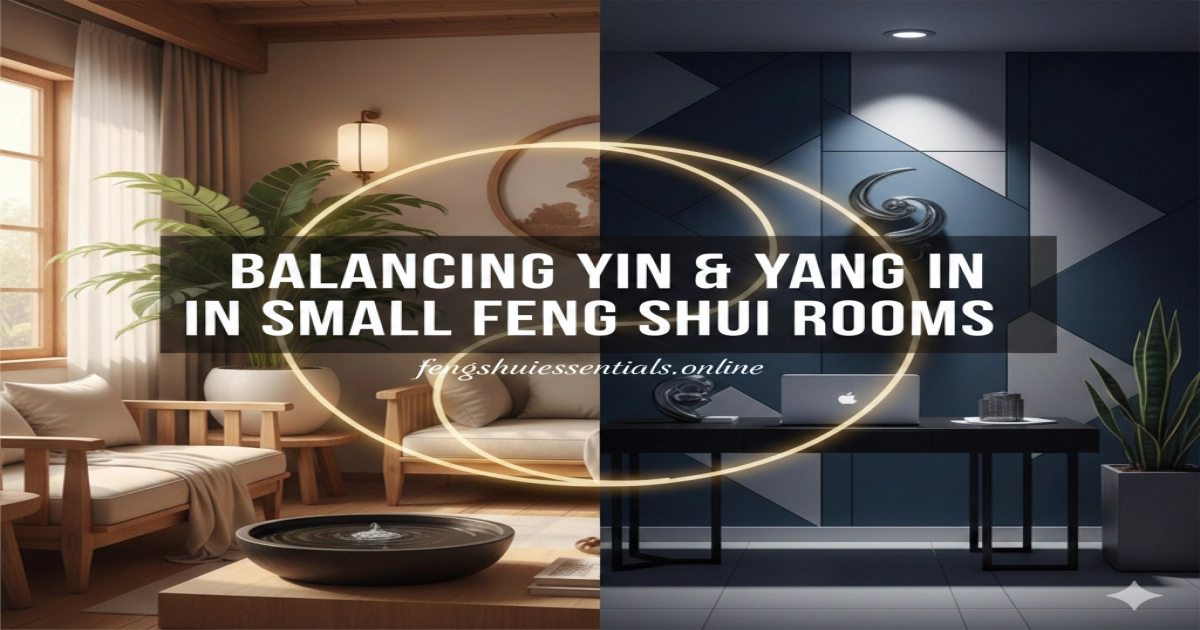
Achieving a peaceful home starts with understanding dualism. In small urban apartments, energy often becomes “stuck” or overwhelming. Learning how to balance yin yang in feng shui home environments is the key to transforming a cramped room into a sanctuary. While Yang represents activity, light, and heat, Yin embodies rest, darkness, and stillness. A bedroom that is too Yang may cause insomnia, while one that is too Yin can lead to lethargy.
This guide provides professional feng shui energy balance techniques to help you curate a space that supports both your productivity and your peace. By applying yin yang philosophy in home arrangement, even the smallest studio can feel expansive and grounded.
The Foundation: Harmonizing Yin and Yang Elements in Small Bedrooms
In Feng Shui, the bedroom is the most important room for your health. It is primarily a Yin space—intended for rest. However, many modern bedrooms also serve as home offices or gyms, introducing excessive Yang energy. Harmonizing yin and yang elements requires a conscious division of these activities.
The Urban Example: Consider a 100-square-foot studio where the desk sits two feet from the bed. The “Yang” energy of work (emails, stress, bright screens) bleeds into the “Yin” energy of sleep. To fix this, use a foldable screen or a rug to visually “section off” the work zone.
Essential Yin Yang Philosophy in Home Arrangement
To achieve chi flow and yin yang in home layouts, you must look at the “weight” of your room.
- Yin (Passive): Soft fabrics, round shapes, dimmed lights, cool colors.
- Yang (Active): Hard surfaces, sharp angles, bright sunlight, bold colors.
Optimal Bed Placement for Energy Flow and Security
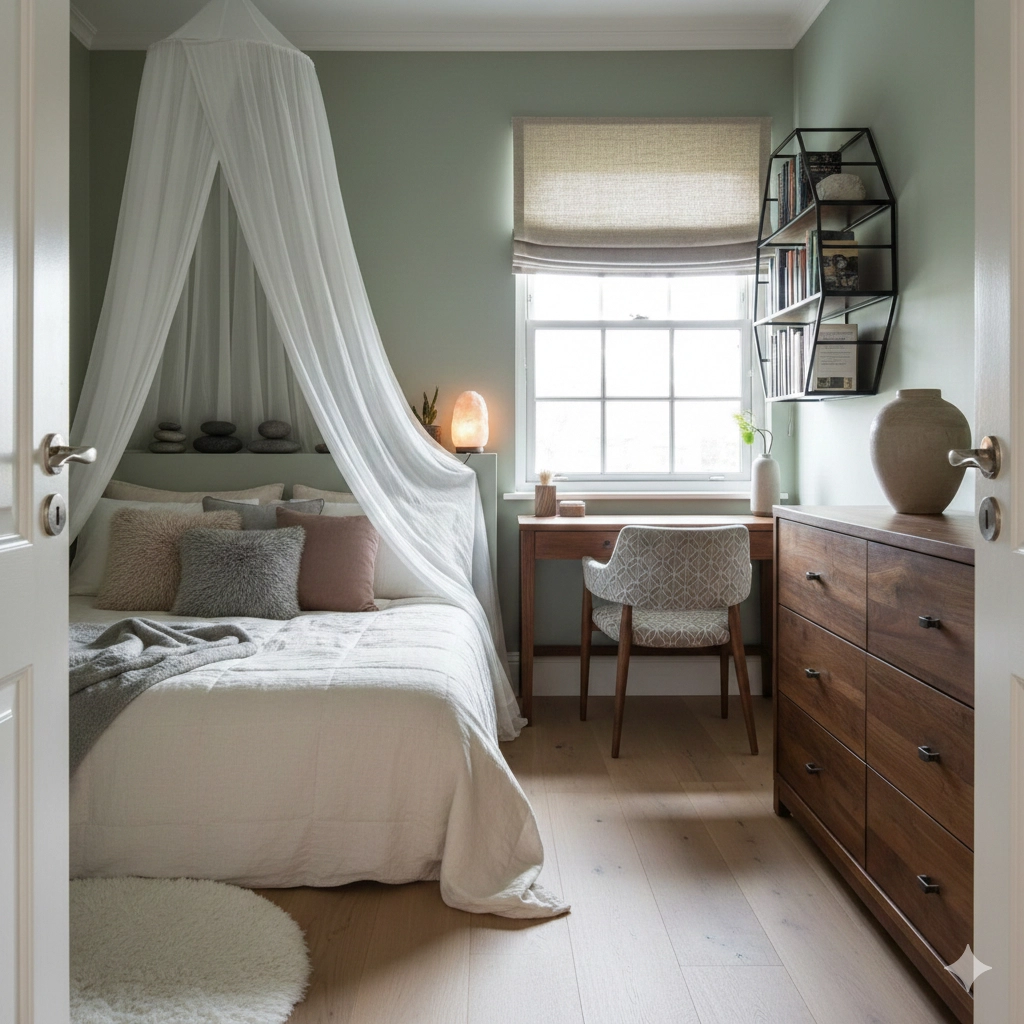
The “Command Position” is the gold standard of feng shui interior design for balance. In a small room, your bed should allow you to see the door without being directly in line with it. This creates a psychological sense of safety (Yin) while maintaining awareness of the room’s entry (Yang).
Best Room Layouts for Yin Yang Energy Flow
- Avoid the “Coffin Position”: Do not place your feet directly facing the door. If space is tight and you have no choice, place a trunk or a heavy blanket at the foot of the bed to act as a buffer.
- Solid Backing: Your headboard should be against a solid wall. Avoid placing the bed under a window, as energy (Chi) escapes, leading to restless sleep.
- Symmetrical Access: For balancing masculine and feminine energy feng shui, ensure there is space on both sides of the bed, even if it is just a few inches. This invites partnership and balance.
The Urban Example: In a narrow “railroad” apartment, shifting the bed just six inches away from a side wall and adding two matching (even if tiny) floating shelves can instantly stabilize the room’s energy.
Furniture Arrangement in Compact Rooms
Small spaces often suffer from “visual clutter,” which creates chaotic Yang energy. Feng shui adjustments for positive energy involve choosing furniture that breathes.
Creating Harmony with Feng Shui Principles
- Legged Furniture: Choose a bed or sofa with legs. This allows Chi to flow under the furniture, preventing stagnant energy from pooling.
- Rounded Edges: Sharp corners are known as “poison arrows.” In tight quarters, you are more likely to bump into them. Opt for round nightstands to soften the room’s “edges.”
Expert Insight: As noted by the International Feng Shui Guild, the goal in small spaces is not to fill every corner, but to allow the “Dragon’s Breath” (Chi) to circulate freely.
Best Colors for Yin Yang Balance in Feng Shui
Color is the fastest way to shift energy. For a bedroom, you generally want a 70/30 split favoring Yin.
Color Palette Strategies
- Yin Colors (70%): Off-white, soft grey, pale blue, or muted lavender. These promote relaxation and lower the heart rate.
- Yang Accents (30%): Terracotta, dull gold, or warm wood tones. These provide enough “fire” to keep the room from feeling cold or depressing.
The Urban Example: A basement apartment with little natural light is naturally “Extreme Yin.” To balance this, use warm “Yang” colors like peach or buttery yellow on the walls to simulate sunlight and prevent the space from feeling “heavy.”
Five-Element Balance Strategies for Modern Homes
Beyond Yin and Yang, we must look at the five-element balance strategies. Each element (Wood, Fire, Earth, Metal, Water) interacts with your room’s energy.
| Element | Attribute | Small Space Application |
| Wood | Growth | A small potted plant or green pillow. |
| Fire | Passion | A candle or triangular decor item. |
| Earth | Stability | Ceramic coasters or a square rug. |
| Metal | Clarity | Round metal frames or grey tones. |
| Water | Flow | Mirror or dark, wavy patterns. |
Plant and Mirror Strategies for Positive Chi
Mirrors and plants are the “aspirins” of Feng Shui, but they require caution in small bedrooms.
Best Plants for Yin Yang Harmony at Home
Plants introduce Wood energy (Yang). However, too many plants in a small bedroom can create “active” energy that disrupts sleep.
- Recommendation: Use one “soft” plant like a Peace Lily. Avoid cacti or plants with spiky leaves, as they create “shars” (cutting energy).
Mirror Cautions
In yin yang symbols in home decor, mirrors represent Water (Yin). They expand space, which is great for small rooms, but they also bounce energy around.
- The Golden Rule: Never place a mirror where you can see your reflection while lying in bed. This can lead to restlessness and “third-party” energy in relationships.
Lighting and Storage: The Secret to Hidden Harmony
Clutter is the ultimate enemy of chi flow and yin yang in home environments. In a small space, storage is often under the bed—a major Feng Shui “no-no.”
Clutter-Clearing Remedies
- Under-Bed Storage: If you must store items under the bed, limit them to “soft” items like linens or seasonal clothing. Avoid shoes, books, or luggage, as these represent “unsettled” energy.
- Lighting Layers: Use a dimmable Yang light (bright overhead) for cleaning and dressing, and Yin lighting (warm bedside lamps) for two hours before sleep.
Applying the Bagua Map to Single Rooms
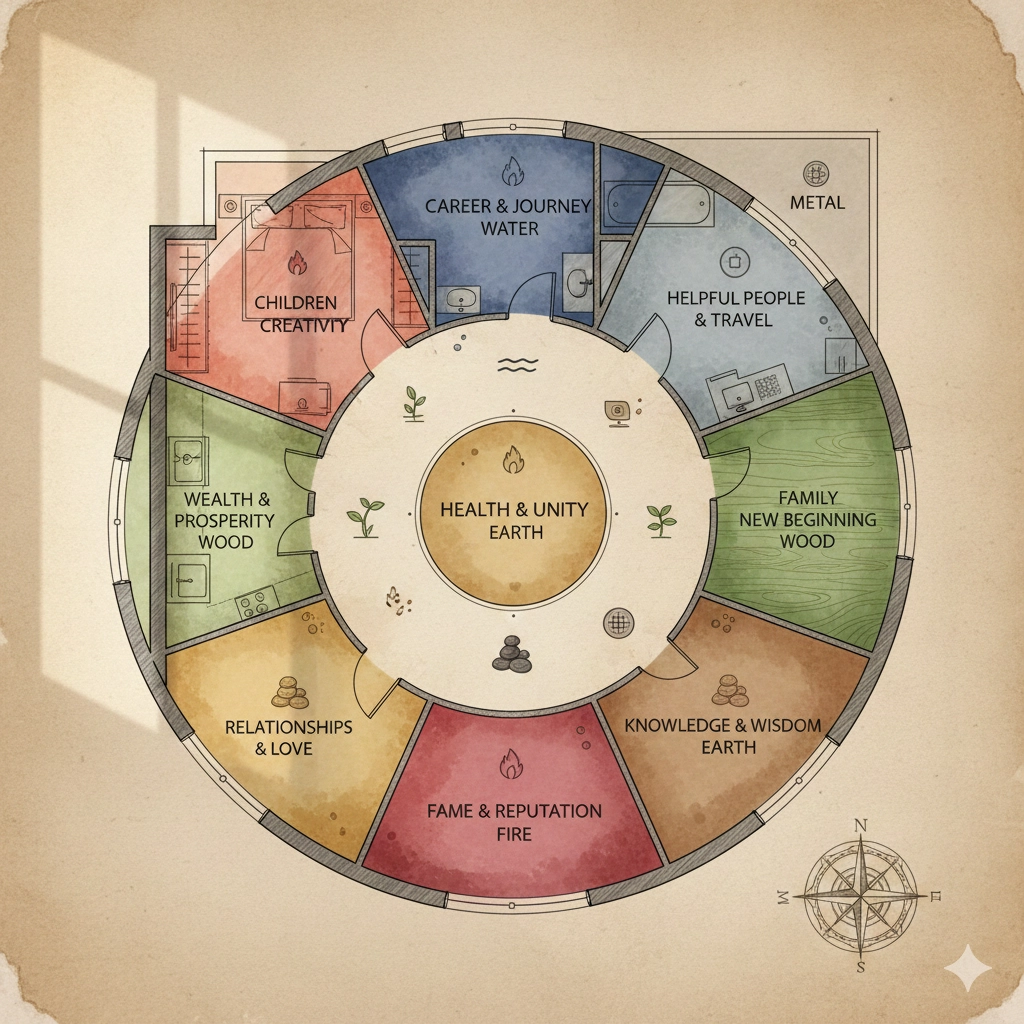
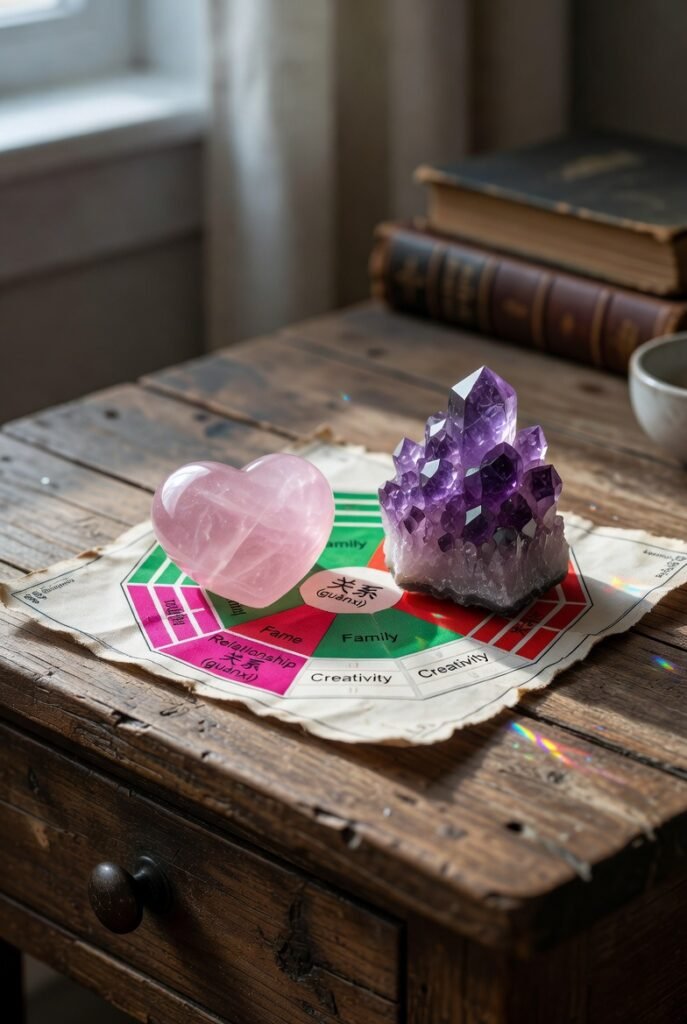
You don’t need a whole house to use the Bagua (the energy map). You can apply it to a single room by aligning the bottom of the map with the wall containing the entrance door.
- Left Corner (Wealth): Place a healthy plant.
- Right Corner (Relationships): Place items in pairs (two candles, two pillows).
- Center (Health): Keep this area as clear as possible to allow Chi to rotate.
Conclusion: Summary of Key Takeaways
To master how to balance yin yang in feng shui home spaces, remember that balance is a feeling, not just a set of rules. As Lillian Too often suggests, the best Feng Shui is that which makes you feel most “at home.”
- Prioritize the Command Position: Ensure you can see the door from your bed.
- Balance Textures: Mix hard (Yang) furniture with soft (Yin) bedding.
- Respect the 70/30 Rule: Keep bedrooms mostly Yin for better rest.
- Control the Mirror: Don’t let it face the bed; use it to brighten dark corners instead.
- Keep the Center Clear: Even in a tiny room, leave the middle of the floor open for energy to circulate.
Frequently Asked Questions
What are the best feng shui cures for yin yang imbalance?
The best cure is often “clearing and adding.” If a room feels too chaotic (Yang), add “Yin” through heavy curtains and soft rugs. If it feels stagnant (Yin), add “Yang” with a bright light, a bell, or a fresh plant.
What are the best tools for measuring yin yang in home?
While professional consultants use a Lo Pan (compass), you can use a simple smartphone compass to find your directions. However, the best “tool” is your own intuition—pay attention to where you feel “stuck” in your room.
Can I have a TV in a small Feng Shui bedroom?
A TV is high Yang energy (Metal/Fire). In a small space, it acts like a mirror when off. If you must have one, cover it with a beautiful cloth at night to return the room to a Yin state for sleeping.
What are the best books on yin yang feng shui principles?
For beginners, The Complete Illustrated Guide to Feng Shui by Lillian Too is excellent. For those interested in the Western “Black Hat” method, Move Your Stuff, Change Your Life by Karen Rauch Carter offers practical modern tips.
Thank You for Visiting Feng Shui Essentials
We appreciate you taking the time to explore Feng Shui Essentials. Our goal is to provide clear, practical guidance rooted in authentic Feng Shui principles to help you create balanced, harmonious spaces.
Your feedback helps us improve the quality, clarity, and usefulness of our content. If you have suggestions, questions, or topics you would like us to cover, we welcome your input.