
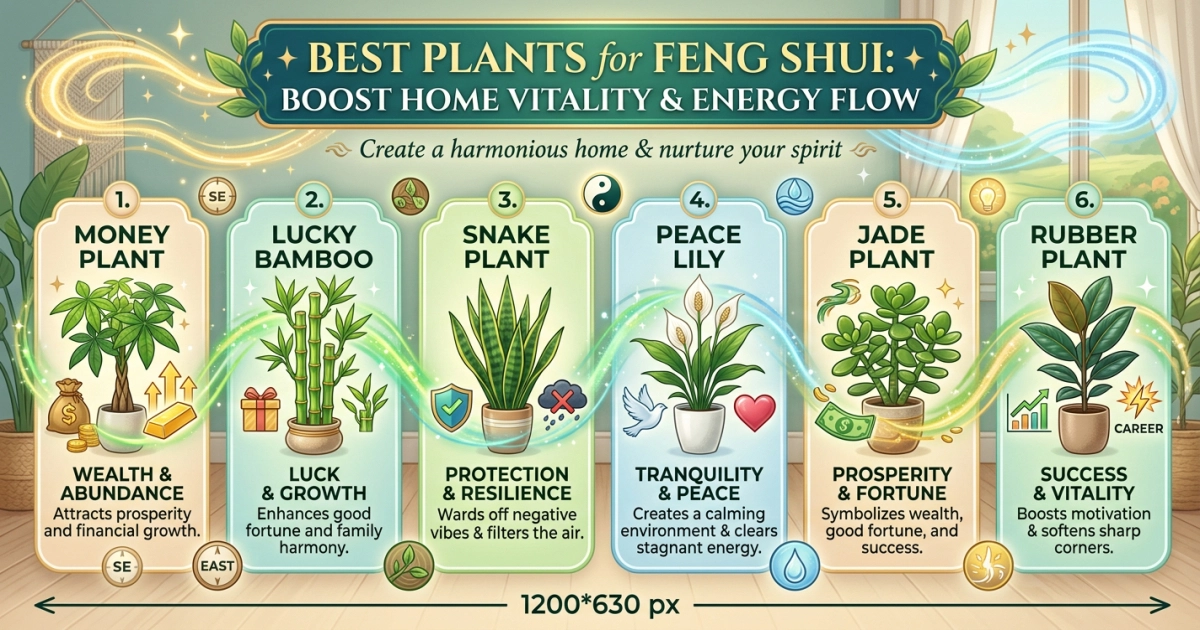
In the high-density living of modern cities, our homes often feel more like enclosures than sanctuaries. However, the ancient art of Feng Shui teaches us that even the smallest studio apartment can become a powerhouse of “Sheng Chi”—the breath of life. By strategically selecting the best plants for feng shui in home environments, you can bridge the gap between urban stagnation and natural vitality.
Plants represent the Wood element, signifying growth, flexibility, and new beginnings. In my years of consulting for urban dwellers, I have found that the right greenery doesn’t just decorate a room; it corrects energetic imbalances and filters the “Sha Chi” (negative energy) inherent in cramped quarters. This guide provides a professional roadmap for optimizing your compact living space using botanical wisdom and spatial alignment.
Optimal Bed Placement for Energy Flow in Small Rooms
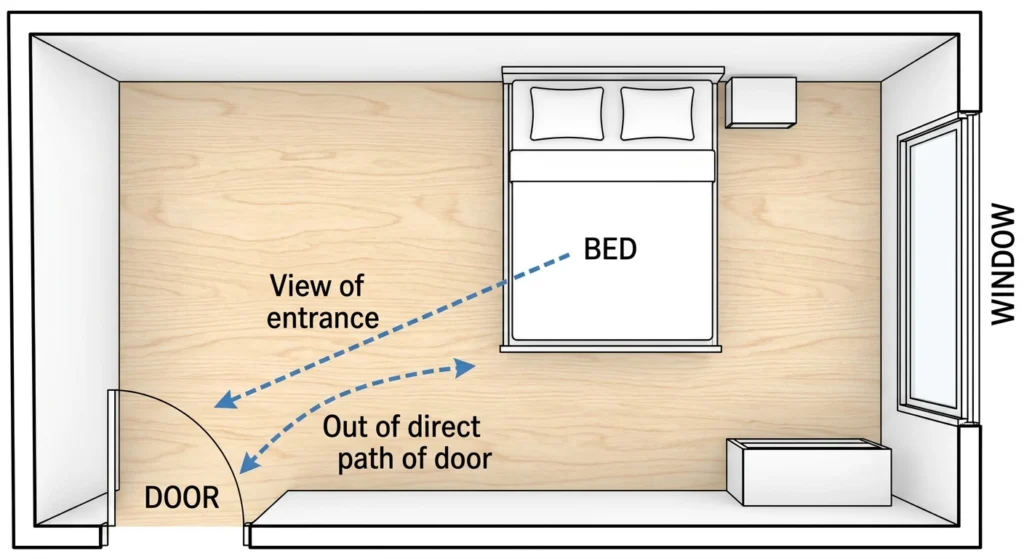
The bedroom is the most vital room in Feng Shui because it governs your personal energy and health. In small apartments, the “Commanding Position” is often sacrificed for floor space, which is a significant mistake.
The Commanding Position
To maintain control over your life’s path, your bed must be placed so you can see the door without being directly in line with it. If your feet point straight out the door, this is known as the “Coffin Position,” which drains your vitality while you sleep.
Apartment Example: In a 300-square-foot studio, if the only wall for your bed puts you in line with the door, place a heavy trunk or a footboard at the end of the bed to act as a shield.
Bed Placement vs. Energy Leaks
Avoid placing the headboard directly under a window. Windows represent unstable energy. If you must place it there, use a solid wooden headboard to provide the “Mountain” support recommended by the International Feng Shui Guild.
Furniture Arrangement in Compact Rooms
Small spaces often suffer from “cluttered flow.” When furniture blocks the natural walking path, it also blocks the flow of wealth and opportunity.
Creating “Breathing Room”
Ensure there is a clear path for Chi to circulate. Furniture should have rounded corners where possible. Sharp edges, or “poison arrows,” create cutting energy that leads to irritability and stress.
- Foundational Tip: Keep the center of the room open. This area, the “Tai Qi,” represents your heart and overall balance.
- Advanced Tip: Use furniture with legs rather than pieces that sit flat on the floor. This allows Chi to flow under the furniture, preventing stagnation.
Apartment Example: Instead of a bulky, solid coffee table, choose a circular glass table with a metal frame. This balances the Water and Metal elements while keeping the visual and energetic flow open.
Color Choices for Harmonious Balance
Color is a vibration that can either nourish or deplete the five elements (Wood, Fire, Earth, Metal, Water) in your home. In small spaces, the goal is to expand the room without making it feel cold.
| Element | Area of Life | Recommended Colors |
| Wood | Growth/Family | Green, Teal |
| Fire | Fame/Reputation | Red, Soft Orange |
| Earth | Stability/Health | Yellow, Terracotta |
| Metal | Precision/Children | White, Grey, Metallic |
| Water | Career/Flow | Blue, Black |
For sleep quality, lean toward Earth tones like sand or soft cream to ground the energy. Avoid high-energy “Fire” colors like bright red in the bedroom, as they can cause insomnia.
Best Feng Shui Plants for Small Apartments
The Wood element is best introduced through living plants. However, not all plants are created equal in the eyes of a consultant.
The Best Feng Shui Plants for Bedroom Sleep Quality
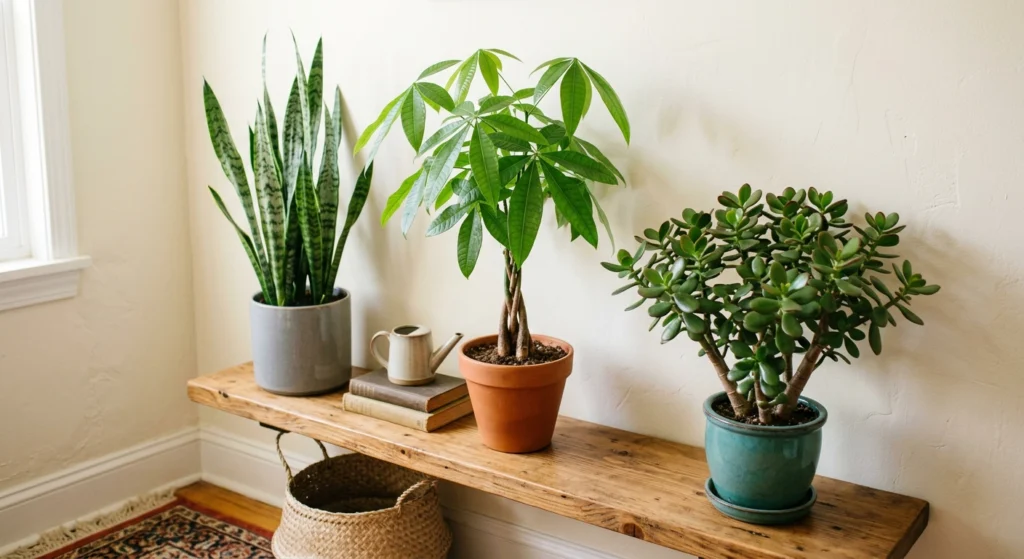
For the bedroom, prioritize plants that purify the air at night. The snake plant feng shui benefits are twofold: they convert CO2 to O2 during the night and their upward growth symbolizes protective energy. Unlike many plants, they are resilient in low light, making them perfect for “basement” or North-facing apartments.
Top Botanical Choices for Every Room
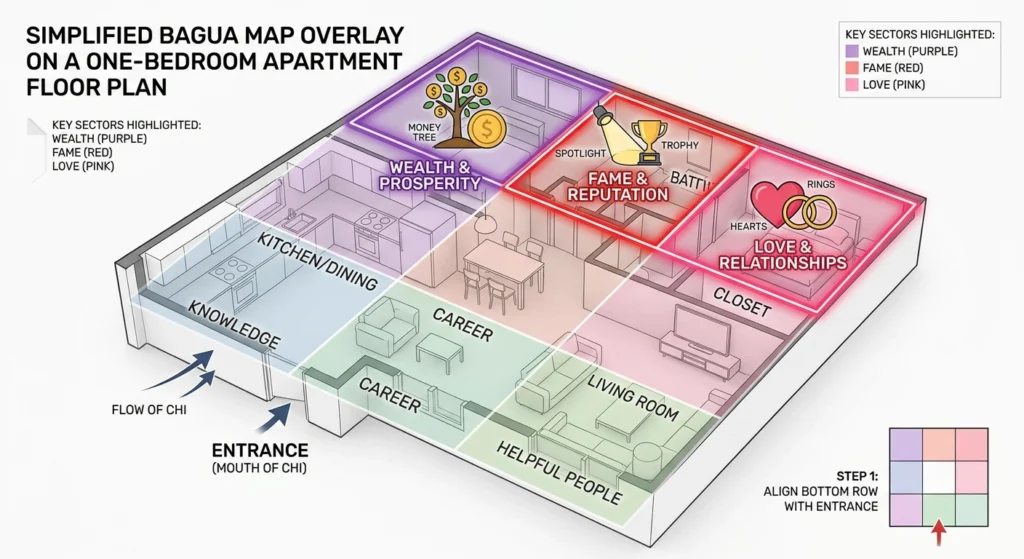
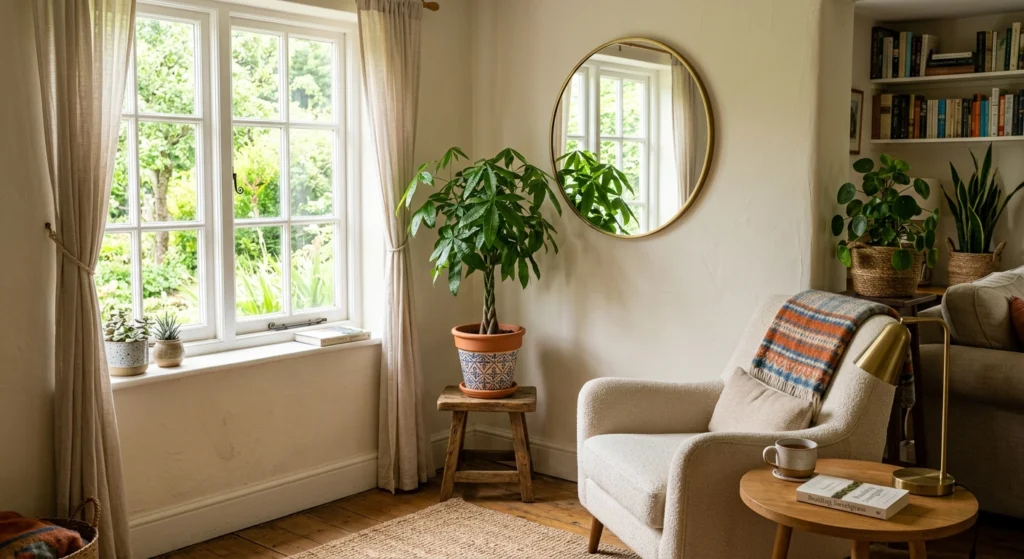
- Money tree plant feng shui wealth: Best placed in the Southeast corner (the Wealth area) of your living room. Its braided trunk symbolizes interconnectedness and “locking in” prosperity.
- Peace lily feng shui purification: Ideal for the best feng shui plants for bathroom purification, as it thrives in humidity and neutralizes toxins.
- Jade plant feng shui prosperity: A “succulent of wealth” perfect for entryways to invite financial abundance.
- Orchid feng shui love energy: Place in the Southwest corner to enhance relationship harmony.
Plant and Mirror Strategies for Positive Chi
Mirrors are the “aspirin” of Feng Shui; they can cure almost any spatial ailment, but they must be used with caution.
Expanding the Bagua
In a small room, a mirror can “double” the space. However, never place a mirror facing the bed, as it reflects your energy back at you, preventing deep rest. Instead, use a mirror to reflect a beautiful view or a healthy plant, effectively doubling the “Sheng Chi” in the room.
The Power of Lucky Bamboo
Lucky bamboo feng shui home placement is a versatile remedy. Placing three stalks in the East corner promotes family health, while two stalks in the Southwest promote love. It is one of the best plants for feng shui in home offices because it requires little maintenance and represents the “Water and Wood” synergy.
Lighting and Storage Solutions for Energy Clarity
Lighting is “Fire” energy. In a small apartment, dark corners are “dead zones” where energy rots.
- Layered Lighting: Use floor lamps to bounce light off the ceiling, lifting the energy of the room.
- Clutter-Clearing Remedies: In Feng Shui, clutter is “postponed decisions.” It physically blocks Chi.
- The Under-Bed Rule: Avoid storing items under the bed. If you must, only store “soft” items like linens. Never store shoes or documents, as these represent “walking away” or “unfinished work” that disturbs sleep.
Apartment Example: Use a rubber plant feng shui stability choice in a corner that feels “heavy” or dark. Its broad, round leaves soften the corner and its dark green hue provides a grounding Metal-Wood balance.
The Bagua Map in Small Spaces
The Bagua is the Feng Shui energy map. In a small apartment, you can apply the Bagua to the entire floor plan or just a single room.
- Entryway: Use aloe vera feng shui healing properties here. Its spiky leaves act as a “sentinel,” protecting the home from negative energy while providing healing vibes.
- Living Room: The best feng shui plants for living room harmony include the pothos feng shui growth and abundance. Its trailing vines help “soften” the harsh angles of shelves and cabinets.
Plant Cautions: What to Avoid
Expert practitioners like Lillian Too often warn against “pointed” plants like cacti inside the home unless they are used specifically for protection in a window. Their “spiky” energy can cause arguments. Similarly, if a plant is dying, remove it immediately. A dying plant creates “Yin” energy, which leads to lethargy and sadness.
- Fern feng shui humidity balance: Great for bathrooms, but ensure they don’t become dry and “crispy,” as this symbolizes drying up of resources.
Summary of Key Takeaways
- Bed Position: Prioritize the Commanding Position to reduce stress.
- Wood Element: Use the best plants for feng shui in home (like Snake Plants and Money Trees) to boost vitality.
- Avoid Spikes: Stay away from cacti in the bedroom or living areas.
- Mirror Magic: Use mirrors to expand space, but never reflect the bed.
- Vertical Growth: Choose plants that grow upward (like Lucky Bamboo) to lift the energy of a small room.
Frequently Asked Questions (FAQ)
1. What are the best feng shui plants for office productivity?
The pothos and lucky bamboo are excellent. Pothos removes indoor air pollutants common in offices, while lucky bamboo represents steady, upward growth in your career.
2. Can I use fake plants for Feng Shui?
While real plants are preferred for their “life force,” high-quality silk plants are acceptable if you cannot keep real ones alive. Avoid dried flowers, as they represent “dead energy.”
3. Where is the best place for a money tree?
The Southeast corner of your home or living room is the “Wealth” sector. Placing a money tree here, ideally in a blue or green pot, stimulates financial abundance.
4. How do I fix a bathroom in the “Wealth” sector?
Bathrooms naturally drain energy. Use a peace lily or pothos to “upcycle” the waste-water energy and keep the toilet lid closed to prevent wealth from “flushing away.”
Thank You For Visiting Fengshuiessentials.online. We Value Your Feedback!
1 thought on “Incorporating Plants in Feng Shui for Home Vitality”