
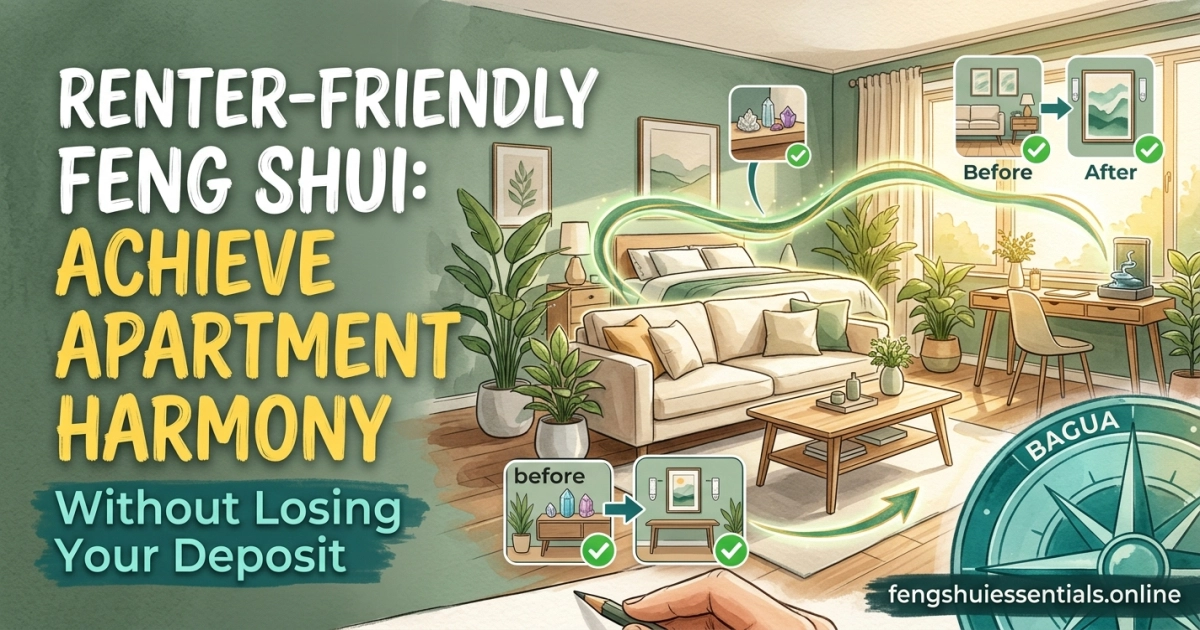
Introduction: Why Apartment Feng Shui Is Different
Feng shui is often misunderstood as a practice reserved for homeowners with sprawling floor plans, permanent fixtures, and the freedom to remodel at will. But the reality is far more practical. Renters and apartment dwellers face unique energetic challenges: shared walls, fixed plumbing, awkward layouts, limited natural light, and lease agreements that prohibit structural changes. Yet these constraints do not diminish the power of feng shui—they simply require a smarter, more intentional approach.
This comprehensive Feng Shui apartment guide is designed specifically for renters who want to optimize their living spaces without risking their security deposit. You will learn how to apply time-tested principles like the Bagua map, five elements theory, and yin-yang balance within the real-world limitations of apartments, studios, L-shaped rooms, basements, attics, and balconies. By the end, you’ll have a step-by-step action plan to create a home that supports your goals for wealth, career, love, health, and personal growth—all without a single renovation.
The core idea behind Feng Shui for renters is simple: energy flows where attention goes, and arrangement matters more than architecture. Even if you cannot move a wall, you can shift the flow of chi through furniture placement, color, lighting, mirrors, plants, and intention. A cramped studio can feel expansive with the right zoning. A dark basement can feel bright and alive with the right cures. An L-shaped room can be balanced with the right Bagua adjustments. The key is to understand the principles and adapt them creatively.
In the sections that follow, we’ll break down the essential strategies for apartment-specific feng shui, linking to detailed guides that will help you implement each technique. This pillar post serves as your foundational roadmap; use the embedded links to dive deeper into specific topics.
The Foundation: Applying the Bagua Map to Your Apartment
The Bagua map is the most important diagnostic tool in feng shui. It divides a space into nine zones—wealth, fame, love, family, health, children/creativity, knowledge, career, and helpful people—each connected to a compass direction and an element. But applying the Bagua to an apartment is not always straightforward. Irregular layouts, missing corners, and open-plan studios require a more flexible method than the traditional square grid.
For a detailed walkthrough on overlaying the Bagua onto non-traditional layouts, read Bagua Map for Apartments: How to Apply It to Any Floor Plan. This guide explains how to align the map with your front door, handle missing sectors, and adapt to L-shaped or studio configurations.
If you’re new to the concept entirely, start with How to Use the Feng Shui Bagua Map in Modern Apartments, which offers a beginner-friendly explanation of each zone and its corresponding element, color, and life area.
How to Overlay the Bagua in an Apartment
- Locate your front door. The front door is the mouth of chi. Stand inside your apartment looking out. The wall containing the front door aligns with the bottom edge of the Bagua map: Career, Knowledge, and Helpful People zones.
- Divide your space into a 3×3 grid. If your apartment is a rectangle, draw an imaginary grid over the floor plan. If it’s irregular, use the “expanded Bagua” method: extend the grid to cover the missing areas, then apply cures within the physical space that remains.
- Identify missing corners. Missing areas in an apartment indicate weakened energy for the corresponding life area. For example, a missing wealth corner (far left from the front door) may signal financial instability. You can compensate with mirrors, crystals, plants, or the appropriate element.
- Use the five elements to balance each zone. Wood for growth, Fire for passion, Earth for grounding, Metal for clarity, and Water for flow. If a zone is missing or cluttered, the corresponding element can restore balance.
Common Apartment Bagua Challenges
- Open-plan studios: The entire living area may cover multiple zones simultaneously. You can still map the Bagua by visualizing the grid and assigning each zone to a specific area of the room.
- Awkward L-shapes: An L-shaped apartment often has a missing corner. The cure is to “complete” the missing area with a mirror or a heavy object placed at the inner corner where the two arms meet.
- Bathrooms in wealth zones: Bathrooms are associated with draining energy. If your bathroom falls in the wealth corner, keep the door closed, add a plant, and use Earth element colors to slow the drain.
For a deeper dive into handling irregular floor plans, refer back to the detailed Bagua guide linked above.
Renter-Friendly Feng Shui: No-Renovation Harmony Hacks
Renters often believe that feng shui requires permanent changes—like moving a front door or tearing down walls—but that is far from true. The most effective feng shui cures are non-invasive, removable, and affordable. The key is to work with what you have and use intention to redirect energy.
If you want a comprehensive list of hacks that won’t cost you your deposit, read Feng Shui Tips for Renters Apartment: No-Reno Harmony Hacks. This article covers renter-friendly fixes for every room, including temporary wallpaper, adhesive hooks, portable room dividers, and the strategic use of furniture.
Essential No-Renovation Cures
- Command position without moving walls. The command position means your bed, desk, and stove are placed so you can see the door without being directly in line with it. If your bed must face away from the door, place a mirror so you can see the reflection of the entrance.
- Use rugs to define zones. Rugs are powerful grounding tools. In a studio, a rug under the bed defines the sleep area; a different rug under the desk defines the work zone. This creates energetic boundaries without physical walls.
- Hang curtains to soften sharp corners. Many apartments have protruding corners, exposed pipes, or awkward architectural features. Curtains, fabric wall hangings, or tall plants can soften these “poison arrows.”
- Peel-and-stick wallpaper and decals. If your lease allows, removable wallpaper can instantly shift the energy of a room. For example, a deep green accent wall in the wealth corner can activate Wood energy.
- Command strips for wall art. Art is a powerful feng shui cure. Use adhesive strips to hang images that represent your goals—pair imagery in the love zone, water scenes in the career zone, or inspiring quotes in the knowledge zone.
- Portable room dividers. A folding screen or tall bookshelf can act as a temporary wall to separate a bedroom from a living area in a studio. This is one of the most effective no-renovation solutions.
- Battery-operated lighting. Many apartments lack overhead lighting. Use battery-operated sconces or LED strip lights to brighten dark corners and lift stagnant chi.
- Declutter regularly. Clutter blocks chi. Since you can’t add square footage, removing unused items is the easiest way to create more energetic space.
Why These Hacks Work
Feng shui is not about the physical structure alone. It is about the flow of chi—the unseen life force that moves through your environment. When you rearrange furniture, add a mirror, or clear clutter, you change how chi circulates. These small shifts can have a profound impact on your mood, productivity, and overall well-being. Renters can absolutely practice authentic feng shui without violating a lease.
Studio Apartment Layouts: Defining Zones Without Walls
Studio apartments present a unique feng shui challenge: one room must serve as bedroom, living room, office, and dining area. Without careful zoning, the energy can feel chaotic and unfocused. The goal is to create distinct energetic zones using visual and physical cues, even when no walls exist.
For a detailed guide on creating harmony in a single room, read Feng Shui Tips for Studio Apartment Layout That Actually Work. This article provides real-world examples and step-by-step instructions for defining sleeping, working, and living areas.
Key Principles for Studio Feng Shui
- Establish a command position for your bed. The bed is the most important piece of furniture in any home. In a studio, place the bed as far from the door as possible, ideally diagonal to the entrance, with a solid headboard against a wall. Avoid placing the bed directly in line with the door or under a window.
- Use a bookshelf or screen as a headboard. If your bed must float in the room, place a tall bookshelf or folding screen behind the headboard. This creates a sense of support and security.
- Separate the sleep zone from the living zone. A low bookshelf, a sheer curtain, or a tall plant can visually divide the sleeping area from the rest of the room. Even a different area rug under the bed signals a separate zone.
- Keep the kitchen area visually distinct. If your studio has a kitchenette, use a small table or bar cart as a boundary. Avoid cooking odors drifting into the sleep area by using a fan or air purifier.
- Maximize vertical space. In a small studio, floor space is precious. Use wall-mounted shelves to store books and decor, freeing up the floor for chi to flow.
- Choose multi-functional furniture. A sofa bed, a drop-leaf table, or a storage ottoman can reduce clutter and maintain flexibility. However, avoid turning your bed into a work desk—if possible, use a separate surface for work.
Color and Element Tips for Studios
- Use a calm, neutral palette for the main areas to create a sense of spaciousness. Add pops of color in specific Bagua zones—green in the wealth corner, red in the fame zone, pink in the love zone.
- Incorporate all five elements in subtle ways: a small water fountain or mirror (Water), a plant (Wood), a lamp (Fire), a ceramic bowl (Earth), and a metal frame or clock (Metal). Balance prevents the room from feeling too heavy or too airy.
- Avoid mirrors facing the bed. Mirrors in the bedroom can disrupt sleep. If you have a mirrored closet, cover it with a curtain or screen at night.
By treating each zone as a separate “room” through the use of rugs, lighting, and furniture placement, you can create a studio that feels intentional, peaceful, and energetically balanced.
Solving Odd Layouts: L-Shaped Rooms and Missing Corners
L-shaped rooms and apartments with missing corners are more common than most people realize. In feng shui, missing corners correspond to missing life areas. For example, an apartment missing the far-right corner (love/relationships zone) may indicate difficulty finding or maintaining a partner. An L-shaped room can also create stagnant energy in the bend or a “poison arrow” pointing into the main space.
For specific solutions to these challenging layouts, read Feng Shui Layout Ideas for L-Shaped Rooms: Expert Solutions. This guide covers cures for missing corners, furniture arrangements for awkward angles, and ways to balance energy flow in odd spaces.
Common L-Shaped Room Problems and Cures
Problem 1: The Missing Corner
If your room is L-shaped, one corner of the Bagua grid may be physically absent. For example, if the love zone is missing, you might feel a lack of connection or intimacy. The cure is to “complete” the space energetically:
- Place a large mirror on the wall that forms the inner corner of the L. The mirror visually extends the space and symbolically fills the missing area.
- Hang a crystal or faceted glass sphere in the missing corner to disperse and refract chi.
- Use a tall plant or floor lamp at the inner corner to anchor the energy.
Problem 2: The Poison Arrow
The sharp inner corner of an L-shaped room can send a “poison arrow” of cutting chi toward the center of the room. Soften it with:
- A tall, bushy plant placed directly in front of the corner.
- A piece of fabric or a tapestry hanging over the corner.
- A rounded piece of furniture, like a circular table or an upholstered chair, placed at the corner.
Problem 3: Energy Stagnation in the Bend
The bend of an L-shaped room often becomes a dead zone where chi collects and stagnates. Activate this area with:
- A floor lamp or upward-facing light.
- A small water feature or a plant.
- A piece of moving art, like a mobile or a clock, to keep energy circulating.
Problem 4: Furniture Placement
In an L-shaped room, avoid placing your bed or desk in the smaller arm of the L, as this can feel cramped and unsupported. Instead, use the larger portion for the primary function (sleeping, working) and the smaller arm for storage, a reading nook, or a dressing area.
Micro-Spaces and Flexible Living: Maximizing Energy in Small Footprints
The modern trend toward micro-apartments and flexible living spaces has pushed feng shui practitioners to adapt traditional principles to very small footprints—often under 300 square feet. In these environments, every inch matters, and clutter is the enemy of good chi.
If you’re living in a micro-space or a flexible layout that changes throughout the day, read The Energy of Micro-Spaces & Flexible Living. This article explores how fluid layouts, emotional comfort, and functional efficiency interact to create harmony in tiny homes.
Feng Shui Principles for Micro-Spaces
- Embrace multi-functionality without chaos. A Murphy bed, a fold-down desk, and nesting tables can transform a room from bedroom to office to dining area. The key is to reset the space after each use so energy does not become stagnant.
- Use vertical storage. Floor space is limited, so go up. Wall-mounted shelves, hanging organizers, and tall, narrow bookcases keep items off the floor and allow chi to circulate freely.
- Keep sightlines clear. Even in a tiny room, chi needs a clear path from the door to the window. Avoid placing furniture in a way that blocks the natural flow. A clear path invites opportunity and fresh energy.
- Incorporate the five elements subtly. You don’t need large objects to represent the elements. A small candle (Fire), a ceramic mug (Earth), a metal paperweight (Metal), a tiny plant (Wood), and a glass of water (Water) are enough to balance a micro-space.
- Use mirrors strategically. Mirrors can make a micro-space feel larger, but they must be placed carefully. Avoid mirrors that reflect the bed or the front door directly. A mirror on a side wall that reflects a window or a beautiful view is ideal.
- Prioritize the command position. In a micro-space, the bed is often the largest piece of furniture. Place it in the command position—diagonal to the door, headboard against a solid wall, and not in line with the entrance. If this is impossible, use a mirror to see the door from the bed.
Emotional Comfort in Flexible Living
Flexible living can create emotional stress if the space never feels truly restful. To counteract this, designate at least one area—even if it’s just a corner—as a permanent “sanctuary.” This could be a comfortable chair, a meditation cushion, or a small altar with meaningful objects. Having a stable anchor helps ground your energy in an ever-changing environment.
Vertical Energy: Staircases, Basements, and Attics
Apartments are not always single-level. Many renters live in multi-level units, split-level spaces, or homes with basements and attics. These vertical transitions carry unique feng shui challenges and opportunities. Staircases move chi rapidly between floors; basements are prone to stagnant, yin energy; attics can become cluttered and heavy. Understanding how to balance these areas is essential for whole-home harmony.
Staircase Feng Shui Remedies for Energy Support
Staircases are often called the “waterfalls” of a home because they channel chi upward and downward. A staircase that directly faces the front door can cause wealth and opportunity to rush out of the home. A narrow, steep, or dark staircase can create a sense of anxiety and instability.
For a complete guide to managing staircases in rentals, read Staircase Feng Shui Remedies for Energy Support. This article covers cures for bad staircase placement, ways to slow down chi, and tips for keeping staircases safe and well-lit.
Key staircase cures include:
- Place a plant, mirror, or artwork at the bottom of the staircase to slow and redirect chi.
- Keep staircases brightly lit, especially at night, to lift energy.
- Avoid storing clutter under the stairs, as this creates stagnant chi. If you must use the space, enclose it with doors and keep it organized.
- If the staircase faces the front door, place a small table with a heavy object (like a stone or crystal) between the door and the bottom step to anchor the energy.
Feng Shui Guidelines for Basement and Lower-Level Rooms
Basements are naturally yin: dark, cool, and below ground level. They are associated with introspection, rest, and sometimes isolation. When used improperly—as a cluttered storage dump or a neglected laundry room—a basement can drain the energy of the entire home. However, with the right cures, a basement can become a supportive space for rest, work, or recreation.
For detailed advice on reviving lower-level rooms, read Feng Shui Guidelines for Basement and Lower-Level Rooms. This guide explains how to balance yin and yang, clear stagnant energy, and use colors, lighting, and plants to revive below-ground spaces.
Essential basement cures:
- Maximize lighting. Use full-spectrum bulbs, floor lamps, and mirrors to bounce light around the room.
- Warm colors. Paint walls in warm earth tones or use rugs and textiles in terracotta, gold, or soft yellow to counteract the cold, damp quality of basements.
- Add plants. Hardy, low-light plants like pothos, snake plants, or peace lilies bring Wood energy and life force into the space.
- Keep humidity low. A dehumidifier prevents the heavy, stagnant feeling associated with damp basements.
- Avoid sleeping in a basement if possible. If you must, ensure the room has a window, proper ventilation, and a solid headboard.
How to Feng Shui an Attic or Upper Storage Space
Attics, like basements, are often overlooked. They sit above the main living areas and can become repositories for old items, forgotten memories, and heavy energy. Because attics are closer to the roof, they are also more yang—warm, bright, and active—but when cluttered, they can feel oppressive.
For a complete guide to transforming your attic into a positive chi source, read How to Feng Shui an Attic or Upper Storage Space. This article offers expert tips for layout, lighting, and decluttering that actually work.
Attic feng shui tips:
- Declutter ruthlessly. Attics are magnets for “just in case” items. Keep only what you truly need or love.
- Add skylights or bright lighting. If your attic has a window, keep it clean and unobstructed. Use bright LED lights to lift the energy.
- Use sloping ceilings wisely. In rooms with slanted ceilings, place the bed or desk where the ceiling is highest. Avoid sitting or sleeping directly under a low, sloped ceiling, which can feel oppressive.
- Incorporate upward-moving energy. Use tall shelves, vertical artwork, or a ceiling fan to keep chi circulating.
Extending to Outdoor Spaces: Balconies and Terraces
In apartment living, outdoor space is a luxury. A balcony or terrace can serve as a vital extension of your home, bringing in fresh yang energy, natural light, and connection to nature. However, balconies are often overlooked or treated as storage areas. With intentional feng shui, even a tiny balcony can become a powerful source of vitality.
For a complete guide to optimizing your outdoor space, read Feng Shui Tips for Balconies and Outdoor Spaces. This article covers element balancing, plant selection, and layout strategies for urban balconies.
Balcony Feng Shui Principles
- Treat the balcony as a room. Even if it’s only 3×5 feet, treat it with the same care as your living room. A clean, intentional balcony signals to the universe that you welcome opportunity and abundance.
- Balance the elements. A balcony naturally has Wood (plants) and Earth (pots, tiles). Add Metal with a small wind chime or metal table, Fire with outdoor string lights or candles, and Water with a small fountain or birdbath.
- Create a comfortable seating area. Even a single chair and a small table invite you to spend time outside. This activates the balcony’s energy and encourages the flow of fresh chi into your home.
- Use plants strategically. In feng shui, plants represent growth and vitality. Choose plants that thrive in your climate and place them to soften sharp corners or screen unpleasant views.
- Keep the balcony clutter-free. Do not use the balcony as a dumping ground for bikes, boxes, or broken items. Clutter blocks the flow of chi and creates a stagnant barrier between you and the outside world.
- Protect privacy. If your balcony overlooks a busy street or a neighbor’s window, use bamboo blinds, sheer curtains, or tall plants to create a sense of enclosure and security.
Balcony Cures for Specific Bagua Zones
- Wealth corner (far left): Place a healthy plant, a small water feature, or a green chair to activate Wood energy.
- Fame corner (far middle): Add red flowers or a red cushion to activate Fire energy.
- Love corner (far right): Place two chairs side by side or a pair of plants to symbolize partnership.
Minimalist Feng Shui for Modern Renters
Minimalism and feng shui are natural allies. Both emphasize the importance of decluttering, intentionality, and the energy of objects. However, minimalist feng shui is not about stark, empty rooms. It is about curating a space that supports your well-being without excess.
For a complete guide to integrating feng shui with a minimalist aesthetic, read Adapting Feng Shui to Minimalist Home Styles. This article offers practical tips for energy flow, bed placement, and clutter-clearing in modern, compact apartments.
How to Practice Minimalist Feng Shui
- Adopt the “one in, one out” rule. Every new item you bring into your apartment should replace an old one. This prevents clutter from accumulating and keeps energy fresh.
- Choose quality over quantity. In minimalist feng shui, a single well-made piece of furniture is more powerful than five cheap pieces. Invest in items that you love and that serve a purpose.
- Keep surfaces clear. Countertops, tables, and floors should be as clear as possible. Clear surfaces allow chi to flow freely and create a sense of calm.
- Use a neutral base with intentional accents. A palette of whites, grays, and beiges creates a calm foundation. Add accents of the five elements through textiles, art, or small decor items.
- Embrace empty space. In feng shui, empty space is not wasted—it is potential energy. A corner left intentionally empty allows chi to gather and circulate. Avoid the urge to fill every nook.
- Declutter by category, not room. Follow the KonMari method: go through clothes, books, papers, and miscellaneous items one category at a time. This prevents feeling overwhelmed and ensures that every item you keep sparks joy.
Minimalist Cures for Small Apartments
- A single plant in the wealth corner can activate Wood energy without adding clutter.
- A small metal bowl in the helpful people corner can activate Metal energy.
- A salt lamp or candle in the fame corner adds Fire energy and creates a warm glow.
The beauty of minimalist feng shui is that it works in any space, regardless of size or budget. By reducing what you own, you increase the energetic capacity of your home.
Step-by-Step Action Plan for Your Apartment
Now that you understand the core principles, it’s time to create a personalized feng shui action plan for your rental. Use the following steps as a checklist.
Step 1: Clear the Clutter
Before any feng shui cure can work, you must clear stagnant energy. Go room by room and remove anything that is broken, unused, or no longer serves you. This is the foundation of all feng shui. If you need a structured approach, use a room-by-room checklist to guide your decluttering.
Step 2: Map Your Bagua
Stand at your front door and overlay the Bagua map onto your floor plan. Identify which zones are missing, cluttered, or dominated by the wrong element. Mark these areas for attention.
Step 3: Assess the Command Position
Check the placement of your bed, desk, and stove. Can you see the door from each of these positions without being directly in line with it? If not, make adjustments using mirrors, furniture placement, or screens.
Step 4: Balance the Five Elements
Walk through each room and note which elements are present or absent. In a typical apartment, Wood and Earth are often missing in modern, minimalist spaces. Add plants, wood furniture, or green accents to bring in Wood; add ceramics, crystals, or earthy tones to bring in Earth.
Step 5: Address Problem Areas
Tackle specific challenges like L-shaped rooms, dark hallways, staircases facing the door, or cluttered balconies. Use the linked guides in this article to apply targeted cures.
Step 6: Set Intentions
Feng shui is not just about physical arrangement; it’s about intention. As you place each object, silently state your intention. For example, when placing a plant in the wealth corner, say, “This plant brings growth and abundance to my finances.” This mental focus activates the cure.
Step 7: Maintain the Flow
Feng shui is an ongoing practice. Set aside time each week to tidy surfaces, clear clutter, and refresh your cures. Seasonal adjustments—like changing colors or rearranging furniture—can keep the energy vibrant.
Common Mistakes Renters Make
Even well-intentioned renters can accidentally create imbalances. Here are the most common mistakes and how to avoid them.
1. Over-Mirroring
Mirrors are powerful feng shui tools, but too many mirrors—or mirrors placed incorrectly—can fragment chi and cause restlessness. Avoid mirrors facing the bed, mirrors directly opposite the front door, and broken or distorted mirrors.
2. Neglecting the Front Door
The front door is the mouth of chi. If your entryway is dark, cluttered, or blocked, you are literally preventing opportunity from entering your life. Keep the area bright, clean, and inviting. A small plant, a mirror, or a welcome mat can make a huge difference.
3. Using the Wrong Element in the Wrong Zone
Each Bagua zone has a corresponding element. For example, the career zone is Water, the fame zone is Fire, and the wealth zone is Wood. Placing a water feature in the fame zone can “douse” your reputation. Always check the element correspondence before placing a cure.
4. Sleeping Under a Window
In feng shui, a bed under a window lacks support and can lead to restless sleep. If you must place your bed under a window, use a heavy headboard, thick curtains, and a solid piece of furniture behind the bed for support.
5. Ignoring the Bathroom
Bathrooms are associated with draining energy. If your bathroom is in a powerful zone like wealth or career, take extra precautions: keep the door closed, place a plant on the toilet tank, and use Earth-element colors to slow the drain.
6. Cluttering the Bedroom
The bedroom should be a sanctuary. Avoid exercise equipment, work desks, televisions, and piles of laundry in the bedroom. These items bring active yang energy into a space that should be restful and yin.
Frequently Asked Questions
1. Can I practice feng shui in a rented apartment without making permanent changes?
Absolutely. Feng shui is primarily about arrangement, intention, and energy flow. You can use mirrors, plants, rugs, curtains, lighting, and furniture placement to shift chi without altering the structure. For specific no-renovation hacks, refer to the renter-friendly guide linked in Section 3.
2. How do I apply the Bagua map to an irregular floor plan?
The Bagua map can be adapted to any layout. For L-shaped rooms or missing corners, extend the grid and use mirrors, crystals, or plants to “complete” the missing area. The article Bagua Map for Apartments: How to Apply It to Any Floor Plan provides step-by-step instructions.
3. What is the most important feng shui principle for a studio apartment?
In a studio, the most important principle is defining separate zones for sleeping, working, and living. Use rugs, screens, lighting, and furniture placement to create energetic boundaries. The command position for your bed is also critical for restful sleep and security.
4. How can I improve feng shui in a basement apartment?
Basements are naturally yin and prone to stagnant energy. Maximize lighting, use warm colors, add plants, and keep humidity low. Avoid sleeping in a basement if possible, but if you must, ensure good ventilation and a solid headboard.
5. Are plants always good for feng shui?
Plants are generally excellent for feng shui because they bring Wood energy and vitality. However, avoid sharp, spiky plants like cacti in the bedroom, and keep plants healthy—dying plants drain energy.
6. What if my front door directly aligns with a window or balcony door?
When chi enters the front door and exits directly through a window or balcony door, it creates a “wind tunnel” effect that can drain wealth and opportunity. Place a plant, a screen, or a piece of furniture between the two openings to slow the flow. Heavy curtains on the window can also help.
7. How often should I re-evaluate my feng shui?
It’s good practice to review your feng shui at least once per season or whenever you experience a major life change—like a new job, a relationship shift, or a move. Energy is dynamic, and your space should evolve with you.
Conclusion: Your Apartment Is a Canvas
Feng shui is not limited by the size of your apartment or the terms of your lease. It is a practice of bringing awareness to your environment and making intentional choices that support your well-being. By applying the principles in this Feng Shui apartment guide, you can transform even the smallest, most awkward rental into a sanctuary of balance, abundance, and peace.
Remember that the journey is just as important as the destination. Start small—clear one cluttered corner, place one plant, adjust one mirror—and observe how the energy shifts. Over time, these small changes compound into a profound transformation.
For more detailed guidance on specific topics, explore the linked articles throughout this pillar post. Each one dives deeper into the nuances of apartment feng shui, providing actionable tips and expert insights that will help you on your path to a harmonious home.