

Quick Answer:
To apply Feng Shui to pet areas, place their main bed or crate in the Commanding Position of a quiet room (visible but not directly in line with the door). Ensure their corner is clean, brightly lit, and uses soothing colors (blues/greens for cats, warm earth tones for dogs) to balance energy (Chi). Avoid placing pet zones in the kitchen or master bedroom, and keep toys organized to prevent stagnant energy.
Introduction: Why Your Pet’s Space Needs Feng Shui
We love our pets; they are family. We give them the best food, toys, and lots of cuddles. But have you thought about the energy in their special corner? Feng Shui isn’t just for people; it’s for every living being in your home. This ancient practice is all about balancing “Chi” (energy) to create a harmonious environment. When your pet’s space has good Feng Shui, it reduces their stress, improves their health, and makes your entire home feel more peaceful.
Many behavior problems, like excessive barking or hiding, can stem from bad energy flow. In this guide, we will explore practical, simple Feng Shui tips for pet areas and corners to ensure your companion animals feel safe, calm, and loved.
The Commanding Position: Best Feng Shui Pet Bed Placement
In Feng Shui, the “Commanding Position” is the most crucial concept for feeling secure. This is where your pet sleeps or spends the most time resting. It should never be in a direct line with the door, as this creates “rushing Chi,” which is chaotic and stressful.
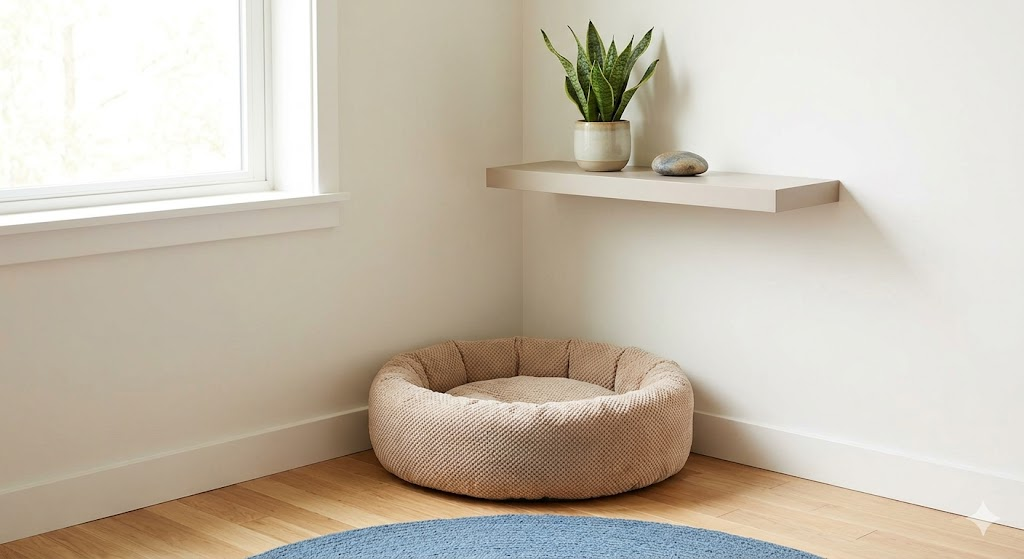
The best feng shui pet bed placement is in a solid corner where your pet can see the entrance to the room, but the door isn’t “attacking” them. This allows them to see what is coming, letting their natural instincts relax. Imagine a wild animal; they never sleep with their back to a threat. Your dog or cat is the same. Avoid placing beds directly under heavy shelves or sharp overhead beams, which create oppressive energy (Sha Chi).
Small Space Solutions: Small Spaces and Apartments
For those living in tighter quarters, finding this perfect spot can be tough. The best feng shui pet area for small spaces is often a designated corner in the living room. You can define this area with a small rug or a specific color (more on colors below). The best feng shui pet corner for apartments often uses vertical space; for cats, a cat tree in the commanding corner is ideal, allowing them to survey their entire “kingdom” securely.
The Five Elements and Pet Species: Colors and Balance
Feng Shui uses Five Elements (Wood, Fire, Earth, Metal, Water) to create balance. When optimizing companion animal spaces, we can use color and material to influence the energy of the pet zone based on the species’ natural temperament.
The Best Feng Shui Tips for Dog Owners
Dogs are naturally active, loyal, and social (very ‘Yang’ energy). To keep them calm but healthy, their areas benefit from stabilization.
- Materials: Choose sturdy, Earth-element materials like solid wood or heavy ceramics.
- Colors: The best Feng Shui colors for dog areas are Earth tones: warm beiges, soft yellows, and muted browns. These colors provide stability and groundedness.
- Location: Dogs generally thrive when their main area is a shared, grounded space, like a family room.
The Best Feng Shui Colors for Cat Areas
Cats are mysterious, independent, and sensitive to energy flows (more ‘Yin’ energy). They often need calming, safe-haven energy.
- Colors: The best feng shui colors for cat areas are soothing blues, gentle greens (Water and Wood elements), or even soft lavenders. These colors promote peace and introspection.
- Materials: Cats love cozy, softer surfaces (Yin). Provide soft, washable blankets and natural fibers like wool.
- Verticality: Cats are natural climbers. Their ‘Commanding Position’ is often high up. A high, soft perch is essential for their pet zone bagua alignment.
Pet Area Yin Yang Balance
It is vital to check your pet area yin yang balance. Too much noise, bright light, and activity (Yang) can create a frantic pet. A cold, dark, silent corner (Yin) can make a pet lethargic or depressed. You must balance the two: the best feng shui pet corner lighting is bright but adjustable daylight, perhaps shaded by a sheer curtain.
Reducing Stress and Anxiety in Pet Zones
A pet experiencing anxiety often has stagnant or disrupted energy flow in their designated space. Applying feng shui animal habitat design principles can help restore calm.
Best Feng Shui Remedies for Pet Anxiety
Anxiety often happens when a pet feels “trapped” or cannot find peace.
- Clear Stagnant Energy: If your pet is always nervous, their corner might be full of chaotic energy. Clean the area thoroughly. Stagnate energy often hides in dust.
- Sound Therapy: Introduce gentle water sounds or very soft classical music to smooth the Chi.
- Nature Elements: Bringing in life helps. The best feng shui plants for pet corners include pet-safe options like Spider Plants (Chlorophytum comosum) or Boston Ferns. These plants clean the air and absorb harsh energy, revitalizing the space.
Feng Shui Pet Sanctuary Setup
A dedicated ‘sanctuary’ is essential for anxious pets. This is a place where they are never disturbed by humans. For a dog, this might be a crate covered partially with a calm blue cloth. For a cat, it might be an enclosed cat condo with a soothing lavender spray applied to their bedding. This dedicated feng shui pet sanctuary setup gives your animal a place to retreat and self-soothe.
Harmonious Accessories: Feeding, Water, and Play
Feng Shui isn’t just about where things are; it’s about what those things do.
Best Feng Shui Pet Feeding Bowls
The feeding station represents nourishment and abundance.
- Materials: Always use high-quality, solid materials. Glass, ceramic, or heavy stainless steel are best. Avoid cheap plastic, which can scratch, harbor bacteria, and has weak energy.
- Placement: The water source is powerful. Never place the water bowl right next to a litter box (cats) or pee pads (dogs), as this creates “dirty Water” energy. The feeding station should be in a calm, fixed spot, away from foot traffic.
- Form: Round or oval shapes promote harmony and flow better than harsh rectangles.
Organizing for Energy Flow
The best feng shui pet toys for harmony are not messy ones. In Feng Shui, clutter is blocked energy (stagnant Chi). It makes the atmosphere heavy and prevents good fortune from entering.
- Storage: Keep all toys organized in a closed bin, chest, or basket. Do not have toys scattered constantly. This creates visual clutter, which stresses pets out.
- Rotation: Do not have all the toys out at once. Keep a small rotation available, and store the rest. Fresh toys mean fresh energy, which keeps your pet engaged and mentally stimulated.
- Cleanliness: Regularly clean and sanitize toys. Damaged or broken toys should be discarded; they have broken, sad energy.
Quick Tips for Feng Shui Pet Areas and Corners
| Feature | Best Practice | What to Avoid |
| Bed Placement | Solid corner, commanding view. | Directly inline with door, under heavy shelves. |
| Colors (Dogs) | Earthy tones (Beige, Warm Yellow). | Bright reds (Fire, too active). |
| Colors (Cats) | Cool tones (Blue, Green, Lavender). | Drab grays or solid blacks (too Yin). |
| Feeding Station | High-quality ceramic/glass/steel. | Plastic bowls, right next to litter/waste. |
| Toys | Clean, rotated, and stored in a closed bin. | Constant floor clutter, broken or dirty toys. |
| Small Spaces | Corner of the living room defined by a rug or wall color. | Putting pet areas in busy hallways or the kitchen. |
By following these simple guidelines, you can ensure that pet space energy flow feng shui works for you and your animal companion. You will notice that as your pet becomes calmer and happier, the energy of your entire home will shift for the better.