
Creating a high-performance workspace in a compact urban apartment requires more than just a surface and a chair. It requires the intentional manipulation of Sheng Chi (positive energy). When applying feng shui office desk placement rules, the goal is to position yourself in a way that minimizes stress and maximizes your personal authority.
As a consultant with years of experience navigating the tight corners of New York and London flats, I’ve seen how a misplaced desk can lead to burnout. By following office desk feng shui positioning guidelines, you can transform a cramped bedroom nook into a powerhouse of productivity. This guide applies the wisdom of experts like Lillian Too to modern, small-scale living, ensuring your desk becomes a magnet for career advancement rather than a source of stagnant energy.
The Command Position: The Gold Standard of Desk Orientation
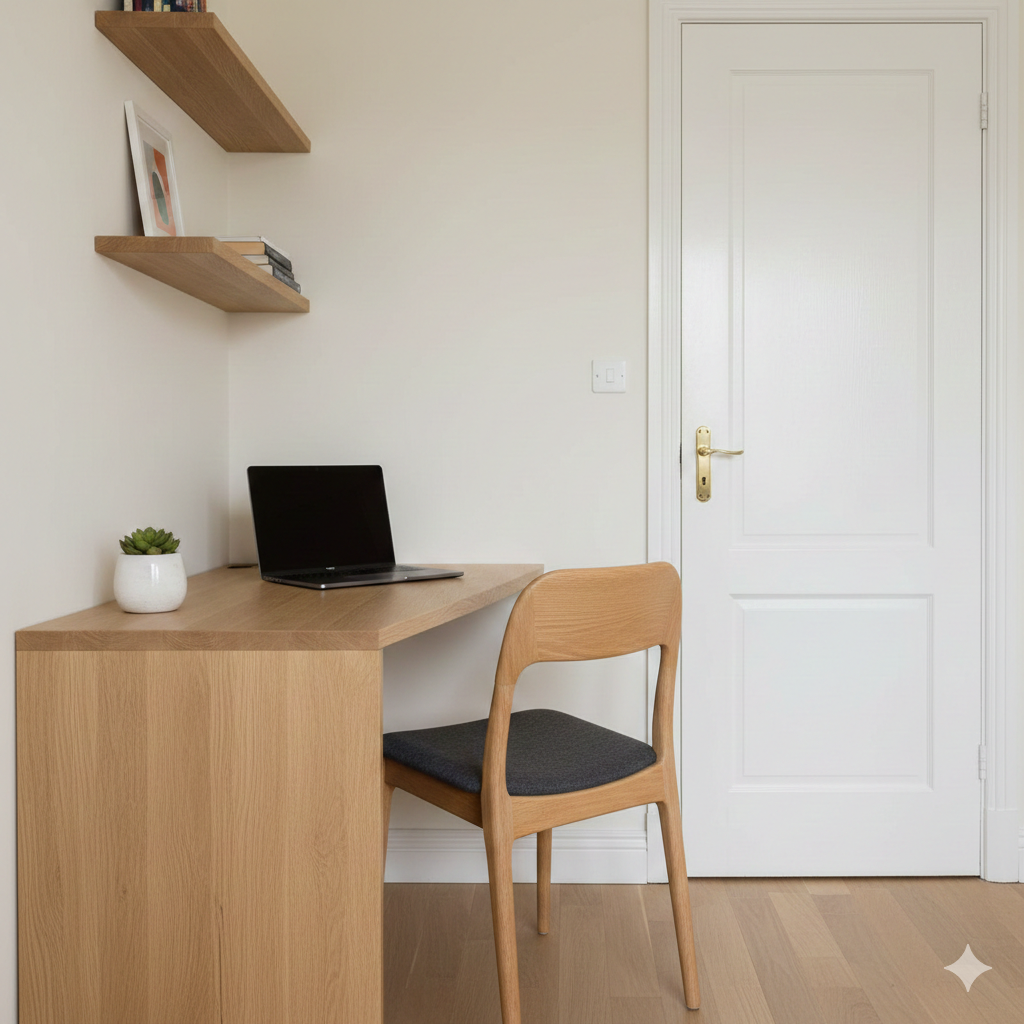
The most critical of all feng shui workspace arrangement principles is the “Command Position.” In Feng Shui, being in command means you can see the entrance to the room without being directly in line with it.
Why the Command Position Matters
When your back is to the door, your subconscious remains in a “startle” state, anticipating interruptions. This creates a subtle, constant drain on your nervous system. By placing your desk so you have a clear view of the door and a solid wall behind you, you establish psychological security.
- Small Space Example: In a studio apartment where the “office” is a corner of the bedroom, place the desk diagonal to the door. If space is too tight to face the door, place a small, high-quality mirror on your monitor or wall so you can see the reflection of the entrance behind you.
Navigating the Window: Desk Orientation Feng Shui Tips
While a view is pleasant, best feng shui rules for desk facing window suggest caution. Glaring sunlight and the “pull” of outside activity can scatter your focus, leading to Sha Chi (disturbing energy).
Balancing Light and Focus
If your desk must face a window, you are essentially watching your energy “leak” out of the room. This is particularly challenging for creative professionals who need sustained internal focus.
- The Remedy: Use light-filtering linen curtains or place a sturdy plant, like a Money Tree (Pachira aquatica), on the windowsill. This creates a “green buffer” that keeps your focus within the room while still allowing natural light to nourish your Yang energy.
Applying the Bagua Map to Your Desktop
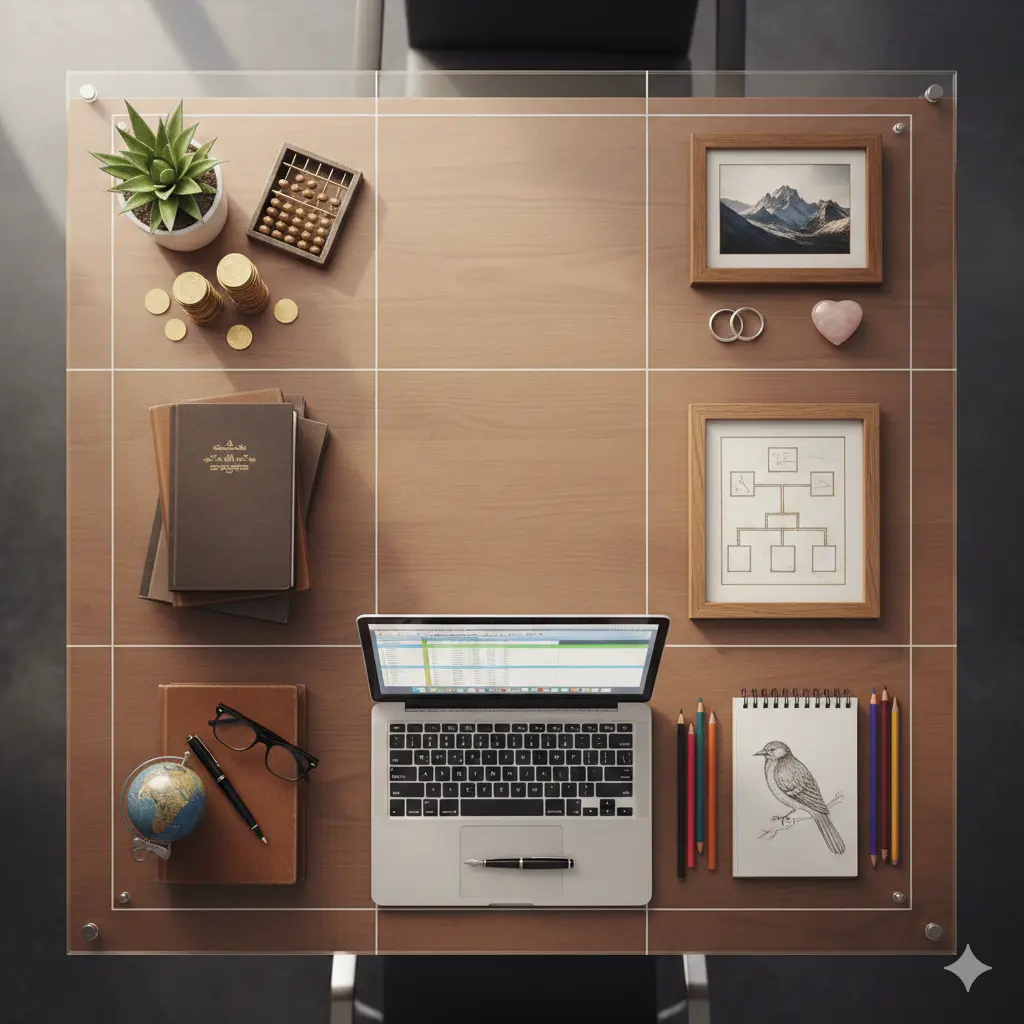
The Bagua is an energy map used to evaluate a space. In small home offices, you can apply the Bagua directly to your desktop surface to enhance specific life areas.
Mapping Your Success
Divide your desk into a 3×3 grid.
- Top Left (Wealth): Place a healthy plant or a purple accessory to trigger abundance.
- Top Right (Relationships): Keep a pair of rose quartz crystals or a photo of a loved one.
- Center (Health): Keep this area clear of clutter to allow energy to circulate.
- Bottom Center (Career): This is where your keyboard or laptop sits. Ensure it is clean and functioning perfectly.
Chi energy flow in office desk setup depends on these micro-adjustments. An overcrowded Wealth corner can lead to “cluttered” finances, while a dusty Career center can stall promotions.
Balancing the Five Elements for Productivity
To achieve yin yang balance in desk positioning, you must integrate the Five Elements: Wood, Fire, Earth, Metal, and Water. In small spaces, we often have too much “Metal” (electronics) and not enough “Earth” (stability).
Five-Element Strategies
- Wood: Represents growth. Add a small succulent or use a wooden desk.
- Fire: Represents fame and inspiration. Use a red notebook or a small desk lamp.
- Earth: Represents grounding. Use a ceramic mug or a stone paperweight.
- Metal: Represents precision. This is usually covered by your computer or metal desk legs.
- Water: Represents flow and networking. A black mousepad or a small glass of fresh water (changed daily) suffices.
Best feng shui desk placement for career advancement often relies on strengthening the “Earth” element behind your seat to provide the “Mountain” support needed for executive presence.
Furniture Arrangement in Compact Rooms
When dealing with feng shui office furniture placement in a bedroom or small den, “visual weight” is vital. Heavy, dark furniture can overwhelm a small room, causing the Chi to feel stagnant and heavy.
Avoiding the “Casket” Position
Avoid placing your desk directly facing a wall with your back to the bed. This creates a conflict between Yin (rest) and Yang (work) energies. If you must work in your bedroom, use a folding screen or a bookshelf to physically and energetically separate the two zones.
- Apartment Example: Use a white, “floating” desk that attaches to the wall. This keeps the floor space clear, allowing Chi to flow underneath the furniture, preventing the room from feeling “stuck.”
Best Feng Shui Rules for Avoiding Distractions
A common mistake in feng shui office layout for productivity is placing the desk between two doors or in a direct line between a window and a door. This creates a “wind tunnel” effect where energy moves too fast, making it impossible to concentrate.
Creating an Energy Anchor
If you are stuck in a high-traffic path, use a heavy rug under your desk. This “anchors” your space and slows down the rushing energy. For those in a shared workspace, use a small desk partition or even a row of small plants to define your energetic boundary.
(A cozy home office nook with a textured area rug under the desk and a small partition screen separating the workspace from the rest of the room.)

Lighting and Storage: Clearing the Path for Chi
Clutter is the ultimate enemy of chi energy flow in office desk setup. In small spaces, storage must be vertical and closed. Open shelving often creates “poison arrows”—sharp angles that “cut” the energy directed at you.
Lighting for Vitality
Poor lighting leads to Yin (depressive) energy. For a north-facing room, which naturally lacks sunlight, use “Full Spectrum” bulbs that mimic daylight. This supports the Fire element and keeps your mood elevated during long work hours.
- Pro Tip: According to the International Feng Shui Guild, your desk lamp should be placed on the opposite side of your dominant hand to reduce shadows and eye strain, promoting a smoother flow of ideas.
Summary of Key Takeaways
- Priority One: Always aim for the Command Position to reduce stress.
- Back Support: Ensure you have a solid wall or a high-back chair behind you for stability.
- Element Balance: Offset the “Metal” of electronics with “Wood” (plants) and “Earth” (ceramics).
- The Mirror Cure: Use mirrors to see behind you if your back must face the door.
- The “Mountain” Effect: Keep the area behind your chair clear of clutter to support career growth.
- Zoning: Use physical dividers to separate work Yang from sleep Yin in bedroom offices.
Frequently Asked Questions
What is the best feng shui desk placement for a north-facing room?
In a north-facing room (the Water element), focus on adding “Wood” elements like plants and “Fire” elements like bright lighting to prevent the space from feeling too cold or sluggish.
How do I apply feng shui desk rules for a shared workspace?
Define your territory. Use a dedicated desk mat and a small personal plant to create an energetic “bubble” that separates your Chi from your coworkers’ energy.
What is the best feng shui desk position for the wealth corner?
The wealth corner of your entire room is the far-left corner from the entrance. Placing your desk here, or placing a symbol of wealth (like a healthy Jade plant) on the top-left corner of your desk, can stimulate financial growth.
Can I have my desk facing a wall?
It is not ideal as it represents “obstacles.” If you must face a wall, hang a piece of art depicting a distant horizon or a “window to nature” to visually and energetically expand your field of vision.
Thank You for Visiting Feng Shui Essentials
We appreciate you taking the time to explore Feng Shui Essentials. Our goal is to provide clear, practical guidance rooted in authentic Feng Shui principles to help you create balanced, harmonious spaces.
Your feedback helps us improve the quality, clarity, and usefulness of our content. If you have suggestions, questions, or topics you would like us to cover, we welcome your input.