
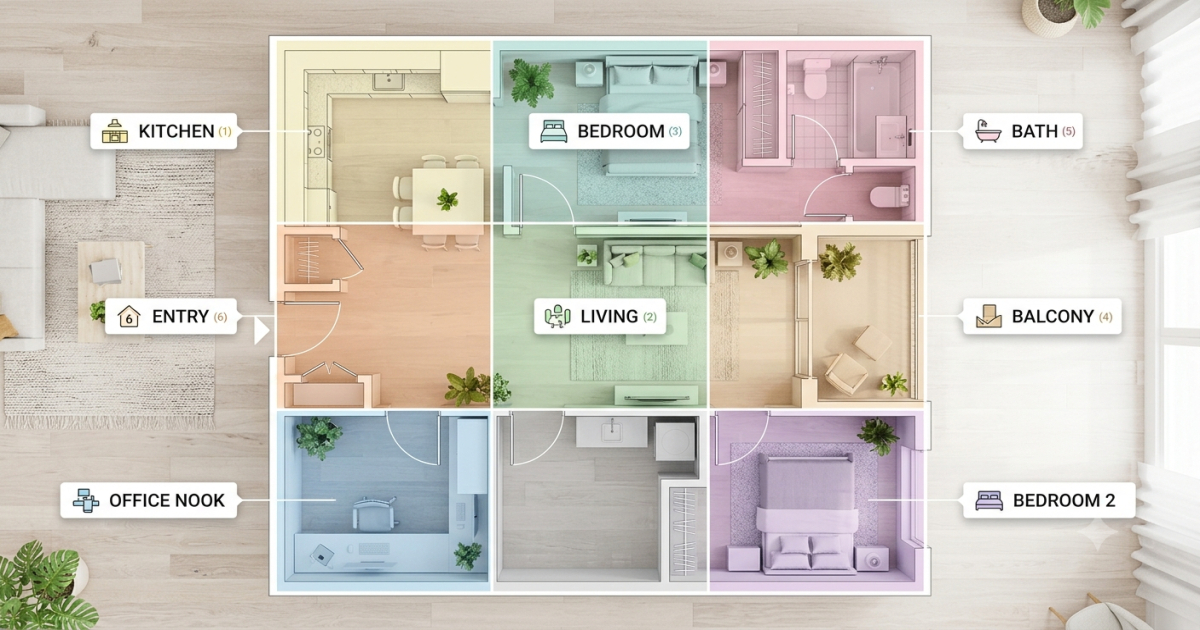
I moved into my first L-shaped studio three years ago. Every bagua map tutorial I found online showed a perfect square. Mine looked nothing like that. So I had to figure this out the hard way and this is the version I wish someone had handed me on day one.
What Is a Bagua Map, Really?
A bagua map is a nine-section grid you lay over your home. Each of the nine sections is tied to an area of life things like career, relationships, health, and wealth. The idea, borrowed from feng shui, is that how you arrange each section affects the energy, or “chi,” in that part of your life.
You don’t need to believe in energy flow to get value out of this. At minimum, it’s a structured way to think about which corner of your home gets ignored (usually the one behind the couch) and give it some intention.
Compass School vs. BTB And Which One Should You Use?
Here’s the thing almost nobody tells you: there are two different schools of feng shui, and they don’t agree on how to lay the grid.
- Compass School uses true directions north, south, east, west measured with an actual compass.
- BTB (Black Sect Tantric Buddhist) uses your front door as the starting point, no compass needed.
For apartments, I’d lean BTB. Compass direction gets messy fast when your building isn’t aligned to true north, which most aren’t. Starting from your own front door is simpler and works in basically any layout.
Step 1: Get Your Floor Plan Right
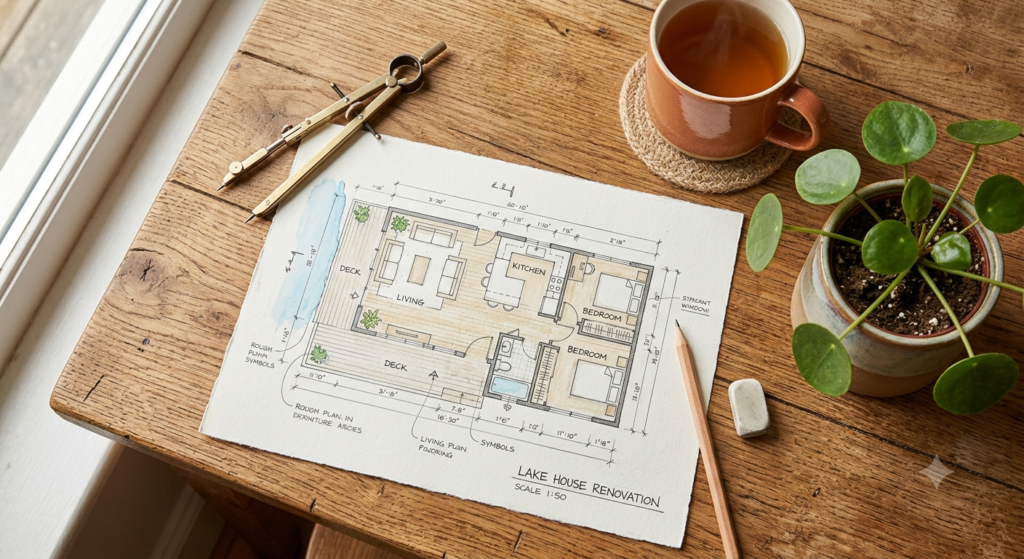
Sketch your apartment from above. It doesn’t need to be fancy graph paper or a simple app works. Mark every door and window. This sketch is what you’ll lay the grid on top of, so get the proportions roughly right.
Step 2: Find Your “Front”
Stand at your main entrance, facing into the apartment. That wall the one with your front door is your “front” for BTB purposes. Everything else gets mapped relative to that.
Step 3: Overlay the 9 Bagua Areas
Divide your floor plan into a 3×3 grid, starting from that front wall. The diagram below shows how the nine areas sit in a square layout front door at the bottom, career straight ahead:
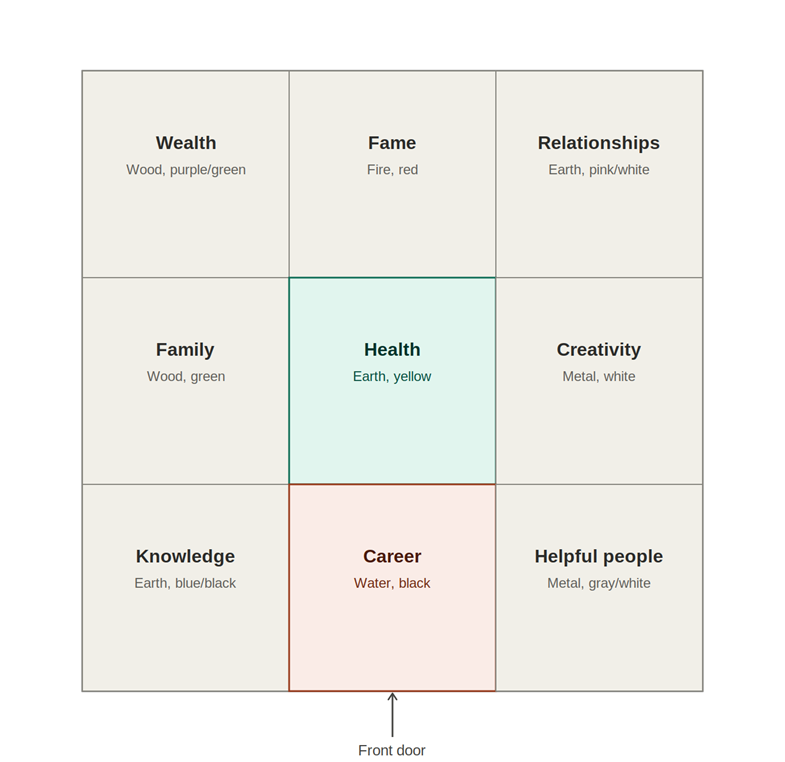
Figure 1: Bagua grid overlaid on a square apartment floor plan.
Here’s the same breakdown in table form:
| Area | Life aspect | Element | Color |
| Back-left | Wealth | Wood | Purple, green |
| Back-center | Fame / reputation | Fire | Red |
| Back-right | Relationships | Earth | Pink, white |
| Middle-left | Family | Wood | Green |
| Center | Health / balance | Earth | Yellow |
| Middle-right | Creativity / children | Metal | White |
| Front-left | Knowledge | Earth | Blue, black |
| Front-center | Career | Water | Black |
| Front-right | Helpful people / travel | Metal | Gray, white |
Once the grid is on your sketch, walk your actual apartment and match each square to a real spot.
What If Your Apartment Is L-Shaped or Has a Missing Corner?

This is the part every other guide skips. If your floor plan is L-shaped, one section of that 3×3 grid will fall outside your actual walls it’s “missing.” That doesn’t mean you’re stuck. Two fixes work well:
- Place a mirror on the wall where the missing area would be, angled to visually “extend” the room into that direction.
- Anchor the area symbolically with an object that represents it a small plant for the wealth corner, a red accent for the fame corner placed as close to that missing zone as your actual walls allow.
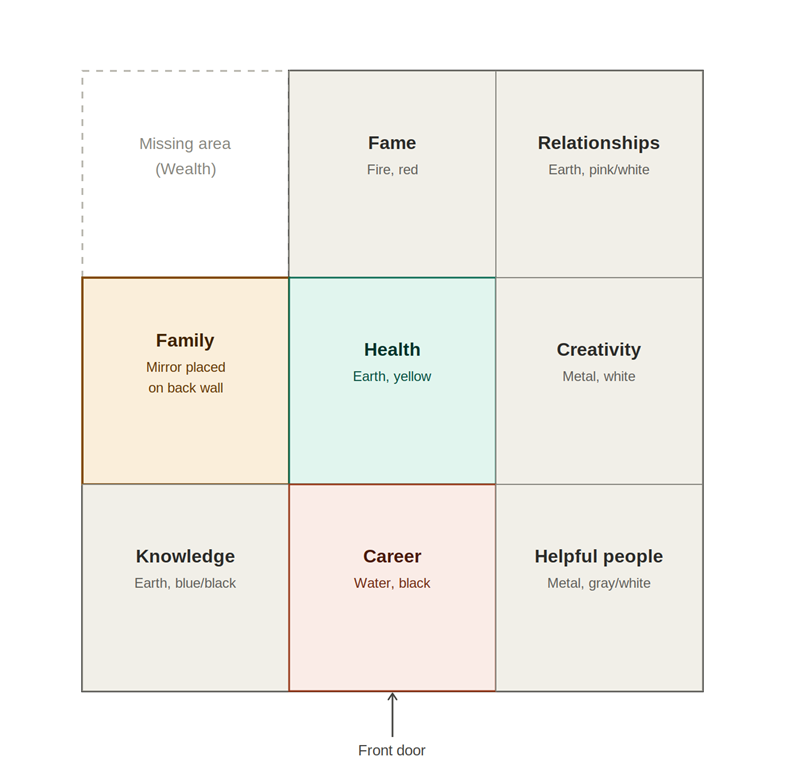
Figure 2: The same grid on an L-shaped apartment. The wealth area falls outside the walls, so a mirror on the family-area wall visually completes it.
I used a round mirror in my missing wealth corner. Small thing, but it gave that dead space a job.
What About a Rectangular Apartment?
Rectangular layouts are actually the easiest case you’re not missing any bagua areas, but the grid stretches unevenly across the space. If your apartment is long and narrow, one column of the 3×3 grid (say, wealth–family–knowledge) might cover a tiny sliver by the entry, while the opposite column stretches across your entire living room. That’s fine the proportion of floor space each area gets doesn’t need to be equal. Just divide the long dimension into three even bands and the short dimension into three even bands, the same way you would for a square room, and let the grid lines fall where they fall.
Applying the Bagua Map in a Studio Apartment
In a studio, several bagua areas overlap into the same physical zone your sleeping area might sit in both the “relationships” and “helpful people” sections. That’s normal. Layer the intentions: if your bed sits in a shared zone, pick furniture and colors that support both meanings instead of picking just one.
Common Mistakes Renters Make
- Using the compass method in a building that isn’t aligned to true north
- Ignoring the front door and starting the grid from a random wall instead
- Trying to “fix” every area at once start with one or two that matter most to you right now
Related Reading
Where to Go From Here
Once your bagua grid is mapped, the real work is applying it room by room. A few guides that build directly on this:
- Living in a small studio? Feng Shui Tips for Studio Apartment Layout covers how to handle overlapping bagua zones when your bed, desk, and living space share one room.
- Renting? Feng Shui Tips for Renters has workarounds for fixes you can’t make permanent no drilling, no repainting.
- Not sure where to put your bed or desk? Feng Shui Power Position Rules for Every Room picks up exactly where the career and knowledge corners leave off.
- Small bedroom specifically? Feng Shui Tips for Small Bedroom Arrangement walks through furniture placement inside a cramped relationships/family corner.
FAQ
What is a bagua map and how do I use it?
It’s a nine-section energy grid you overlay on your floor plan, starting from your front door, to guide furniture and color choices in each life area.
How do I apply the bagua map to an irregular or L-shaped apartment?
Overlay the standard 3×3 grid anyway. Any section that falls outside your actual walls is a “missing area” fix it with a mirror or a symbolic object instead of ignoring it.
Which wall counts as the “front” of the apartment for feng shui?
In the BTB method, it’s the wall containing your main entrance door, viewed from where you stand as you walk in.
What if part of my bagua map is missing?
Use a mirror to visually extend the room into that direction, or place an object symbolizing that area’s meaning as close to the missing zone as possible.
Do I use the compass direction or the front-door method?
For apartments, the front-door (BTB) method is usually more practical, since most buildings aren’t aligned to true compass directions.
Can feng shui work in a studio or one-room apartment?
Yes, expect some bagua areas to overlap in the same physical space, and choose decor that supports both meanings in that shared zone.
Final Thoughts
None of this requires knocking down walls or hiring anyone. Grab a piece of paper, find your front door, and start with just one corner. Mine started with a mirror in an empty triangle of unused space. Yours can start just as small.
Written by Archer, 7 years apartment renter and DIY feng shui practitioner. I applied bagua mapping across multiple rental layouts, including irregular studios, and writes about practical, renter-friendly home design at fengshuiessentials.
1 thought on “Bagua Map for Apartments: How to Apply It to Any Floor Plan”