

Quick Answer:
To create a high-vibe Feng Shui study nook, place your desk in the “Command Position” (facing the door but not directly in line with it) with a solid wall behind you. Use warm, layered lighting to reduce eye strain, incorporate “Wood” element colors like soft greens for growth, and clear physical clutter to unlock mental clarity.
Table of Contents
My Journey from Chaos to Calm: A Feng Shui Story
I used to think “Feng Shui” was just a fancy word for moving furniture until I spent three months trying to write a novel in a cramped corner of my bedroom. My desk faced a blank, grey wall. Behind me, the door swung open and shut, constantly making me jump. I felt drained, uninspired, and—frankly—blocked.
It wasn’t until I applied the principles of a Feng Shui study nook and reading area that things shifted. I didn’t just move my desk; I changed the energy of my entire day. I realized that our physical space is a mirror of our mental state. When I finally dragged my heavy oak desk into the “Command Position,” my word count doubled.
In this guide, I’m sharing the hands-on failures (like the time I put too many water features in my office and felt like I was drowning in tasks) and the professional “wins” I’ve gathered from years of helping others design their dream homes.
The Power of the Command Position
The most common mistake people make in a feng shui study area is the “hidden desk” syndrome. We tend to tuck desks into dark corners or face them against walls to “save space.” In Feng Shui, this is a productivity killer.
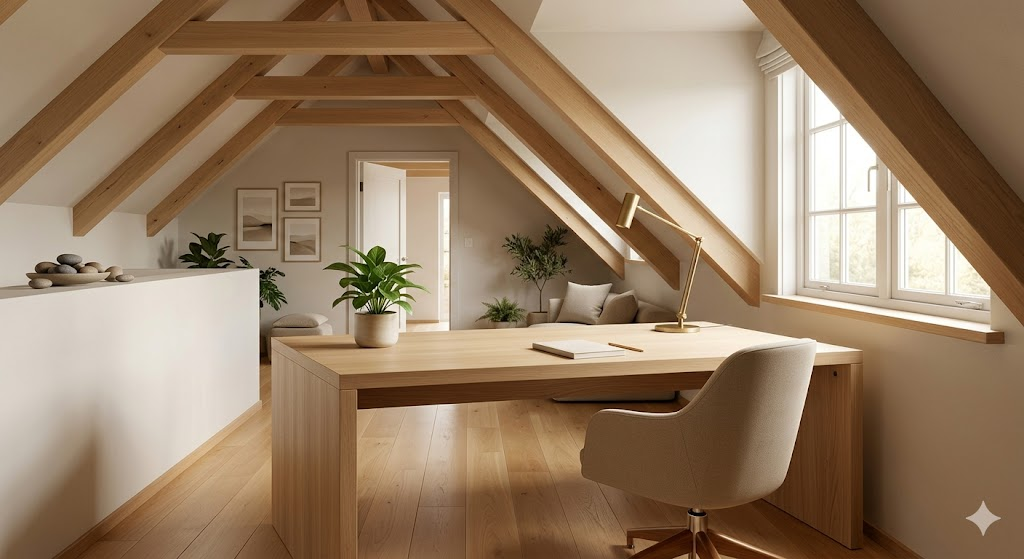
The Command Position is the golden rule of feng shui desk placement. You should be able to see the entrance to the room without being directly in line with it. This setup reduces your “startle response,” allowing your nervous system to relax so your brain can focus on deep work.
Pro Tip: If you absolutely must face a wall because of a small apartment layout, hang a small, stylish mirror on that wall. This allows you to “see” behind you metaphorically, curing the subconscious anxiety of someone sneaking up on you.
Designing the Best Feng Shui Study Nook for Focus
When you are looking for the best feng shui study nook for focus, you need to look at the Bagua map—the energy map of your home. The North (Career) and Northeast (Knowledge/Wisdom) sectors are the prime real estate for your feng shui study nook design.
I once worked with a client who was struggling with her bar exam. Her study area was in the South sector (Fame/Fire). She was “burning out” literally. We moved her to the Northeast corner, introduced “Earth” elements like crystals and clay pots, and used a soft yellow rug. The change was instant. She felt grounded instead of scattered.
For students, the feng shui study room layout should emphasize the Wood element. Wood represents growth, vitality, and upward movement. Think of a tall, healthy tree. You can bring this in through:
- Live plants (avoid cacti; their “spiky” energy is too aggressive for focus).
- Vertical lines in wallpaper or shelving.
- Green and brown accents.
Small Space Solutions: Best Feng Shui Study Nook for Small Apartments
Living in a studio or a small flat doesn’t mean you have to sacrifice your Chi. The best feng shui study nook for small apartments often involves “zoning.”
In my first tiny apartment, my “office” was three feet away from my bed. I felt like I was sleeping at work. To fix this, I used a folding screen. When work ended, I closed the screen. This physical boundary creates a mental boundary.
Feng shui study nook tips for small spaces:
- Use “Floating” Desks: They keep the floor visible, which makes the energy feel like it’s flowing rather than being “stuck” under heavy furniture.
- Light is Life: Use full-spectrum bulbs to mimic natural sunlight, especially if your nook is in a closet or hallway.
- Color Psychology: Use light blues or teals to keep the space feeling airy and expansive.
The Best Feng Shui Reading Nook for Kids: Cultivating a Love for Learning
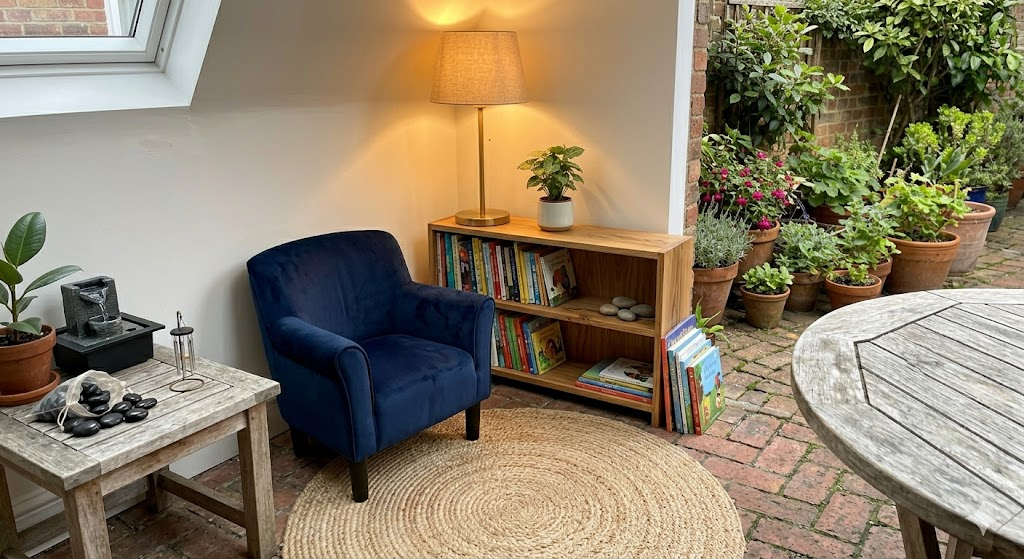
If you want to encourage a child’s imagination, the best feng shui reading nook for kids should be a “womb-like” space. Children feel safest when they are slightly enclosed but not trapped.
In my experience, a bean bag or a soft armchair tucked into a corner (the “Wealth” or “Knowledge” corner of their bedroom) works wonders. Avoid high, heavy bookshelves directly over their heads, as this creates “oppressive energy” that can make a child feel anxious or sleepy when they should be reading.
Instead, use lower shelves where they can see the covers of their books. This invites them into the story. A soft, warm lamp and a plush rug create a “Yin” (quiet/receptive) energy that balances the “Yang” (active) energy of play.
The Writer’s Sanctuary: Best Feng Shui Study Nook for Writers
Writers need a specific kind of “Chi.” You need the flow of water (communication) mixed with the stability of mountains (structure). The best feng shui study nook for writers often features a balance of “Earth” and “Water.”
I personally keep a small, quiet water fountain on the far left side of my desk (the Wealth area). The sound of moving water keeps my thoughts fluid. However, be careful! Too much “Water” energy can lead to emotional overwhelm. If you find yourself crying over a draft instead of writing it, turn off the fountain and add a “Mountain”—a heavy stone paperweight or a picture of a majestic range.
Feng shui study nook guide for writers:
- Clear the View: Don’t stare directly out a window if you get distracted. Place the desk so the window is to your side. You get the light without the “leaking” of your focus.
- Scent matters: Peppermint or lemon essential oils boost cognitive function and keep the air “vibrant.”
Finding Stillness: Best Feng Shui Study Nook for Meditation and Relaxation
Sometimes, your study nook needs to double as a sanctuary. The best feng shui study nook for meditation and the best feng shui reading nook for relaxation rely on Yin energy.
In these spaces, you want to move away from the “active” colors like red or bright orange. Instead, embrace:
- Lavender and Soft Grey: For peace and introspection.
- Natural Textures: Linen, cotton, and wood connect you to the earth.
- The “Power of Three”: Grouping items in threes (like three stones or three candles) creates a sense of harmony.
When I designed a feng shui home library for a client who practiced daily mindfulness, we replaced a metal desk with a low, wooden “tansu” style table. By sitting closer to the floor, she felt more “grounded” (literally and figuratively).
Professional Troubleshooting: Why Your Space Might Be Failing You
If you’ve moved your furniture and you still feel stuck, look for these three “energy leakers” I see all the time:
- The “Back to the Door” Trap: As mentioned, this is the #1 mistake. If you can’t move the desk, put a bell on the door. The sound will alert you to someone entering, which helps your subconscious feel less “exposed.”
- Clutter “Dead Zones”: Look at your “Knowledge” corner (the front-left area of your room relative to the entrance). Is there a pile of old mail there? That’s stagnant energy blocking your ability to learn new things.
- Sharp Edges: In Feng Shui, we call these “Poison Arrows.” If the corner of a square bookshelf is pointing directly at your head while you sit, it can cause headaches. Soften it with a trailing plant like Pothos.
Best Feng Shui Study Nook for Home Office: Balancing Career and Home
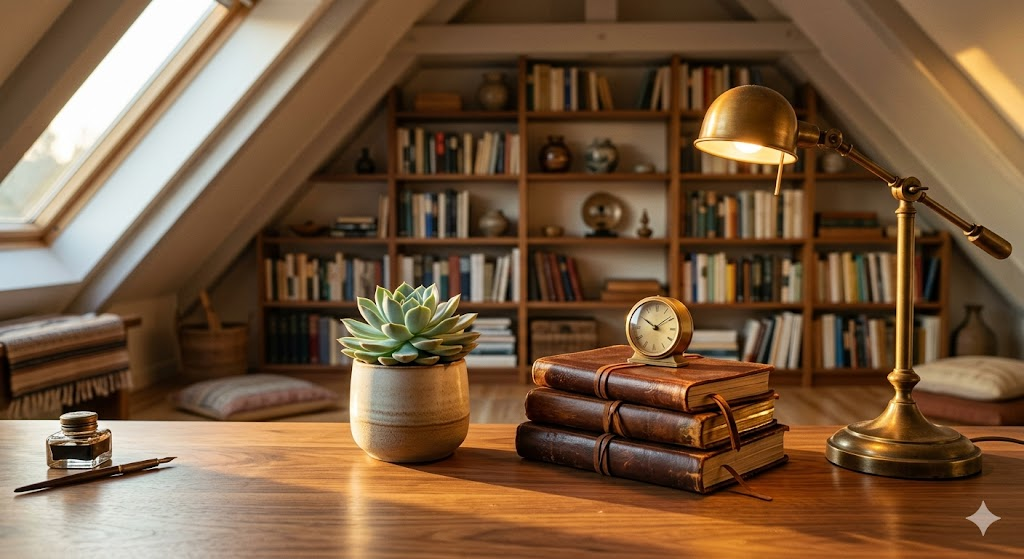
The best feng shui study nook for home office users is one that can be “turned off.” If you work from home, the “energy” of your job can easily bleed into your family life.
If your office is in your bedroom, you are likely either not sleeping well or not working well. The energies are incompatible. If you have no choice, use a “Cure.” Place a piece of Black Tourmaline between your desk and your bed to “absorb” the work stress before it hits your sleeping space.
Essential Layout Tips:
- The “Solid Back”: Your chair should have a high back. This represents support from “mentors” or “benefactors” in your career.
- The Power of Art: Hang a picture of a mountain behind you for stability, and a picture of an open field or a path in front of you to represent a bright future.
Creating the Ultimate Feng Shui Home Library
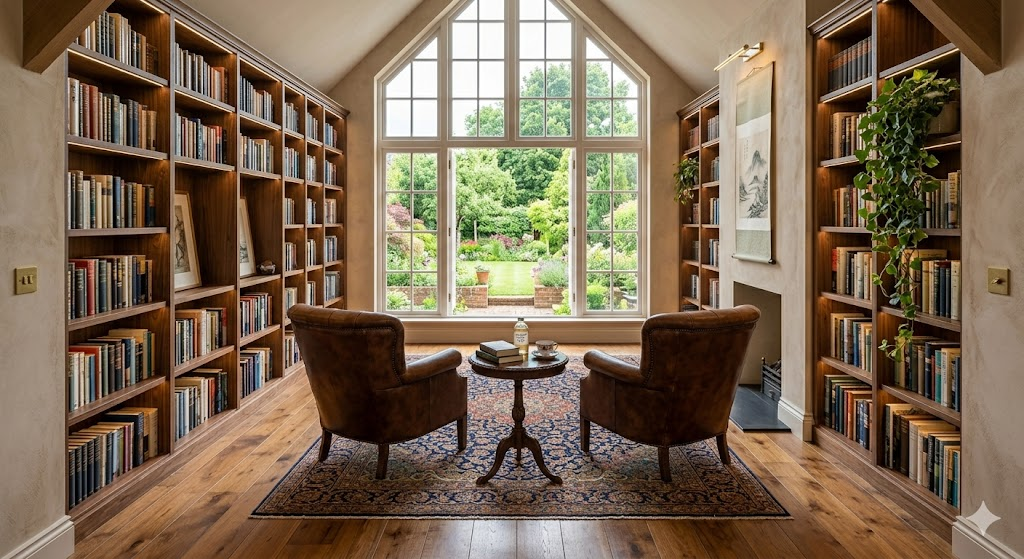
A feng shui home library is more than just a place for books; it’s a repository of your personal growth. To keep this space from feeling heavy or “dusty”:
- Air Flow: Open windows daily. Stagnant air equals stagnant thoughts.
- The “Space Clearing” Ritual: Once a month, ring a bell or use a smudge stick (like cedar or palo santo) to clear the “mental dust” from the room.
- Organization: Don’t just cram books in. Leave about 10% of every shelf empty. This “white space” allows new ideas and opportunities to enter your life.
Summary Checklist for Your Nook
| Feature | Feng Shui Goal | Recommended Action |
|---|---|---|
| Desk Position | Command | Face the door (offset). |
| Wall Behind You | Support | Use a solid wall or high-back chair. |
| Lighting | Clarity | Use layered, warm lighting. |
| Plants | Growth | Add a money tree or peace lily. |
| Cables/Wires | Flow | Hide them! Tangled wires = tangled thoughts. |
Final Thoughts: Trust Your Intuition
At the end of the day, Feng Shui is about how you feel in the space. If you follow all the rules but the room feels cold or “not you,” then it isn’t good Feng Shui.
I’ve seen “perfectly” designed rooms that felt like museums—sterile and lifeless. The best feng shui study nook tips I can give you is to fill your space with things that spark joy and curiosity.
Frequently Asked Questions (FAQs)
Q: Can I have a mirror in my study nook?
A: Yes, but don’t place it so you see your own reflection while working. This can be distracting and “double” your workload. Place it to reflect a beautiful view or to see the door behind you.
Q: What color is best for a student’s study nook?
A: Soft greens and light yellows are best. Green promotes growth and new beginnings, while yellow stimulates the intellect and keeps the mood “sunny.”
Q: Is it bad to have my desk under a window?
A: It’s not “bad,” but it can cause your energy to “leak” out. If you love the view, just make sure you have a solid wall behind you to keep you grounded.
Q: How do I fix a study nook that feels “heavy”?
A: Clear the clutter! Specifically, check under the desk and on top of shelves. Use a salt lamp to ionize the air and “lighten” the vibrational frequency of the room.
For more tips on optimizing your home environment or to find specific furniture recommendations, you can search for the latest design trends on Google.
Thank You For Visiting Our Website https://fengshuiessentials.online/
1 thought on “Feng Shui Study Nook and Reading Area Guidelines”