
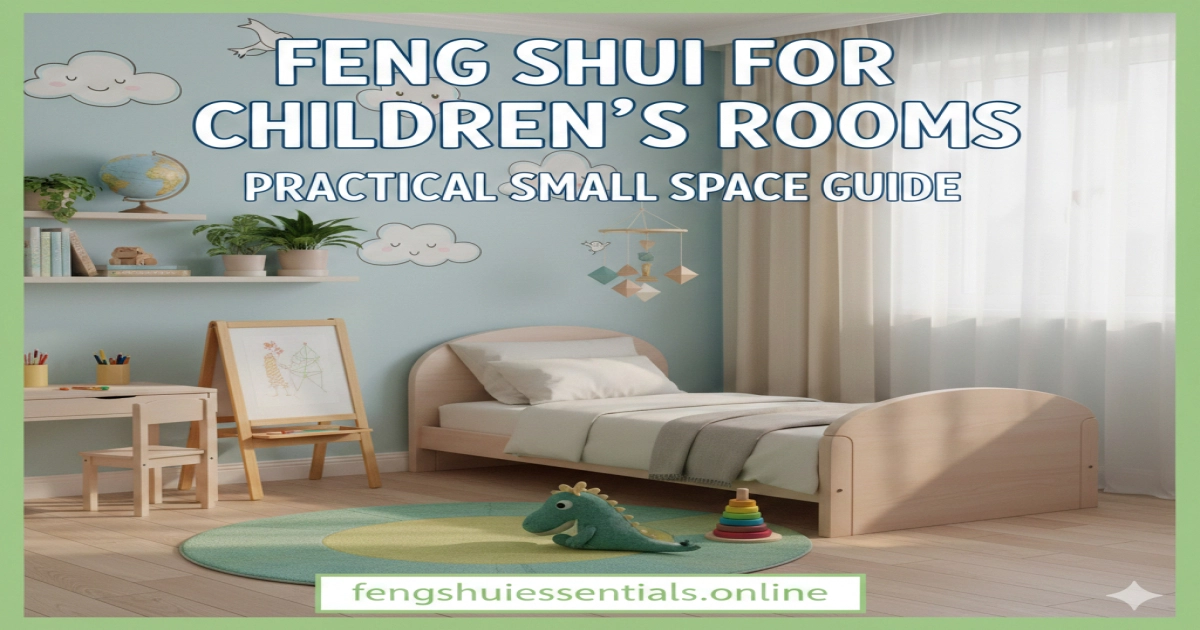
Setting up a calm, happy bedroom for a child in a modern city apartment often feels like a giant puzzle. When square footage is tight, the best spot for a bed usually blocks the closet door, and toys seem to double overnight.
Applying practical Feng Shui in a child’s bedroom isn’t about buying expensive decor or doing costly renovations. It is about making simple, intentional choices that help your child sleep better, feel safe, and focus on play or schoolwork.
In over 12 years of consulting for urban families in compact apartment spaces, I have seen firsthand how a child’s room acts as a blueprint for their daily emotional energy. By balancing yin (restful energy) and yang (active energy) and using the five natural elements, you can transform even a tiny room into a comfortable sanctuary.
Optimal Bed Placement for Security and Better Sleep
The bed is the most important piece of furniture in a child’s room. In classical Form School Feng Shui, the bed represents your child’s physical health, emotional well-being, and sense of self.
The Command Position
Place the bed in the Command Position. This means your child can easily see the main bedroom door while lying in bed, but their bed is not directly lined up with the doorway.
Seeing the door provides a deep psychological sense of safety. It calms the body’s nervous system, lowers stress hormones, and promotes deeper sleep.
- Avoid the “Coffin Position”: Never set up the bed directly facing the door with your child’s feet pointing straight out into the hallway. This layout allows fast, harsh energy to rush over the body, often causing tossing, turning, and night wakeups.
- Use a Solid Wall: Always push the headboard flat against a solid wall. Avoid placing the bed under a window. Sleeping without a solid wall behind the head can make kids feel insecure or unsupported.
- Real Apartment Solution: In a tight $10\times 10$ foot bedroom where placing the bed under a window is unavoidable, use a thick, solid wood headboard and hang heavy blackout curtains to “seal” the energy at night. If you are working with unusual floor plans, review our guide on feng shui layout ideas for L-shaped rooms for more spatial fixes.
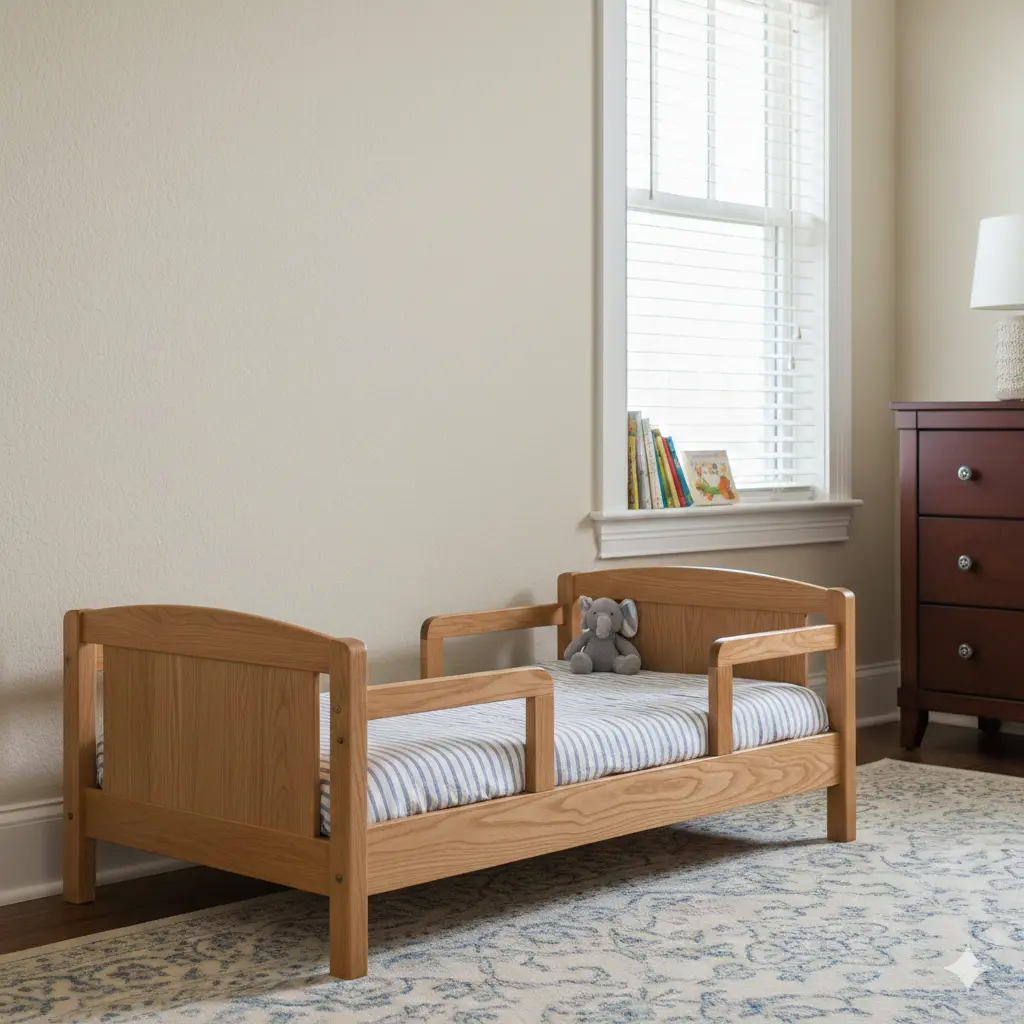
Best Bed Placement for Small Apartment Layouts
When floor space is limited, many parents turn to bunk beds or lofts. While these save space, classical experts like Lillian Too note that elevated beds require specific adjustments to keep energy flowing smoothly.
Bunk Beds and Lofts
Bunk beds can compress energy over the lower bed, making the child sleeping below feel crowded. Meanwhile, the child on the top bunk can feel ungrounded or unsupported.
- Lower Bunk Fix: Paint the underside of the top bunk a light, airy color (like pale sky blue) to visually lift the overhead pressure for the child below.
- Top Bunk Fix: Make sure the top bunk has a sturdy, solid guardrail to give the top sleeper a strong sense of Earth element stability.
- General Small Room Setup: For more layout strategy in tight quarters, see our general guide on feng shui tips for small bedroom arrangement.
Neutralizing “Poison Arrows”
In small bedrooms, sharp corners from wardrobes, nightstands, or floating desks often point straight toward the sleeping area. These hard angles act as “poison arrows” that cut the room’s energy field (chi).
- The Fix: Soften hard edges with fabric guards, or turn furniture slightly so sharp corners point toward empty wall space instead of the bed.
Balancing the Five Elements in a Child’s Space
To create a balanced environment, use the Five Elements framework: Wood, Fire, Earth, Metal, and Water. Each element brings a distinct quality to the room:
| Element | Energy Attribute | Real-World Application for Kids |
| Wood | Growth & Vitality | Green accents, solid wood furniture, tall bookcases. Check our wood element feng shui interiors guide for ideas. |
| Fire | Passion & Action | Nightlights, warm orange accents, triangle art prints. Learn more with our fire element tips for balanced home energy. |
| Earth | Stability & Calm | Square rugs, terracotta clay pots, yellow and tan tones. |
| Metal | Focus & Clarity | Round picture frames, soft white or grey paints, metallic lamps. See our tips on metal element uses in modern feng shui. |
| Water | Wisdom & Flow | Soft wavy patterns, blue tones, small accent pieces. Read about water elements in small spaces. |
If a bedroom feels hyperactive or “too loud” (excess Fire/Yang energy), add Earth elements—such as a thick, tan floor covering from our rug and flooring choices feng shui guide—to ground the energy.
Choosing the Right Colors for Kids’ Rooms
Color alters mood faster than almost any other design choice. Avoid bright, neon shades in sleeping areas because high-energy primary colors stimulate hyperactivity.
- Calming Blues and Soft Greens: Excellent choices for promoting calm, restorative sleep, and natural growth.
- Muted Yellows and Warm Tans: Great for building mental focus and ground stability in study areas.
- Avoid Wall-to-Wall Stark White: While popular in modern apartment design, pure white walls can feel cold or clinical. Children thrive in spaces with gentle warmth.
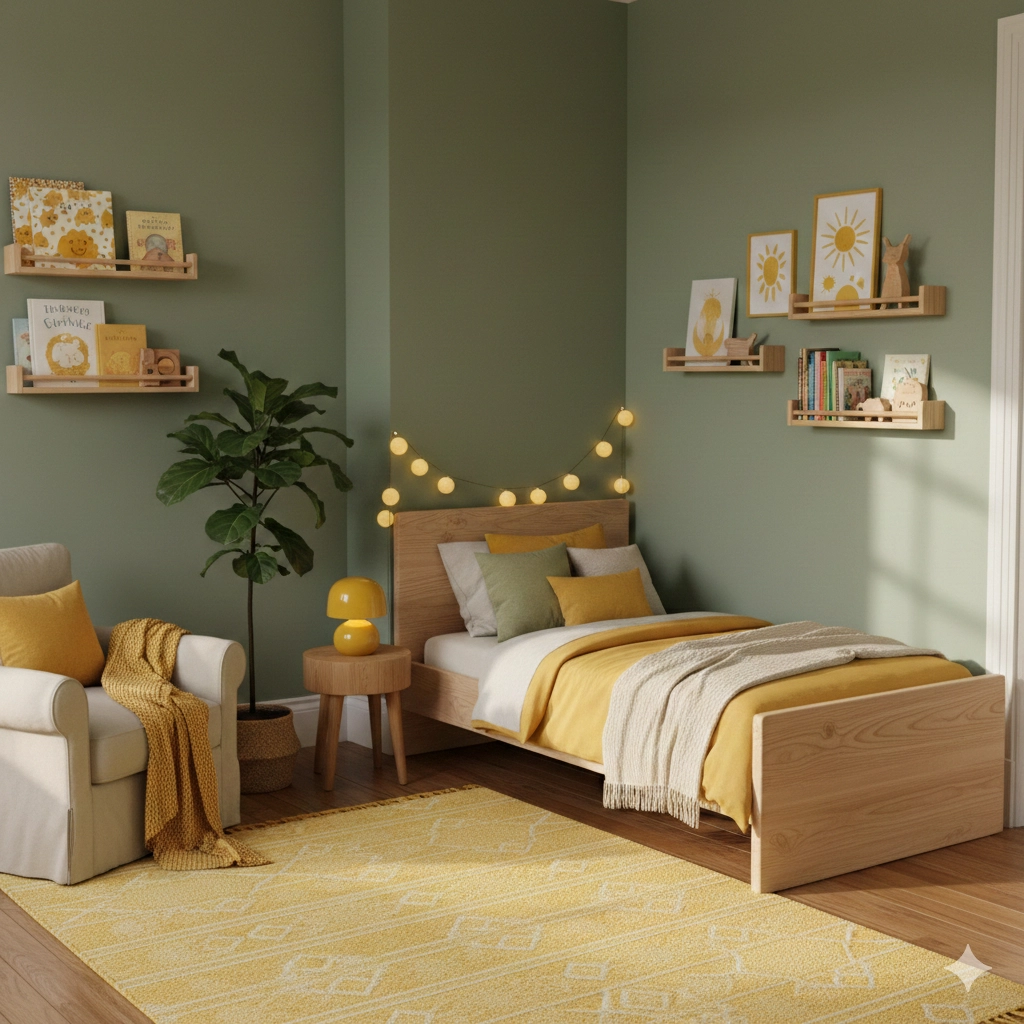
Practical Organization Solutions
Clutter traps stagnant energy and visual noise. For children, keeping toys out of sight at night signals that play time is over and rest time has begun.
- Under-Bed Storage Rules: Try to keep space under the bed completely open so air and energy can circulate. If storage space is tight, store only soft items like extra blankets or winter coats—never hard plastic toys, shoes, or metal items.
- Closed Bins over Open Shelves: Open bookshelves can look chaotic and create cutting lines of energy. Use closed cabinets or fabric storage bins to keep things visually quiet.
- Clearing Entryways: Make sure the bedroom door can open completely to 90 degrees without bumping into hanging bags or toy baskets behind it.
- Daily Routines: Use our step-by-step feng shui clutter clearing checklist to establish easy tidying habits with your kids.
Designing a Focused Study Area
For school-age children, separating study space (Yang) from sleeping space (Yin) helps improve homework focus.
- Desk Power Position: Position the study desk so your child faces the entrance path while working, just like the bed position. Avoid placing a desk facing a blank wall, which can cause mental fatigue. Apply the rules from our feng shui office desk placement rules guide on a smaller scale.
- Bagua Area Focus: Locate study nooks in the North or Northeast sections of your floor plan to support learning and personal growth. You can map your floor plan easily with our guide on how to apply the bagua map in an apartment.
- Dedicated Study Nooks: If you have an awkward alcove, set up a focused station using our feng shui study nook and reading area recommendations.
Strategic Use of Plants, Mirrors, and Lighting
Houseplants for Fresh Energy
Plants bring active Wood element growth into a room. Choose gentle varieties with smooth, rounded leaves, such as Jade plants or Peace Lilies. Avoid cacti or plants with spiky leaves.
Keep plant counts low—1 or 2 small pots are enough for a child’s bedroom. For plant safety and selection tips, review our guide on feng shui plants for home vitality in small spaces.
Mirror Guidelines
Mirrors bounce light and activity around a room. Never place a mirror directly opposite or alongside the bed where it reflects the sleeping child, as this can trigger restless dreams.
If closet doors have built-in mirrors, cover them at night with a soft curtain or removable opaque film. Explore complete placement rules in our guide to feng shui mirror placement in the home.
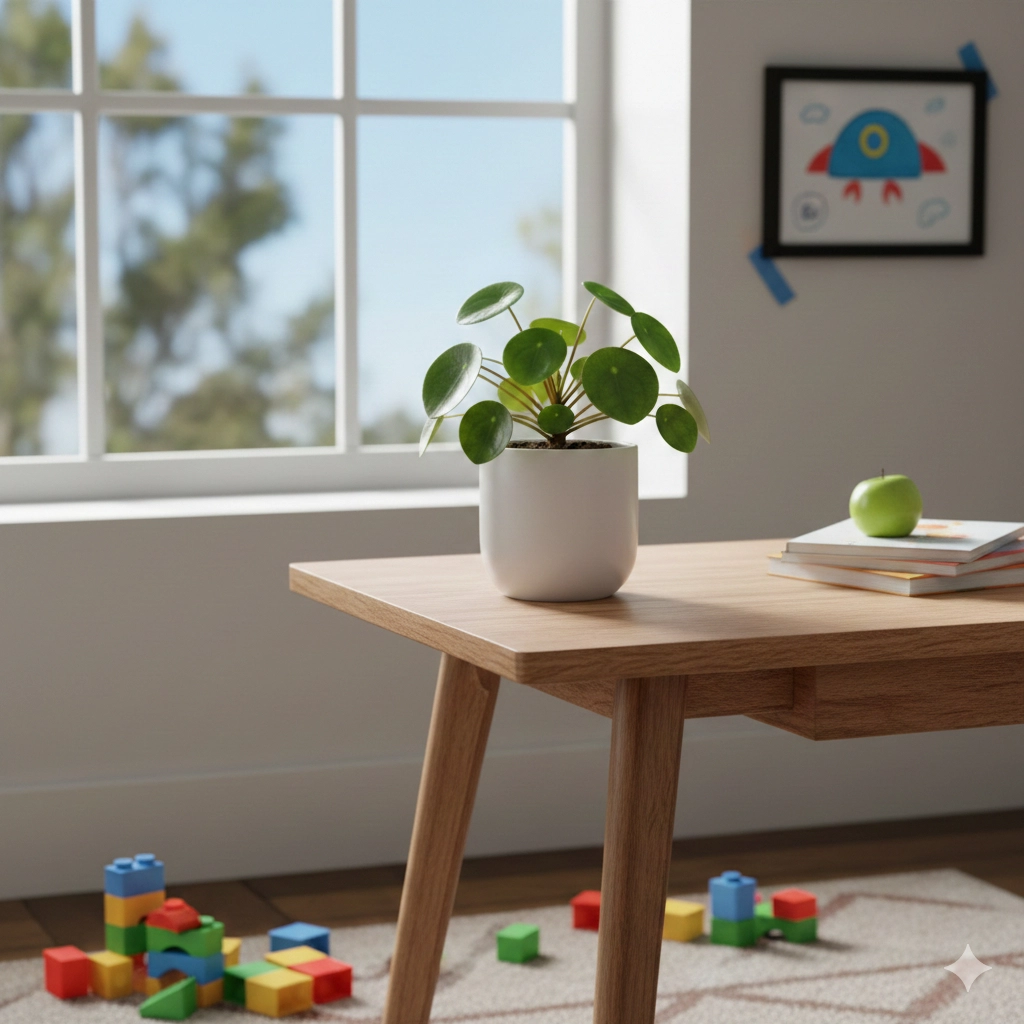
Layered Lighting Setup
Lighting controls the room’s energy levels throughout the day:
- Daytime (Yang): Use bright overhead ceiling lights to encourage play and daytime activity.
- Evening (Yin): Switch to soft, warm lamps at eye level as bedtime approaches.
- Nighttime: Himalayan salt lamps provide a warm, low-intensity glow that calms the room before sleep. Learn more about selecting light sources in our guide on feng shui lighting fixtures and lamp placement.
Shared Room Solutions for Siblings
When siblings share an apartment bedroom, creating balance prevents friction and promotes cooperation.
- Maintain Symmetry: Place beds of equal size with matching nightstands and reading lights to give both children equal spatial support.
- Align Headboards: When beds sit side-by-side, position both headboards against the same solid wall to strengthen the bond between siblings.
- Renter-Friendly Adjustments: If you are living in a rental unit and cannot alter fixtures, use our practical feng shui tips for renters in apartments for non-permanent divider ideas.
Practical Action Summary
- Bed Position: Move the bed into the Command Position with a solid wall supporting the headboard.
- Balance Yin & Yang: Use bright lighting and vibrant colors in study areas, but transition to dim lights and soft textures near the bed.
- Unblock Openings: Clear clutter behind the bedroom door so it swings open completely.
- Choose Natural Materials: Opt for solid wood, natural cotton, and wool over synthetic materials.
- Minimize Electronics: Keep televisions, desktop computers, and gaming tablets away from the immediate sleeping zone.
Frequently Asked Questions (FAQs)
1. What is the single most important Feng Shui rule for a kid’s room?
The “Command Position” for the bed is paramount. If a child feels vulnerable while sleeping because they can’t see the entrance or have “empty space” behind their head, their quality of rest will always suffer.
2. My child’s room is tiny and has no “Command Position” option. What do I do?
If the bed must face away from the door, place a small mirror in a position where the child can see the door’s reflection from the bed. This “corrects” the view and restores the feeling of security.
3. Are bunk beds really that bad for Feng Shui?
They aren’t “bad,” but they are “challenging.” The goal is to prevent the “oppressive” feeling for the bottom bunk and the “floating” feeling for the top. Simple remedies like light paint colors and sturdy railings can mitigate these effects.
4. Can I use red in my child’s room?
Use red sparingly. Red is a high-intensity Fire element. While it can stimulate creativity, too much of it can lead to irritability or difficulty sleeping. Use it in small accents like a pillow or a piece of art rather than painting a whole wall.
Thank You for Visiting Feng Shui Essentials
We appreciate you taking the time to explore Feng Shui Essentials. Our goal is to provide clear, practical guidance rooted in authentic Feng Shui principles to help you create balanced, harmonious spaces.
Your feedback helps us improve the quality, clarity, and usefulness of our content. If you have suggestions, questions, or topics you would like us to cover, we welcome your input.
Author Bio
Rick Michael is a Feng Shui practitioner, writer, and decision architect based in Lahore, Pakistan, with over 12 years of experience adapting classical Compass and Form School principles to compact urban living. As the creator of fengshuiessentials.online, he focuses on practical, apartment-tested spatial solutions that enhance daily function, rest, and focus—without relying on fluff or unnecessary ritual. Every framework he publishes is grounded in real-world testing in small-space layouts to give readers clear, actionable choices for their homes. Have questions about your layout? Reach out directly at rick.michael786@gmail.com.