
Quick Answer:
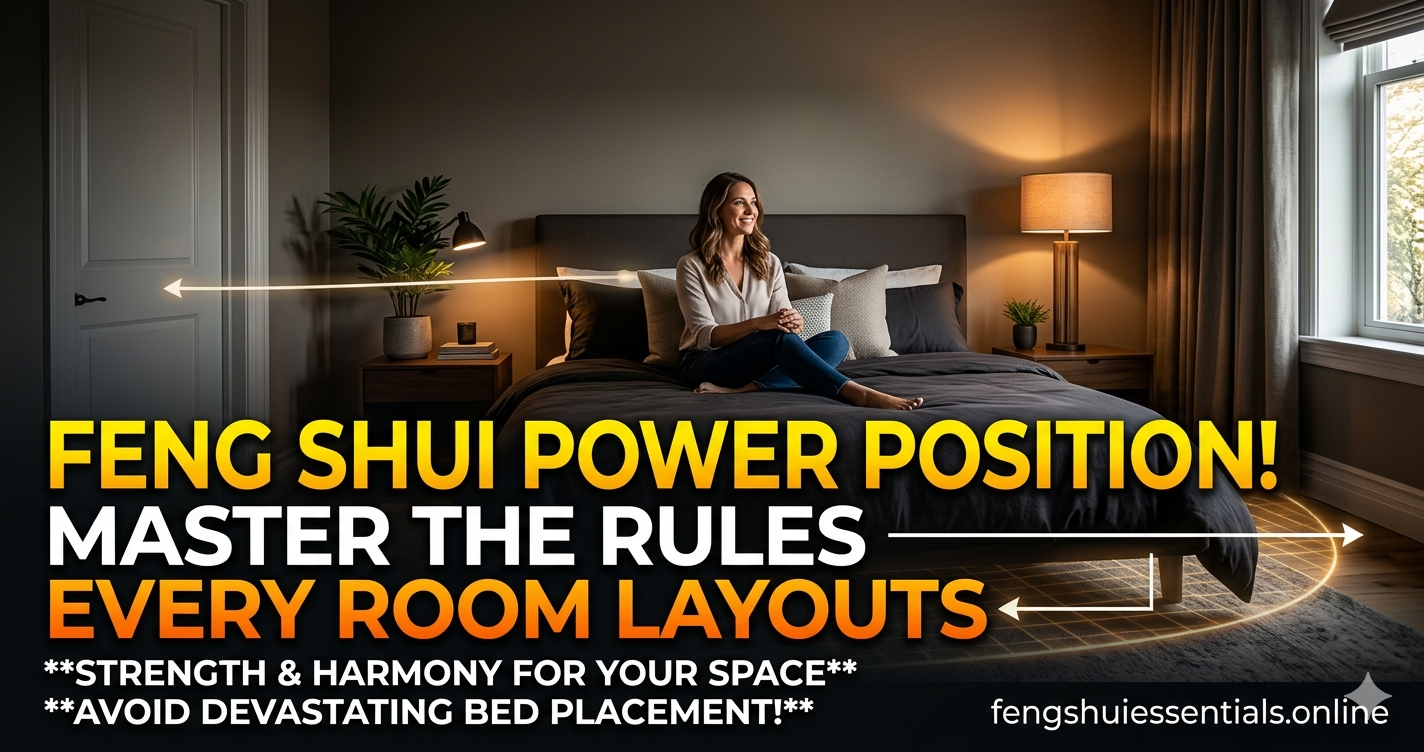
The core rule of the Feng Shui power position (or commanding position) is to place your primary furniture—your bed, desk, or stove—diagonally across from the room’s main entrance. You must have a clear, unobstructed view of the door without being directly in line with it, supported by a solid wall behind you to anchor security, control, and optimal energy flow.
A few years ago, I moved into a beautiful old apartment with an awkwardly shaped bedroom. Eager to maximize floor space, I pushed the headboard directly against the wall right next to the entrance. For three months, I woke up feeling exhausted, anxious, and strangely vulnerable. My career felt stalled, and my sleep was a mess.
That was my first brutal lesson in the commanding position feng shui masters always talk about. Without realizing it, I had placed myself in a psychological “blind spot.”
When I finally rearranged the room, placing my bed diagonally across from the door with a solid wall behind me, everything shifted. I slept through the night, and my morning anxiety vanished. That is the magic of understanding Feng Shui Power Position Rules for Every Room. It is not about superstition or magical thinking; it is about environmental psychology, spatial awareness, and how your nervous system reacts to your surroundings.
Here is exactly how to apply these rules to every space in your home, based on real-world trial, error, and design fixes.
What is the Feng Shui Power Position?
At its core, the power position—often called the commanding position—is the spot in a room where you have the most control, security, and vision.
The baseline rule is simple: You should be able to see the main entrance of the room clearly while sitting or lying down, but you should not be directly in line with it.
Our brains are hardwired with ancient survival instincts. If your back is to the door, or if a door opens directly in line with your head, a subtle part of your subconscious stays on high alert for threats. By choosing the diagonal vantage point, you signal safety to your nervous system. This frees up vital mental energy for deep rest, creative thinking, and productivity.
The Bedroom: Maximizing Rest and Sleep Quality
The bedroom is the most critical space to fix because it dictates your physical and mental recovery. If you get the layout wrong, no amount of white noise machines or blackout curtains will give you deep rest.
Best Feng Shui Bed Placement for Sleep
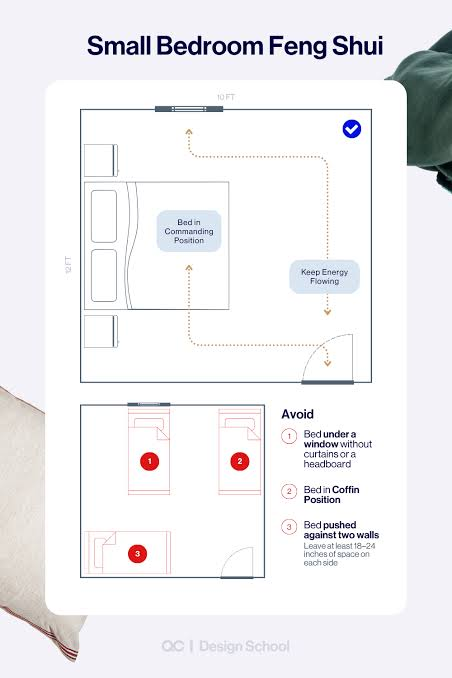
To achieve the best feng shui bed placement for sleep, place your headboard securely against a solid wall. The bed should sit diagonally across from the bedroom door.
- Avoid the Coffin Position: Never place your bed so that your feet point straight out the open door. In traditional design, this is called the “coffin position” and creates a harsh, draining rush of energy.
- Mind the Windows: Avoid placing your headboard directly under a window. Windows lack the solid structural support of a wall, which can make you feel unstable.
Fine-Tuning Your Feng Shui Bed Direction
When mapping out your best feng shui power position for bedroom layouts, keep an eye on what is happening on the other side of your bedroom wall.
During a consultation for a client who complained of constant headaches, I noticed her headboard was sharing a wall with the bathroom toilet pipes. The moving water was constantly disrupting the wall’s energetic stability. Moving her bed just three feet over to an uninterrupted section of drywall completely transformed her sleep quality.
If you are setting up a feng shui guest room feng shui configuration, apply the exact same principles. Even temporary visitors need to feel anchored and safe to enjoy their stay.
The Home Office: Unlocking Focus and Productivity
Your office layout directly influences your professional trajectory, confidence, and clarity of thought. If you feel stuck or constantly interrupted at work, your desk layout is likely the culprit.
Best Feng Shui Desk Position for Productivity
The absolute best feng shui desk position for productivity is facing the door from the far diagonal corner of the room. This ensures you are never caught off guard when someone walks in.
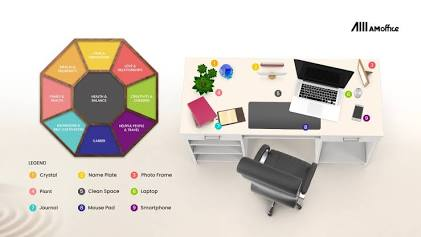
When using the best feng shui commanding position for office work, you want a “mountain” at your back. In modern interior design, a mountain means a solid wall, free of heavy hanging shelves or windows. This setup provides psychological backing, helping you make high-stakes business decisions with confidence.
Troubleshooting the “Desk Facing Door” Dilemma
What happens if your room layout forces a feng shui desk facing door setup where you are trapped in a direct path of foot traffic? Or worse, what if your back is completely turned to the room entrance?
- The Mirror Fix: If your back must face the entrance, place a small, high-quality desktop mirror on your monitor or shelf. Angle it so you can instantly see the door in your peripheral vision.
- The Divider Fix: If you sit directly in line with the door, place a heavy potted plant or a freestanding screen between your desk and the entryway to diffuse the incoming rush of movement.
The Living Room: Structuring Social Harmony
The living room is a shared ecosystem. It dictates how your family interacts, communicates, and unwinds after a long day.
Best Feng Shui Layout for Living Room Comfort
The anchor piece here is your sofa. For the best feng shui layout for living room spaces, your primary seating must occupy the commanding position.
[Window]
      [Sofa] <--- (Back protected by solid wall)

  [Coffee Table]
                      [TV/Media]
[Doorway]
Your feng shui sofa placement should mimic the bed rule: floating your couch in the dead center of a large room with its back to the entrance is a recipe for social anxiety. Guests will naturally avoid that seat because they feel exposed from behind. Instead, anchor the sofa against a solid wall facing the room’s main walkway.
Spatial Challenges: Small Rooms and Tight Angles
One of the biggest real-world hurdles is trying to apply ancient design concepts to cramped apartments. If you are dealing with tight quarters, you have to get creative.
Best Feng Shui Furniture Placement for Small Rooms
When looking for the best feng shui furniture placement for small rooms, you will often hit a structural wall. You might find that placing your bed diagonally forces it right into a closet door or blocks a radiator.
If you cannot achieve a perfect diagonal layout, prioritize protection. Place your furniture where your body feels most enclosed and supported, and use soft textiles or round furniture to keep the room from feeling restrictive.
- Choose nightstands with rounded corners to prevent sharp angles pointing at your head while sleeping.
- Use light, elevated furniture legs to let light and air pass underneath, keeping the floor space visually clean.
The Kitchen and Dining Room: Attracting Health and Abundance
In classic design philosophy, the kitchen is the literal heart of your home’s wealth engine. It represents how well you nourish your body and your bank account.
Best Feng Shui Kitchen Layout for Wealth
The stove is the ultimate wealth symbol in your home. The ideal feng shui stove position allows the cook to see the kitchen entrance without standing directly in line with it.
If you are forced to stare at a blank wall while cooking, you are vulnerable to surprises from behind. To fix this, stick a polished stainless steel panel or a small decorative mirror behind your stovetop so you can track the room behind you.
| Appliance / Feature | Ideal Feng Shui Placement Strategy |
| The Cooktop / Stove | Diagonally visible from the entrance; mirrored if backing a solid wall. |
| The Kitchen Sink | Separated from the stove by at least two feet to prevent elemental clashing. |
| The Dining Table | Centralized to promote easy traffic flow and balanced family seating. |
Best Feng Shui Dining Room Arrangement for Harmony
Your dining room governs family relationships and long-term health. For a stellar best feng shui dining room arrangement for harmony, choose a round or oval table. Sharp corners create harsh tension during dinner conversations.
For your feng shui dining table orientation, ensure that no diner is forced to sit with their back completely exposed to a main open entryway or a high-traffic hallway. If space is tight, use high-backed dining chairs to give seated family members a comforting sense of protection.
The Study or Flex Space: Cultivating Intellectual Growth
Whether it is a child’s homework station or a creative studio, a dedicated study space requires focused energy.
A common mistake I see in a feng shui study room layout is pushing the desk flush against a corner wall, forcing the user to stare blankly into a dead corner. This layout feels cramped and quickly drains your creative stamina.
Instead, angle the desk outward into the room. Even if it cuts down on open floor space, having an open visual field in front of you expands your focus and allows ideas to flow naturally.
Summary Checklist for Every Room
To make sure your home is properly balanced, walk through your house and verify these four core checkpoints:
- Visibility: Can you see the door easily from your bed, desk, and main sofa?
- Alignment: Are you safely out of the direct line of fire of the open doorway?
- Backing: Is there a sturdy structural wall behind your back or headrest?
- Pathways: Can you walk freely through the room without bumping into sharp furniture corners?
If you want to cross-verify your design adjustments or research specific color layouts for your home’s layout coordinates, you can search for more detailed blueprints on the Google Search Engine.
Frequently Asked Questions
What do I do if my bed has to face the door directly?
If your room shape leaves you no choice but to face the door directly, install a footboard on your bed or place a storage bench at the foot of the mattress. This creates a functional protective barrier that deflects incoming energy.
Can a desk face a window in the commanding position?
While a window view is lovely, facing a window can be highly distracting for deep work. The ideal setup is to have the window to your side, keeping the solid wall behind you and the main entrance clearly in your field of vision.
How do I handle multiple doors in a single room?
Prioritize the door that gets the most daily foot traffic. Position your furniture to maintain a commanding view of that primary entrance while using decorative elements—like closed curtains or tall plants—to visually soften any secondary doors.
3 thoughts on “Feng Shui Power Position Rules for Every Room”