
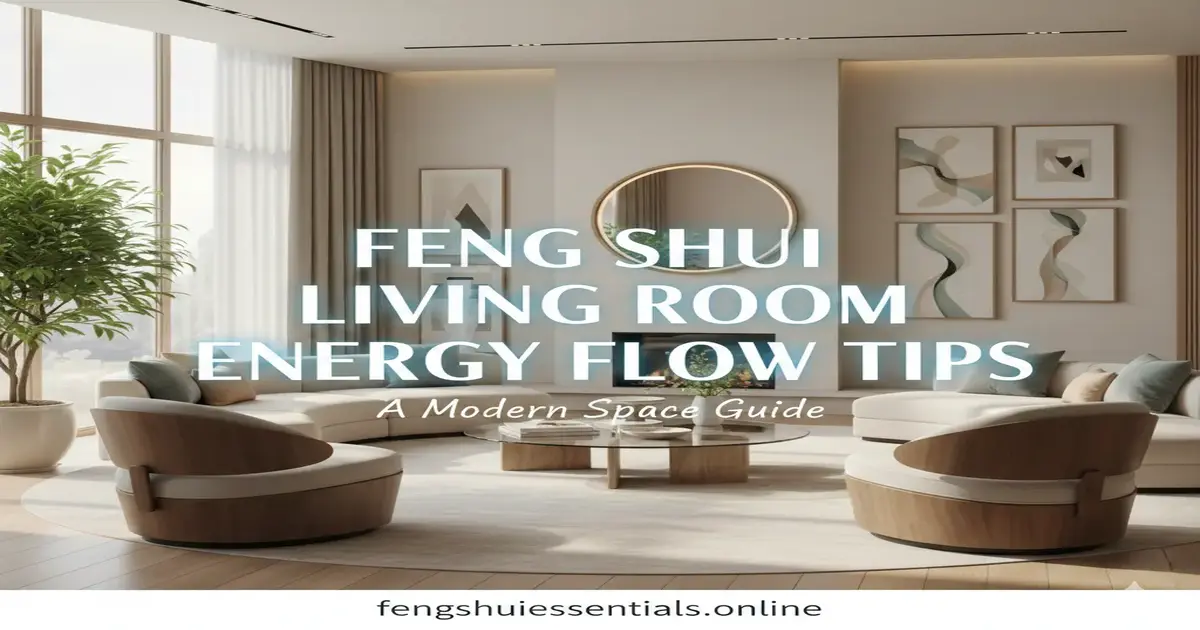
Creating a sanctuary in a modern urban apartment can feel like a challenge, especially when square footage is at a premium. However, the living room serves as the “energetic heart” of the home. It is where social connections are forged and where we transition from the stresses of the world to the peace of our private lives. By applying feng shui living room energy flow tips, you can transform even the smallest studio into a high-vibration environment that supports your health, wealth, and relationships.
In my years of practice as a consultant for the International Feng Shui Guild, I have seen how subtle shifts in furniture and color can radically alter a resident’s mood. This guide provides feng shui living room chi flow techniques designed specifically for compact living. We will explore how to balance the five elements and use the Bagua map to ensure your “wind and water” (the literal translation of Feng Shui) are working for you, not against you.
Optimal Furniture Arrangement for Harmonious Living Room Feng Shui Energy
In small spaces, the way you place your furniture dictates the path of Chi (universal life force). If the path is blocked, the energy stagnates, leading to feelings of lethargy or “stuckness” in life.
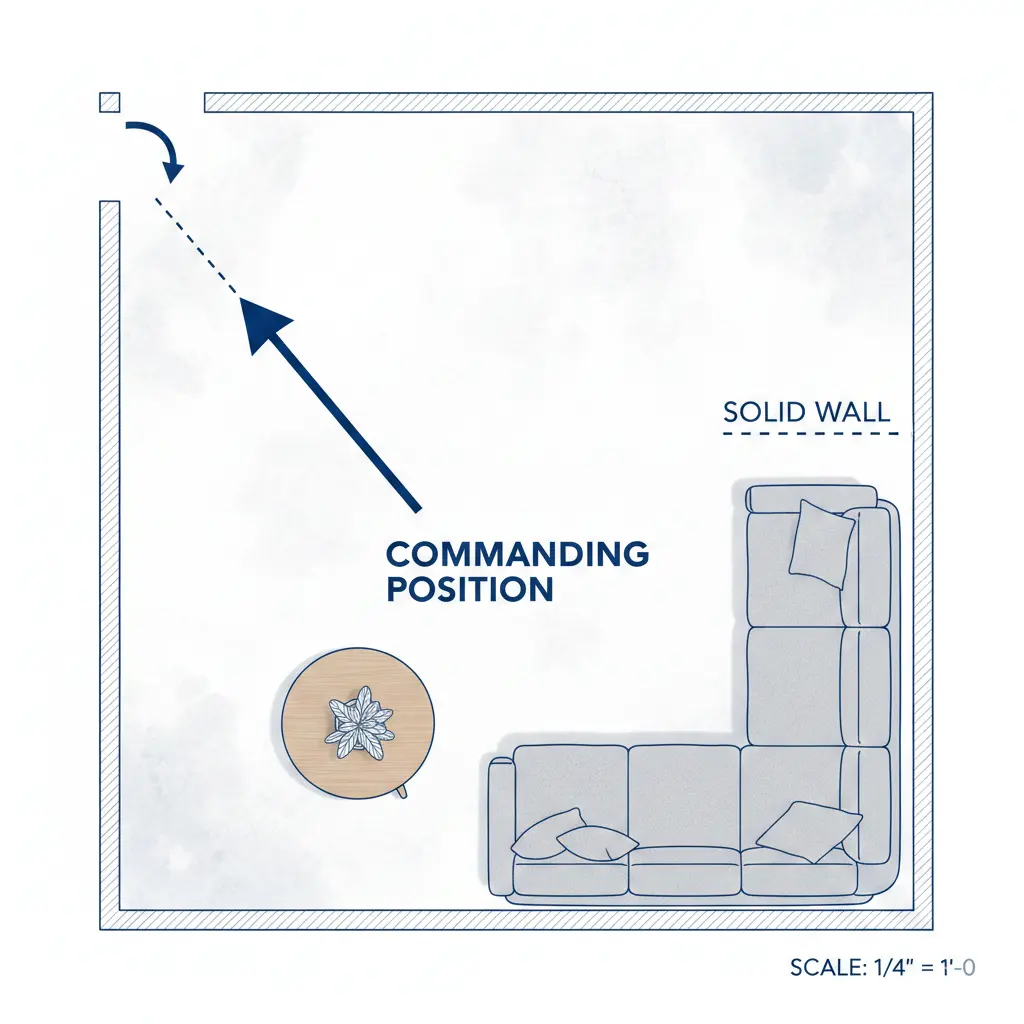
The Commanding Position
The most critical element of best feng shui furniture arrangement for energy flow is the “Commanding Position.” This means placing your primary seating—usually the sofa—so that you have a clear view of the door without being directly in line with it.
- The Logic: Psychologically, this reduces the “startle response” and creates a sense of security. Energetically, it allows you to see opportunities (represented by the door) as they enter your life.
- Small Space Example: In a narrow studio, if your sofa must face away from the entrance, place a small mirror on the opposite wall so you can see the reflection of the door while seated.
Avoiding the “Dead Zone”
Avoid pushing all furniture flush against the walls. While it seems to “save space,” it actually kills harmonious living room feng shui energy by creating a stagnant center. Leaving even two inches of breathing room behind a couch allows energy to circulate around the piece, preventing “dead” chi from settling.
Feng Shui Living Room Bagua Map Energy Flow in Small Spaces
The Bagua is an energy map used to analyze a floor plan. In small apartments, you can apply the Bagua to your entire unit or just the living room itself.
Mapping Your Space
Align the bottom of the Bagua map with the wall containing the main entrance to the room.
- The Wealth Corner: The far left corner.
- The Relationship Corner: The far right corner.
- The Health Center: The middle of the room.
Small Room Application
If your living room is small, don’t try to activate every sector at once. Focus on one or two areas that need help. For instance, if you want to boost your career, place a small water feature or a black decor item in the front-middle section of the room.
Pro Tip: As Lillian Too often emphasizes, balance is superior to activation. An over-activated wealth corner in a tiny room can lead to “overflowing” energy that feels chaotic rather than prosperous.
Feng Shui Living Room Five Elements Energy Balance
The five elements—Wood, Fire, Earth, Metal, and Water—must coexist to create a cycle of creation. In compact spaces, it is easy for one element to dominate (such as “Metal” from electronics or “Earth” from heavy furniture).
Element Characteristics
| Element | Color | Shape | Benefit |
| Wood | Green/Brown | Columns/Tall | Growth & Vitality |
| Fire | Red/Orange | Triangles/Points | Passion & Recognition |
| Earth | Yellow/Tan | Squares/Flat | Stability & Grounding |
| Metal | White/Grey | Circles/Arches | Focus & Clarity |
| Water | Black/Blue | Wavy/Irregular | Wisdom & Flow |
Small Space Example: If your living room feels cold and clinical (too much Metal), add a lush green plant (Wood) and a red throw pillow (Fire) to warm the feng shui living room yin yang balance.
Best Feng Shui Colors for Living Room Energy Flow
Color is one of the fastest ways to shift feng shui living room energy flow symbolism. In small rooms, the goal is usually to expand the space (Yang) while maintaining a sense of calm (Yin).
Choosing Your Palette
- Light Blues and Greens: Represent Wood and Water. These are excellent for small spaces as they recede visually, making the walls feel further away while promoting healing.
- Soft Yellows and Earth Tones: Provide grounding. Use these if you feel anxious or scattered in your home.
- The “Pop” of Fire: Use reds and oranges sparingly. A small “Fire” accent can stimulate conversation—perfect for a social living area—but too much in a small space can lead to irritability.
Mirror and Plant Strategies for Positive Chi
Mirrors and plants are the “aspirins” of Feng Shui. They can fix almost any energetic ailment, but they must be used with caution.
The Power of Mirrors
Mirrors expand a room, but they also double what they reflect.
- The Rule: Never place a mirror so it reflects clutter or a bathroom door. This doubles the “draining” energy.
- The Cure: Place a mirror to reflect a beautiful view from a window, effectively bringing the “outside in” and boosting feng shui living room energy flow and health.
The Best Feng Shui Plants for Living Room Energy Flow
Plants represent the Wood element and purify the air, which is essential for feng shui living room wind and water principles.
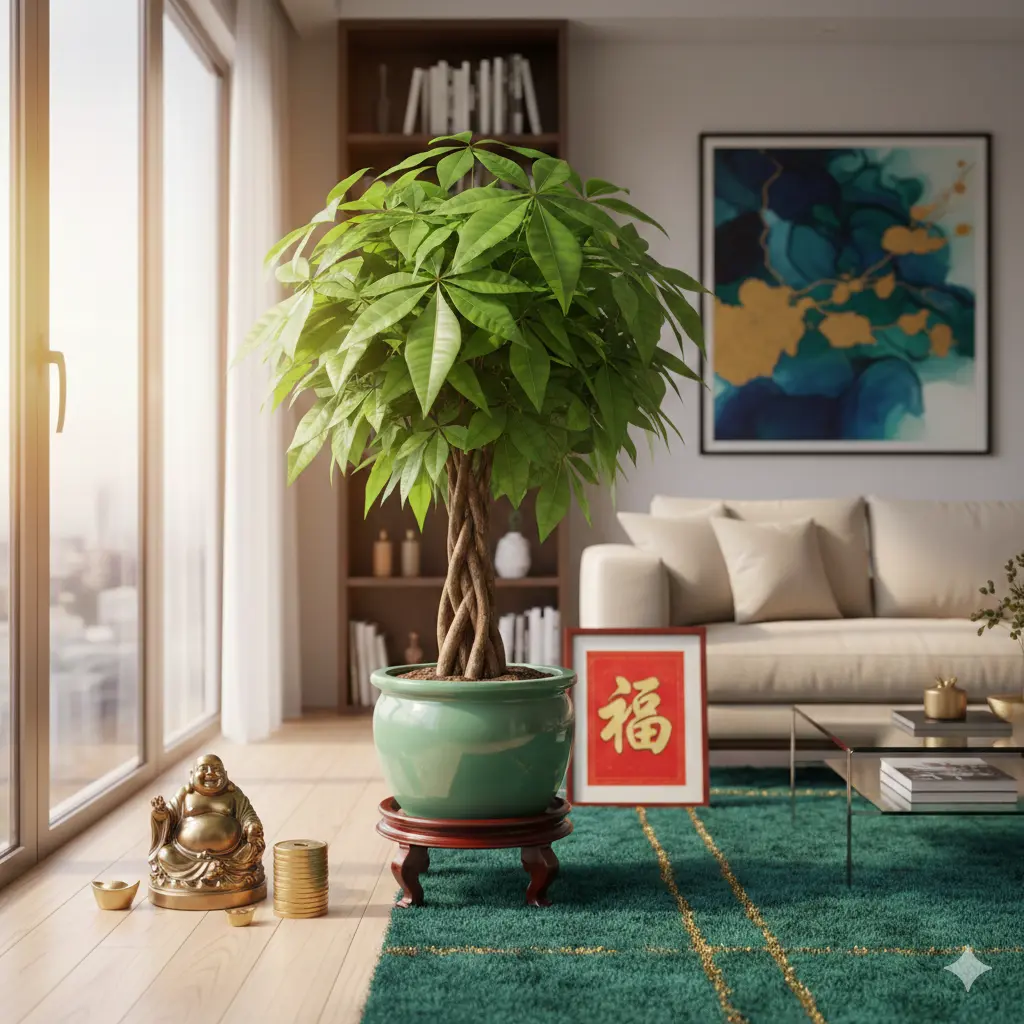
- Recommendations: Money Trees (Pachira aquatica) or Snake Plants are hardy and promote growth.
- Cautions: Avoid cacti or plants with sharp, “pointing” leaves in small spaces. These create “poison arrows” (Sha Chi) that can make guests feel unwelcome or “poked” at an energetic level.
(A vibrant green Pachira Aquatica in a round ceramic pot, placed in the wealth corner of a bright, modern living room.)
Lighting and Storage: Feng Shui Living Room Decluttering for Energy
Clutter is the primary enemy of chi. In a small living room, clutter doesn’t just take up physical space; it acts as an energetic dam.
Storage Solutions
Use “closed” storage rather than open shelving. Open shelves create “visual noise” that disrupts the feng shui living room yin yang balance. When your belongings are tucked away behind solid doors, the energy can glide smoothly across the surface of the cabinet.
Lighting as Energy
Dark corners are where Chi goes to die.
- Layered Lighting: Use a mix of overhead, task, and floor lamps.
- The “Up-Light” Trick: Place a small floor lamp behind a tall plant. The light shining upward mimics the growth of a tree and lifts the energy of the room, preventing it from feeling cramped or “heavy.”
Decor Tips for Balanced Spaces: Cures and Traditions
Advanced practitioners often use specific best feng shui cures for living room energy flow to remedy architectural “flaws,” such as a beam over a sofa or a door that opens directly into a window.
The Crystal Cure
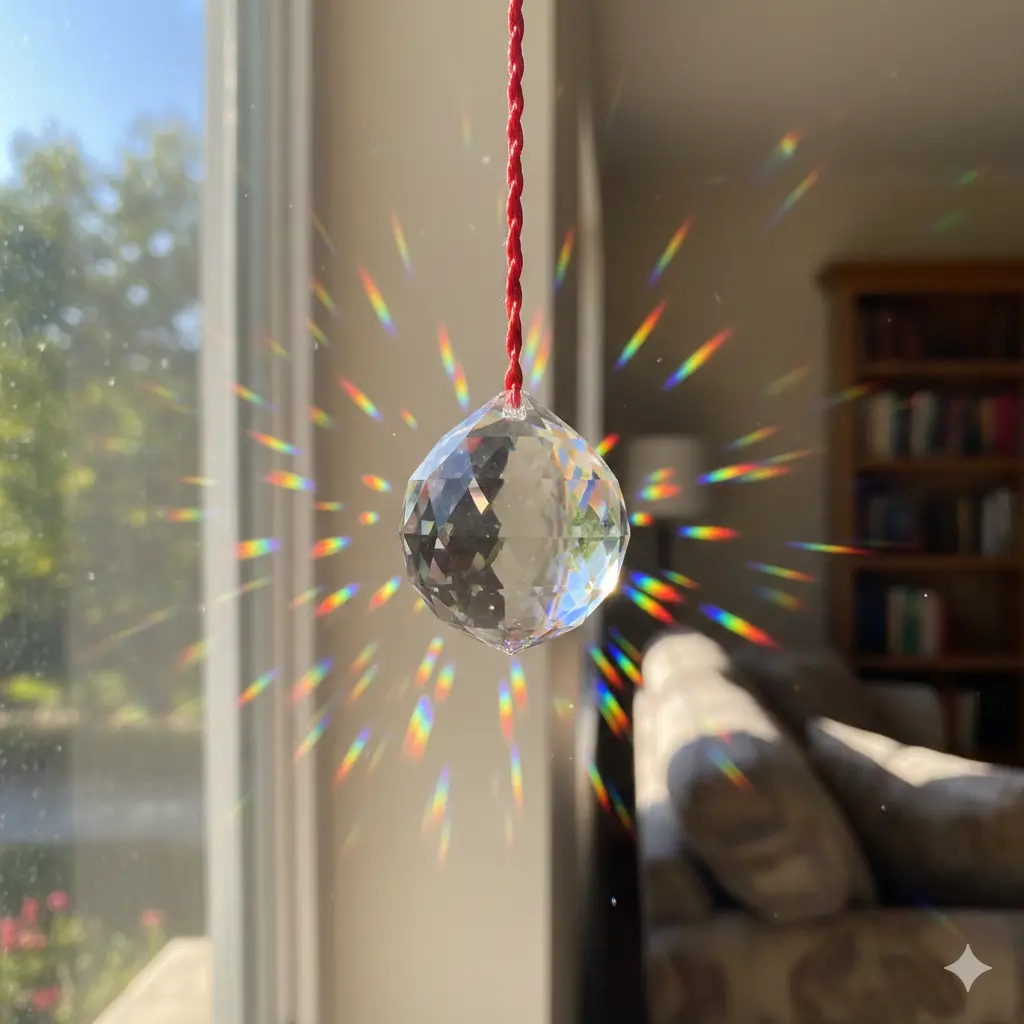
If you have a window directly opposite the entrance of your living room, the Chi enters and immediately exits. This is known as “leaking wealth.”
- The Fix: Hang a faceted leaded glass crystal in the center of the window. This breaks up the rushing energy and disperses it throughout the room.
Symbolism and Tradition
In feng shui living room energy flow traditions, art should be intentional. Avoid images of lonely figures or stormy seas. Instead, choose artwork that depicts what you want to invite into your life: pairs for relationships, or vibrant landscapes for growth.
(A close-up of a clear, multi-faceted crystal sphere suspended by a red string in a window, casting small rainbow light patterns across a living room wall.)
Summary of Key Takeaways
To ensure your living room is a magnet for positive energy, follow these condensed best feng shui tips for living room energy flow:
- Prioritize the Command Position: Ensure your sofa has a view of the door to foster security.
- Apply the Bagua: Use the far-left corner for wealth and the far-right for relationships.
- Balance the Elements: Mix textures and colors (Wood, Fire, Earth, Metal, Water) to prevent energetic stagnation.
- Manage Mirrors: Reflect beauty, not clutter or “draining” areas like bathrooms.
- Clear the Path: Keep the center of the room open and use closed storage to hide “visual noise.”
- Light the Corners: Use upward-facing lights to lift the energy in dark or cramped areas.
By integrating these feng shui living room chi flow techniques, you create a space that doesn’t just look good on social media—it feels good to your soul. Whether you are consulting best feng shui books for living room energy flow or using a best feng shui app, remember that the most important element is your intention.