
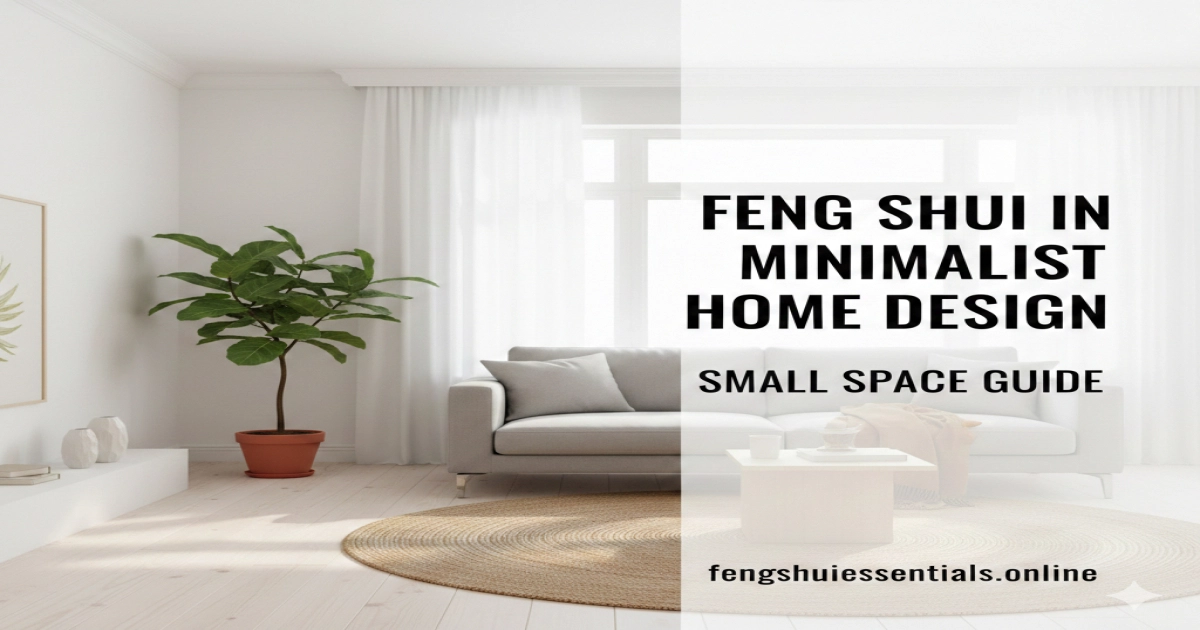
Minimalism and Feng Shui are natural partners. While minimalism focuses on “less is more,” Feng Shui focuses on “less is better for flow.” Integrating feng shui in minimalist home design isn’t just about aesthetics; it is about intentionality. In a small apartment, every object carries a heavy energetic weight. When space is limited, the movement of chi (universal life force) can easily become stagnant or chaotic.
As a consultant who has navigated hundreds of urban floor plans, I have seen how a few inches of bed displacement or a poorly placed mirror can shift a room from a sanctuary to a source of stress. By applying the wisdom of masters like Lillian Too and the standards of the International Feng Shui Guild, we can transform compact living into a high-vibration environment. This guide provides a blueprint for harmonious minimalist living with feng shui, specifically tailored for those balancing modern constraints with ancient wisdom.
Optimal Bed Placement for Energy Flow and Command
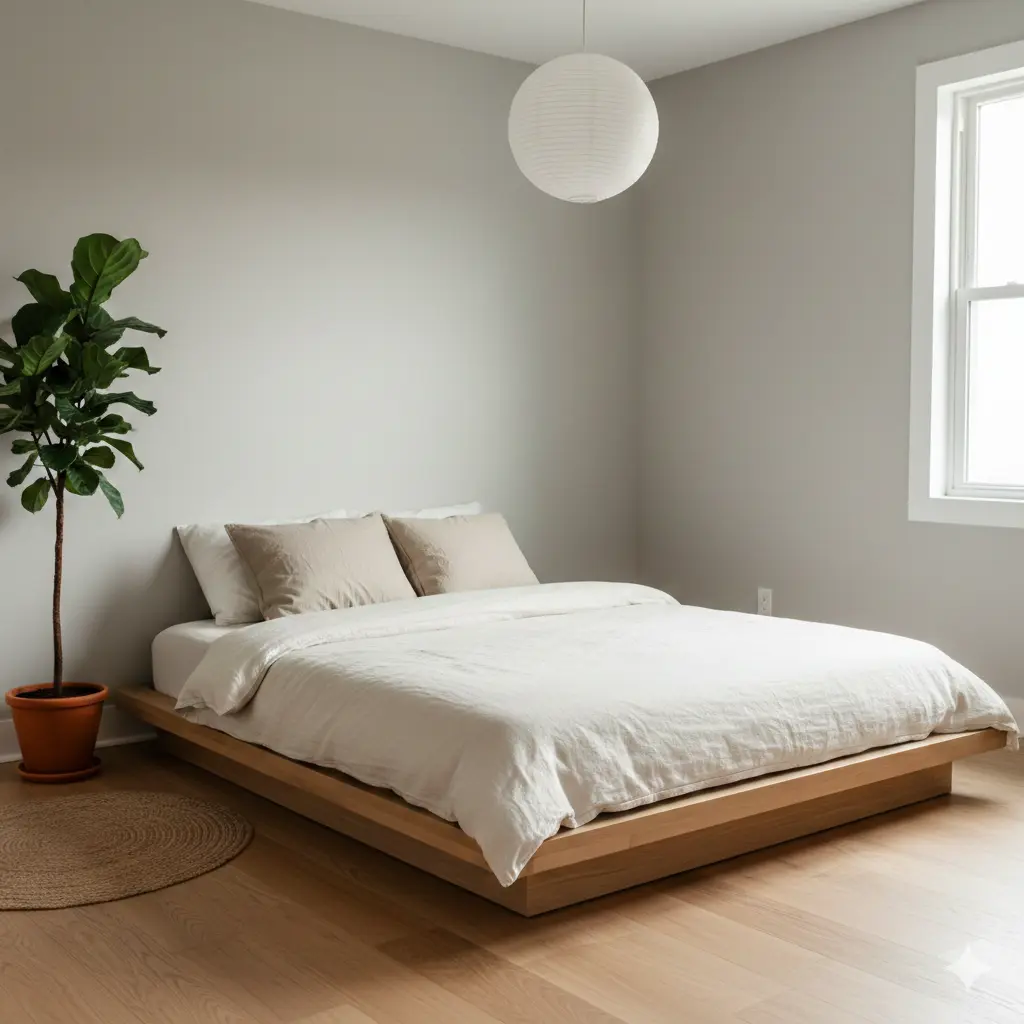
In any small bedroom, the bed is the “soul” of the space. It represents your health and personal restoration. The most critical principle here is the Command Position. You should be able to see the door from your bed without being directly in line with it.
The “Coffin Position” and Narrow Layouts
In minimalist apartments, we often see the “coffin position,” where the feet point directly out the door. This allows energy to escape too quickly, leading to restless sleep. If your room is too narrow to avoid this, place a small footboard or a weighted blanket at the base of the bed to “anchor” your energy.
Example: In a 100-square-foot studio, if the bed must face the door, use a low-profile room divider or a minimalist rug to create a visual and energetic “buffer” between the sleeping area and the entrance.
Solid Walls vs. Windows
A minimalist aesthetic often favors large windows, but Feng Shui demands a solid backing. Always place your headboard against a solid wall. Avoid placing the head of the bed under a window, as energy enters and exits through glass, leaving your personal chi unsupported during the night.
Furniture Arrangement and Feng Shui Minimalist Space Planning
Feng shui minimalist space planning requires a “breathing room” approach. In small spaces, the temptation is to push all furniture against the walls to create floor space. However, this can create a “dead zone” in the center of the room.
Creating Curves in Linear Spaces
Minimalism often relies on sharp angles and clean lines, which can create Sha Chi (sharp energy). To counter this:
- Choose best feng shui minimalist furniture for small spaces with rounded edges.
- Ensure there is a clear walking path. If you have to shimmy past a dresser, your energy is being constricted.
Example: Instead of a rectangular coffee table with sharp corners, opt for a circular nesting table. This encourages the chi to swirl gently through the living area rather than “cutting” through the air.
Color Choices for Harmonious Balance and the Five Elements
Color is one of the fastest ways to shift the vibration of a room. While minimalism often defaults to stark white, Feng Shui suggests a more nuanced palette based on the Five Elements.
The Minimalist Palette Strategy
- Earth (Stability): Light beige, sandy tones, and terracotta. Best for bedrooms.
- Metal (Clarity): White, grey, and metallic finishes. Best for home offices.
- Wood (Growth): Pale greens and teals. Great for kitchens.
- Water (Wisdom): Deep blues or black accents. Use sparingly in small spaces.
- Fire (Passion): Muted corals or soft pinks. Use as accent pillows or art.
Example: If a minimalist living room feels “cold,” it likely has too much Metal energy (white walls, chrome fixtures). Adding best feng shui minimalist colors for living room like a warm oatmeal rug (Earth) will ground the space and make it feel more inviting.
Plant and Mirror Strategies for Positive Chi
In a small home, plants and mirrors are your most powerful tools for “expanding” the walls—but they must be used with caution to avoid energy disruption.
Best Feng Shui Minimalist Plants for Home
Plants represent the Wood element and upward growth. In a minimalist setting, one large, healthy plant is better than five small, dying ones.
- Recommended: Snake plants (purification) or Money Trees (abundance).
- Avoid: Cacti or “pointy” plants in the bedroom, as they create “poison arrows.”
Best Feng Shui Minimalist Mirrors for Good Chi
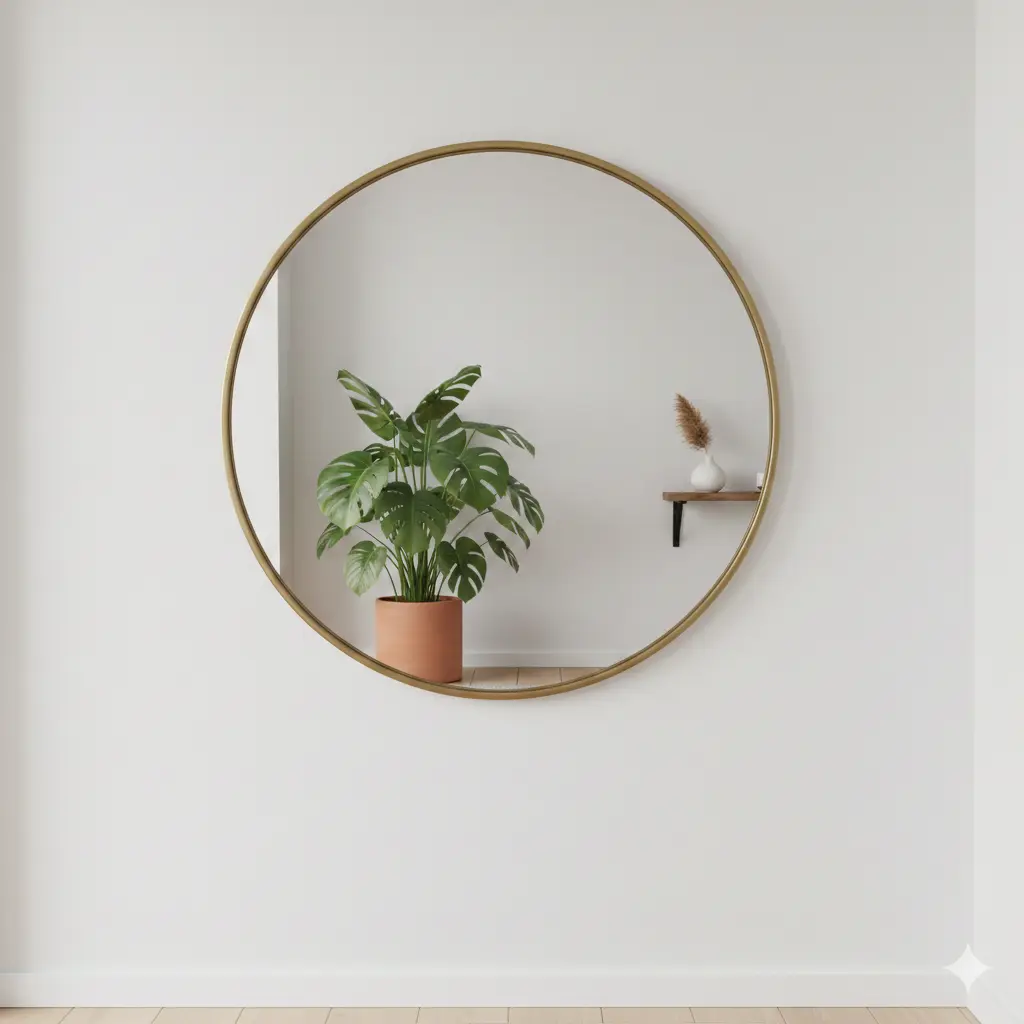
Mirrors can double your space, but they also double what they reflect.
- Placement: Place a mirror to reflect a beautiful view or a dining table (symbolizing doubled wealth).
- Caution: Never place a mirror directly opposite the bed. It can cause “third-party interference” in relationships and keep the mind overactive at night.
Best Feng Shui Minimalist Lighting for Bedrooms
Lighting is the “Fire” element. In small, dark apartments, stagnant energy (Yin) builds up in corners. Best feng shui minimalist lighting for bedrooms involves layering your light sources to ensure no corner is left in shadow.
- Task Lighting: Clear, bright light for reading or working.
- Ambient Lighting: Soft, warm-spectrum bulbs for the evening to transition into a Yin state.
- The “Up-light” Trick: Place a small floor lamp behind a plant to cast light upward. This lifts the energy of a room and makes low ceilings feel higher.
Storage Solutions and Feng Shui Decluttering Techniques
Clutter is the ultimate enemy of chi. In a minimalist home, what you don’t see still affects you. Under-bed storage is common in small apartments, but according to feng shui minimalist home organization tips, it is a major taboo.
The “Under-Bed” Rule
Your chi needs to circulate around your body while you sleep. Storing suitcases, old shoes, or paperwork under the bed creates “stuck” energy.
- The Remedy: If you must use under-bed storage, limit it to soft items like extra linens or pillows. Avoid anything related to work, the past, or “hard” objects.
Example: A client felt “stuck” in her career. We discovered she was storing her old tax returns under her bed. Once moved to a dedicated storage closet, she felt an immediate “lightness” and found a new job within a month.
Bagua Map Application in Small Rooms
The Bagua map is a grid used to map energy in a space. In a small apartment, you can apply the Bagua to the entire floor plan or just a single room.
| Direction | Life Area | Element | Minimalist Decor Tip |
| Southeast | Wealth | Wood | A single healthy jade plant. |
| Southwest | Relationships | Earth | Two identical quartz crystals. |
| North | Career | Water | A small, quiet water feature or dark blue art. |
| West | Creativity | Metal | A clean, white circular clock. |
To simplify, focus on the “Power Corners” (the corners furthest from the door). Keep these areas clear of dust and clutter to ensure the specific life area remains vibrant.
Advanced Decor Tips for Balanced Spaces
To achieve a zen minimalist home feng shui vibe, focus on the quality of your decor rather than the quantity.
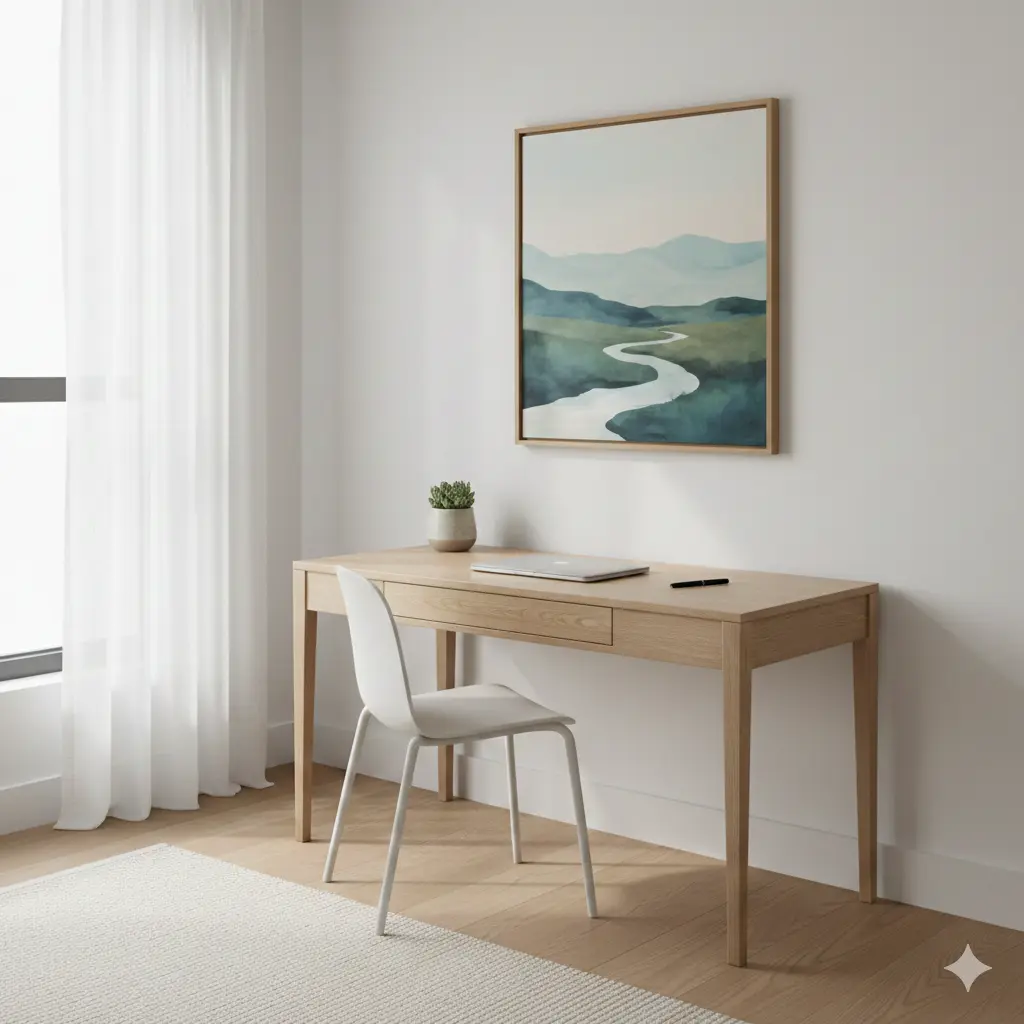
- Best Feng Shui Minimalist Art for Positive Energy: Choose art that depicts what you want to invite into your life. Avoid lonely, abstract, or chaotic images. In a small room, one large, inspiring piece is better than a “gallery wall” which can feel cluttered.
- Best Feng Shui Minimalist Rugs for Harmony: Use rugs to define zones (e.g., a “work zone” vs. a “rest zone”). Natural fibers like wool or jute provide an Earth element that grounds the high-energy “Metal” of minimalist furniture.
- Best Feng Shui Minimalist Scents for Relaxation: Use essential oils like lavender or sandalwood. Avoid synthetic “plug-ins,” which introduce chemical energy into a small, poorly ventilated space.
Summary of Key Takeaways
- Command the Room: Position your bed with a view of the door but not directly in its path.
- Clear the Path: Ensure furniture allows for easy movement to prevent stagnant chi.
- Balance the Elements: Use warm “Earth” tones to soften the “Metal” feel of white minimalist rooms.
- Respect the Bed: Keep the space under your bed clear to allow for restorative sleep.
- Be Selective with Mirrors: Use them to expand space, but never reflect the bed or clutter.
- Quality over Quantity: One high-vibration object (plant, art, or crystal) is better than many distractions.
Frequently Asked Questions (FAQs)
Q: Can I have a TV in a minimalist Feng Shui bedroom?
A: Ideally, no. A TV acts as a mirror when off and introduces “Fire” energy when on, which is too active for a sleep space. If you must have one, cover it with a neutral cloth when not in use.
Q: What if my apartment doesn’t have a “Wealth Corner” due to its shape?
A: Use a mirror on the wall where the corner should be to symbolically “complete” the Bagua map, or apply the Bagua map to your desk or bed instead.
Q: Are artificial plants okay for minimalist Feng Shui?
A: High-quality silk plants are acceptable if they look realistic and are kept dust-free. However, they do not offer the same “living” Wood energy as real plants.
Q: How do I handle a “studio” apartment where the kitchen is near the bed?
A: Use a minimalist folding screen or a tall plant to create a symbolic boundary between the “Fire” of the kitchen and the “Yin” of the sleeping area.
1 thought on “Adapting Feng Shui to Minimalist Home Styles”