
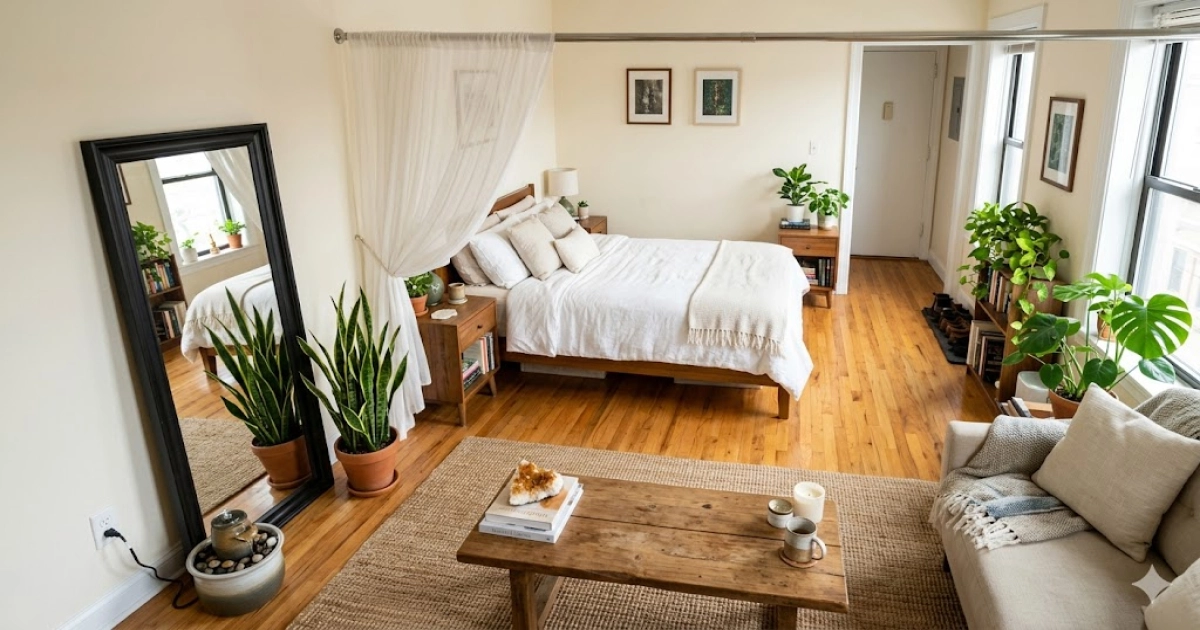
Quick Answer: Feng shui for renters means working with limitations—no painting, no nails, no permanent changes. Use mirrors, plants, furniture placement, and color accents to balance energy. Even a cramped studio can feel expansive and calm if you apply renter-friendly bagua adjustments and clear clutter pathways. I’ll show you exactly how.
I learned the hard way that a rental can fight your feng shui efforts. The first time I tried to “fix” my tiny studio, I moved my bed into the command position only to realize the radiator stuck out exactly where my headboard needed to be. I wasted weeks wedging furniture into impossible angles, thinking I was failing at feng shui. The real failure? I was treating a rental like a house I owned. Once I accepted the constraints and got creative, everything shifted—my sleep, my focus, my bank account. This guide is built on those real, often messy, test-and-learn moments. No fluff. No fake miracle cures. Just renter-safe ways to make your apartment feel like it’s holding you, not fighting you.
Table of Contents
What Makes Rental Apartment Feng Shui Different from Owning a Home?
When you own, you can knock down a wall or paint the front door red. When you rent, your power is in the portable, the temporary, and the cleverly hidden. Most traditional feng shui advice assumes you control the structure. That’s rarely true for apartment dwellers. I’ve had leases that forbid candles, command hooks (yes, some landlords check), and even the wrong kind of curtain rod. The core difference is that renters must create intentional energy flow without altering the “bones” of the space. This forces a deeper understanding of qi—you stop relying on permanent fixes and start working with what you’ve already got. It’s actually a purer form of practice, but it takes humility and a willingness to experiment.
Biggest mistake renters make: believing they need to follow rules meant for homeowners, then giving up when they can’t. The truth is, temporary adjustments often yield faster results because you’re forced to listen to the space rather than impose your will on it.
How Do I Use the Bagua Map in a Rented Space Without Moving Walls?
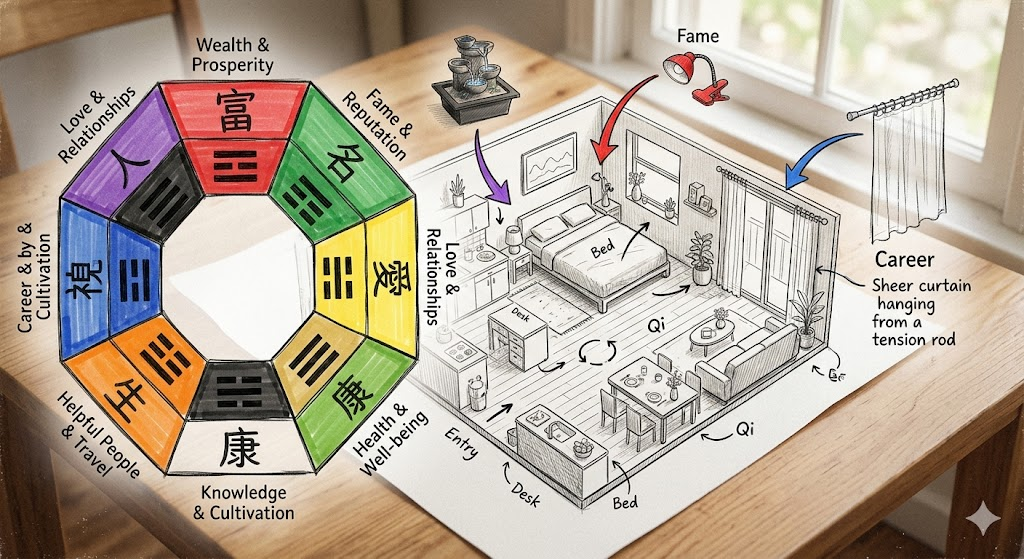
The bagua map doesn’t need nails. I overlay it onto my floor plan (a simple sketch on paper works) and treat each zone as a living energy field I can tweak with color, objects, and intention. In my current apartment, the “Wealth & Prosperity” corner falls right behind a permanently locked closet door. I can’t open it, but I can hang a small, battery-operated light strip around the doorframe (stuck with removable adhesive) and place a thriving money plant on a shelf right beside it. The energy doesn’t know the door is locked; it responds to activation.
Here’s a renter-friendly bagua activation approach I’ve refined over three moves:
- Wealth (Southeast): Use a small, plug-in fountain (no plumbing) or a purple cloth over a side table.
- Fame (South): Add a clip-on red lampshade or a battery candle with a timer.
- Love (Southwest): Pair objects in twos; use a tension rod to hang a sheer, rose-colored curtain as a soft backdrop.
- Family (East): A thriving wooden plant stand with a healthy plant—no drilling, just weight.
- Health (Center): Keep this area physically open. Remove clutter, even if it’s just a clear spot on the floor.
- Children/Creativity (West): A whiteboard with removable adhesive strips, or a metal wind chime hung from a removable hook.
- Knowledge (Northeast): A stack of books on a low, stable box, or a ceramic figurine.
- Career (North): A small, dark-colored bowl with water (change it weekly) and a smooth stone.
- Helpful People (Northwest): A metal bell you ring with intention, or a gray throw pillow.
All of this disappears when you move out. No patching, no painting, no deposit deductions.
What Are the Best Feng Shui Colors for Renters Who Can’t Paint?
Paint is the first thing a landlord bans. I ruined a security deposit once by painting an accent wall without permission—never again. Now I inject color through removable, large-scale fabric, slipcovers, and light.
Here’s how I bring in feng shui colors without a brush:
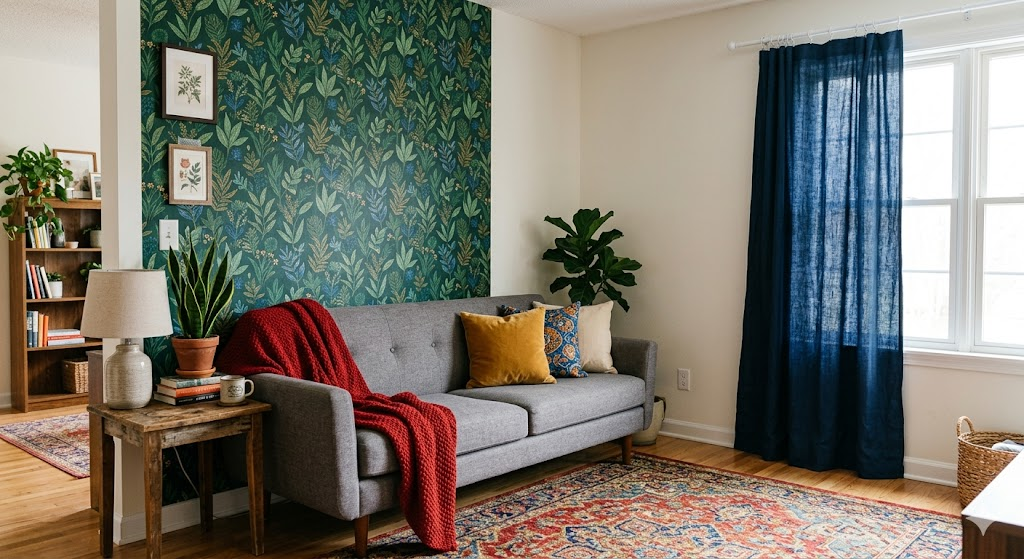
- Red (Fame, Passion): Throw blankets, removable wallpaper panels (the peel-and-stick kind that actually comes off clean), or a red lampshade on a floor lamp.
- Green (Health, Growth): Plants, obviously. But also a green shower curtain (tension rod) or a green fabric hung as a temporary headboard using velcro strips.
- Blue/Black (Career, Wisdom): Blackout curtains in deep navy, or dark ceramic plant pots. Even a dark bath mat by the front door shifts the energy.
- Yellow/Earthy tones (Center, Stability): Slipcover a sofa in a warm sand color, or add a large jute rug over the existing beige carpet.
- White/Metallic (Creativity, Helpful People): White string lights, a metallic mirror frame, or a silver tray on the entry console.
Color works energetically whether it’s on the wall or draped over the couch. I tested this by swapping a gray blanket for a deep green one in my living room’s family area—two weeks later, I noticed I was laughing more in that spot. Is that placebo? Maybe. But feng shui is a language of suggestion, and your brain speaks it fluently.
Which Feng Shui Plants Thrive Indoors and Purify Energy in an Apartment?
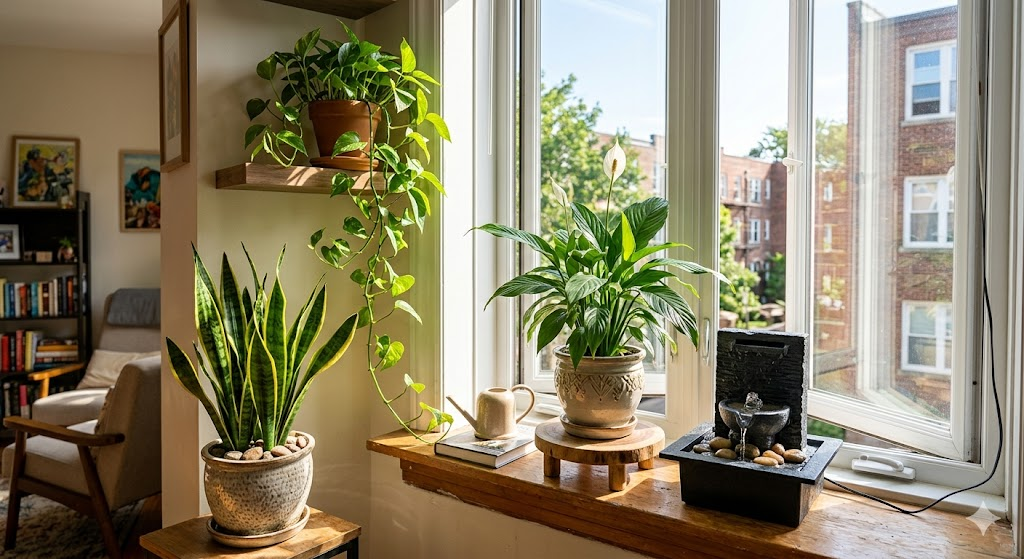
Plants are renters’ best friends because they’re alive, they clean the air, and they don’t require landlord approval. But not every plant is apartment-proof. I’ve killed my share of ferns in dark hallways. The sweet spot is low-light tolerant, air-purifying, and manageable in a pot that doesn’t leak onto the floor.
My tried-and-tested shortlist:
| Plant | Feng Shui Benefit | Care Level | Best Placement |
|---|---|---|---|
| Snake plant (Sansevieria) | Protective energy, absorbs negative qi | Very easy | Entryway or behind a door |
| Pothos (Epipremnum aureum) | Downward trailing softens sharp corners | Easy | On a high shelf to cascade down |
| Peace lily (Spathodea) | Purifies air, calms arguments | Moderate (needs indirect light) | Living room love corner |
| Money tree (Pachira aquatica) | Attracts abundance | Moderate | Wealth area (Southeast) |
| Boston fern | Humidity lover, lifts heavy energy | Moderate-hard in dry air | Bathroom if there’s natural light |
| ZZ plant | Resilient, good for low-light spots | Very easy | Career area near a desk |
One hack: I use cachepots—a decorative outer pot without drainage—and I keep the plant in its plastic nursery pot inside. I water at the sink, let it drain completely, then slip it back. No saucer spills, no wood floor damage. If your lease prohibits plants on hardwood, a clear acrylic mat underneath satisfies both you and the landlord.
I also cluster plants in a “green gang” for big impact. A lonely plant in a corner looks sad; three together create a living energy node. I use a bamboo plant stand with multiple tiers, zero tools needed.
How Can Mirrors Fix Bad Apartment Layouts Without Landlord Issues?
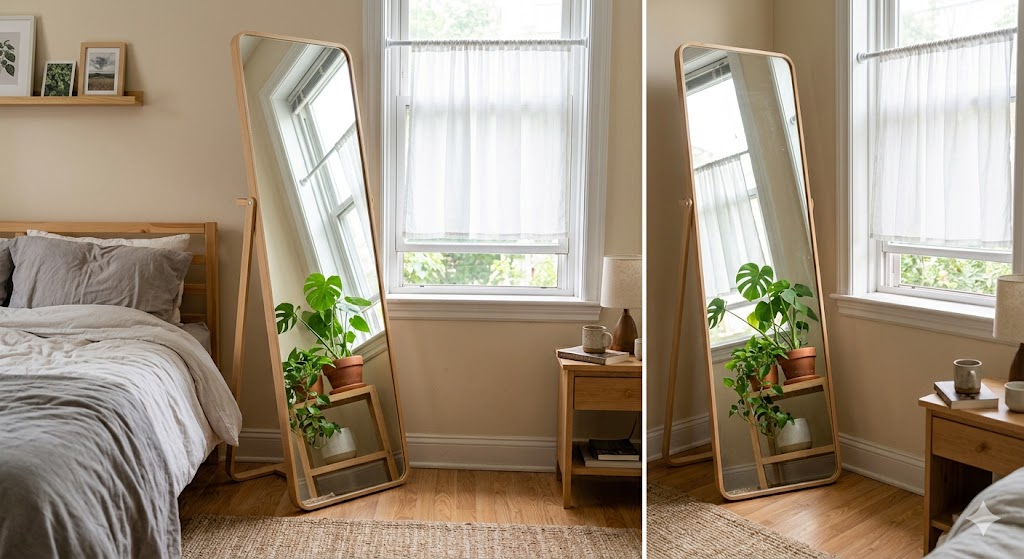
Mirrors are the ultimate renter tool—they expand space, redirect qi, and can “create” missing bagua areas visually. But I’ve made the classic mistake of placing a mirror directly opposite my bed, thinking it would make the room feel larger. I woke up anxious every night. In feng shui, a mirror reflecting you while you sleep can drain energy. I replaced it with a leaning floor mirror that faces a wall when not in use. Instant improvement.
For tricky layouts, here’s what works:
- Command position cheat: If your bed can’t see the door without craning your neck, place a convex or regular mirror so you can see the door reflection from your pillow. It’s not perfect, but it’s a solid psychological fix.
- Expanding narrow hallways: A long, vertical mirror hung on a side wall (using removable adhesive strips) makes a corridor feel less suffocating.
- Activating missing areas: If your apartment’s shape is an L and you’re missing the wealth corner, place a mirror on the wall that “faces” where that corner should be. It energetically completes the space.
- Avoid reflecting clutter or sharp angles: A mirror that doubles the image of a messy desk amplifies chaos. Hide the mess, then hang the mirror.
I own a large, frameless mirror that weighs less than 15 pounds. I lean it against the wall and secure the top with a single, non-marking adhesive safety strap designed for earthquake zones. No holes, no risk. If leaning isn’t allowed, there are lightweight acrylic mirrors that stick with static cling—they won’t damage paint.
What Are the Best Feng Shui Crystals for Renters and How to Place Them Safely?
Crystals are portable energy transmitters. You don’t need massive geodes; tumbled stones work just as well. The challenge is placement without drilling shelves or gluing things to walls. My approach: command-style clear hooks for lightweight hanging points, and discreet “pocket” placements.
Here’s my field-tested crystal lineup:
- Clear quartz: Programmable master healer. I place a small point on my desk facing the door.
- Amethyst: Calms the mind. I put a tiny tumbled amethyst inside my pillowcase (it’s a thing—I’ve done it for years, never lost one).
- Citrine: Abundance energy. I keep a citrine cluster in my wallet or on a coin tray near the front door.
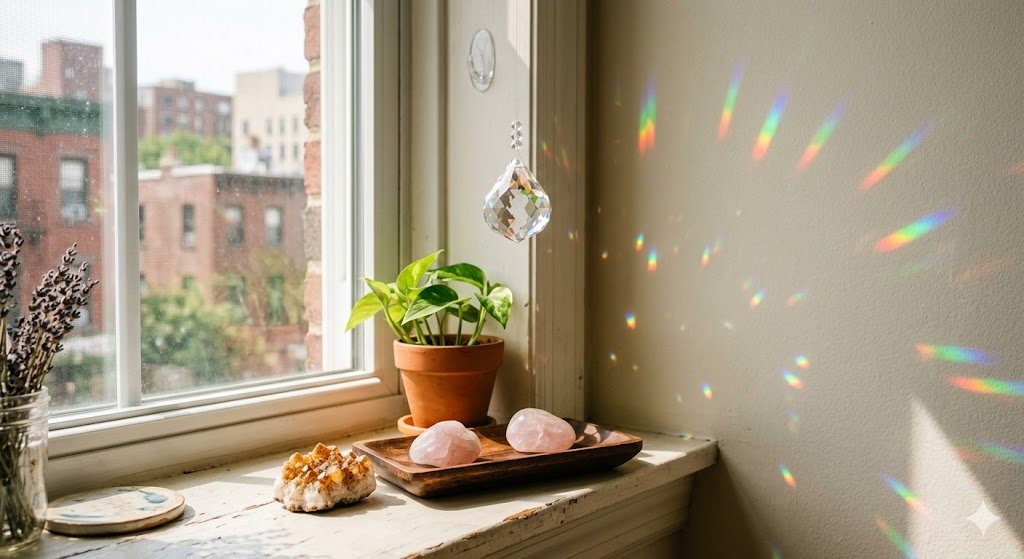
- Rose quartz: Love and self-compassion. A pair sits on my nightstand in a small bowl.
- Black tourmaline: EMF protection and grounding. I stick one behind my Wi-Fi router with a bit of museum putty—no marks, no damage.
- Pyrite: Wealth activation. I place a small chunk on a metal tray in the wealth corner, no drilling needed.
For wall-hung crystals like a faceted suncatcher, I use a removable adhesive hook rated for a few ounces. I hang a small clear quartz crystal in a window where it throws rainbows. It lifts the entire room. I change the crystal with the seasons because our energy shifts. The hook removes cleanly when I move out—tested on three different paint types.
Never underestimate the power of intentional placement. I once kept a pyrite piece buried in a drawer, feeling weird about it. When I put it out in plain sight, my invoicing suddenly got faster. Coincidence? Possibly. But the ritual of placing it changed my behavior, and that’s half the game.
How Do I Arrange Furniture for Good Energy Flow in a Small Rental?
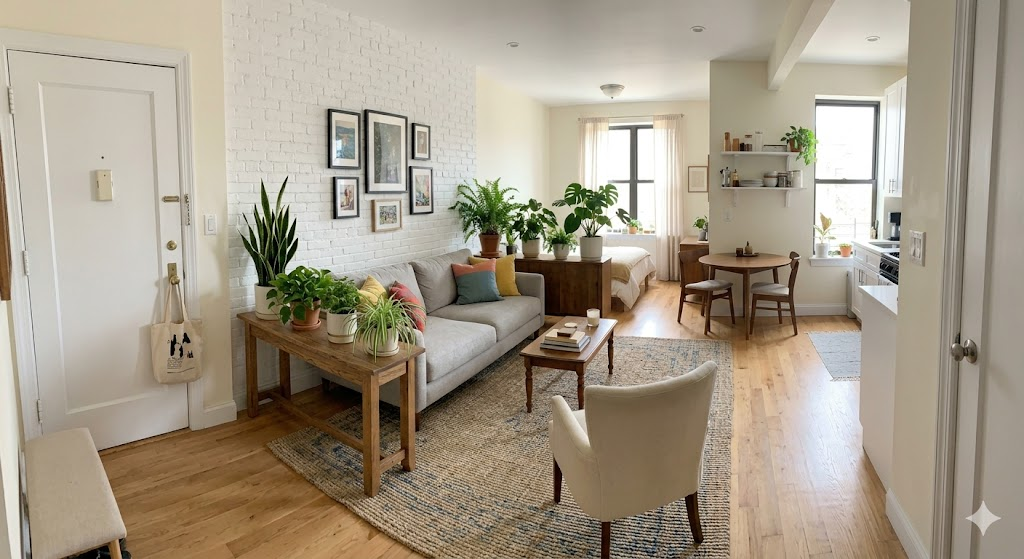
Space is tight, and you can’t tear down the wall between the kitchen and living room. So you have to create zones with what you’ve got. My 400-square-foot studio taught me that walking path clarity matters more than symmetry. If you have to shimmy sideways to get to the bathroom, your qi is stuck.
I use a few non-negotiable rules:
- Every seat needs a solid wall behind it or a high-backed chair. No floating sofa with a walkway behind—it makes you feel exposed. In my studio, the only logical sofa spot left the back open. I solved it by placing a narrow console table directly behind the sofa, then topping it with a row of small plants. It created a “wall” of greenery.
- The bed must be approachable from both sides if possible. Pushing a bed against the wall in a small rental kills relationship energy. I bought a full-size bed instead of a queen to fit two narrow nightstands. Worth the downsized sleep surface.
- Use rugs to define areas. In an open-plan studio, a flat-weave rug under the living area and a softer, high-pile rug under the bed visually separates rest from activity. No construction needed.
- Keep the path from the front door open. The entryway is the mouth of qi. I once had a coat rack that jutted out right when you entered, forcing a detour. Moving it to the opposite wall shifted the entire flow—I didn’t dread coming home anymore.
Multi-functional furniture saves feng shui. An ottoman that stores extra blankets and serves as a coffee table keeps clutter from piling up. A drop-leaf dining table against the wall expands only when needed. Every piece must earn its footprint.
How Can I Reduce Noise and Improve Air Quality Without Permanent Changes?
Noise is invisible but devastating to feng shui. In my last apartment, I lived above a garage, and the constant thrum of the door opener made my career area feel chaotic. I couldn’t install soundproofing, so I used thick tapestries hung from tension rods on the offending wall. It absorbed high-frequency noise and added a rich texture that grounded the space. Also, a white noise machine placed in the wealth area? Not traditional, but I slept better, and that made me sharper financially.
Air quality is equally critical. Stagnant air traps stale energy. I can’t cut holes for a ventilation fan, but I can:
- Use a HEPA tower fan that doubles as an air purifier—placed diagonally across from the window to create a circular air flow.
- Open windows for five minutes daily, even in winter, to cross-ventilate. I do a “morning flush” while I make coffee.
- Add bowls of activated charcoal near the kitchen and bathroom. They absorb odors and cost pennies.
- Keep a small, low-maintenance areca palm or spider plant near my desk; they’re known for filtering airborne toxins.
One surprising noise fix: a tabletop water fountain. The sound of trickling water masks irregular traffic noise and introduces the water element gently. Just make sure it’s a closed-loop fountain you can plug in, and that your lease allows it (most do). The bubbling sound alone shifted my apartment’s mood from anxious to serene within a day.
What Are the Biggest Feng Shui Mistakes Renters Make—and How to Fix Them?
I’ve watched friends and clients sabotage their spaces with good intentions. The top errors I see:
- Over-cluttering the entryway. It’s tempting to drop mail, keys, and shoes right by the door. That bottleneck chokes the apartment’s breath. Fix: Use a shoe cabinet with doors, a small tray for keys, and a “one-touch” rule—handle mail immediately or stash it out of sight.
- Ignoring the bathroom door. If your bathroom door directly faces the front door or the kitchen, energy rushes out. Renter fix: Keep the bathroom door closed and hang a full-length mirror on the outside (removable hook). Or place a tall plant between the doors to diffuse the path.
- Using broken objects. A clock with a dead battery, a lamp with a flickering bulb—these hold stagnant energy. I had a client who kept a non-working microwave as “storage.” Removing it freed up the entire kitchen energetically. Toss or fix anything broken.
- Forcing a water fountain in the wrong spot. Water in the bedroom can create loss or anxiety. I tested a small fountain on my nightstand once and had nightmares for a week. Keep water features in living areas, never where you sleep.
- Copying Instagram layouts. A gorgeous setup online may not fit your bagua. I once arranged a room exactly like a popular influencer, only to realize my wealth corner was now a dead zone blocked by a massive armchair. Always map your own energy first.
- Underestimating intention. Placing a crystal or a mirror without a clear intention is just decorating. I always say out loud what I want that object to do. It feels silly, but it works. The object becomes a trigger for your subconscious.
A recent discussion among feng shui practitioners highlighted how renters often overlook the power of sound as a spatial cure. One expert noted that playing a specific frequency (like 528 Hz) on a small Bluetooth speaker in the health area changed the “weight” of the room measurably—they described it as “sonic sage.” I tried it with a soft singing bowl track in my living room’s center, and the space immediately felt less chaotic. Sound is completely reversible, costs nothing, and violates no lease agreement.
There’s a growing trend of using temporary, removable floor decals to create bagua grids directly on the floor—like laying a large vinyl mandala that you can peel up when you move. One renter in Chicago shared that mapping the bagua under the furniture helped him finally feel “grounded” after years of restlessness. I’ve since tried a simple compass rose decal under my coffee table, and it serves as a constant, invisible anchor. You can feel it underfoot when you vacuum; it’s a tactile reminder.
These insights remind us that feng shui in a rental is a living, iterative practice, not a one-time setup.
FAQ Section
1. Can you really do feng shui in an apartment with strict rules?
Absolutely. Feng shui is about energy, not construction. Temporary fixes like mirrors, plants, crystals, fabric, and sound adjustments achieve the same qi shifts without breaking rules. In my strictest rental, I couldn’t even use adhesive hooks, so I leaned everything and used tension rods. It worked beautifully.
2. What’s the best feng shui tip for a studio apartment renter?
Zone your space with rugs and lighting. Use a room divider like a tall open bookshelf (no tools needed if it’s freestanding) to separate sleep and work areas. Keep your bed in the command position and ensure you never see your work desk from your pillow. That one change saved my sanity.
3. Do renters need to worry about the building’s exterior feng shui?
You can’t control a shared hallway or elevator bank, but you can shield your front door. Place a sturdy plant just inside, keep the area bright, and use a door mat with a grounding color. I also hang a small, inconspicuous bagua mirror above the door on the inside—facing outward—only if it’s respectful to neighbors and not visible as a decoration. (Check local norms.)
4. How do I feng shui a bedroom that shares a wall with a noisy neighbor?
Hang a thick tapestry or a large, lightweight acoustic panel using tension rods or removable adhesive strips. Place a solid wood headboard against that wall. Wood absorbs sound and creates a feeling of support. I also use a white noise machine on the nightstand farthest from the neighbor wall; it masks disturbance effectively.
5. What if my apartment has no natural light in the wealth area?
Use full-spectrum light bulbs in that zone and keep them on during daylight hours. Add a mirror to bounce whatever light exists from adjacent rooms. Live plants might struggle; so I use high-quality faux plants (yes, they work energetically as symbols) combined with a citrine cluster. Light is yang energy; replicate it as closely as you can.
6. Are there any feng shui taboos for rentals I should avoid?
Avoid sleeping under exposed beams or ceiling fans directly over the bed—they “cut” energy. If you can’t reposition, drape a lightweight fabric from the ceiling (tension rod) to soften the line. Also, never place a mirror facing the toilet; it multiplies waste energy. Keep toilet lids closed.
7. Can I use essential oil diffusers for feng shui?
Yes, they’re renter-friendly and add the wood and fire elements. Use scents aligned with your intention—eucalyptus for health, sweet orange for wealth, lavender for calm. But never diffuse in a completely closed room while sleeping; safety first. I prefer a cool-mist diffuser with an automatic shut-off.
Author Bio
Mia Chen is a feng shui consultant who has spent over a decade adapting traditional principles for renters. She’s lived in seven different apartments across three cities, learning through mistakes, lease restrictions, and countless experiments how to create balanced, supportive energy without ever losing a security deposit. Her approach is practical, honest, and deeply rooted in the belief that your home should work for you—not your landlord.
1 thought on “Feng Shui Tips for Renters Apartment: No-Reno Harmony Hacks”